Crude oil has always been the big draw for producers in the Permian –– and in the especially prolific Delaware Basin within the Permian –– but the wells there also produce large volumes of “wet” natural gas that needs to be gathered, processed and transported to market. A lot’s been written about the Permian’s still-strong oil production and the infrastructure developed to support it; we’ve also covered natural gas liquids (NGLs) in the play. Now it’s time to delve into the gas processing and gas pipeline capacity out of West Texas and southeastern New Mexico, including pipes into the increasingly important Mexican market. Today, we discuss recent developments on the gas side of the U.S.’s hottest (remaining) oil production area.
It’s been a tough 24 months in the U.S. oil patch, with falling crude oil prices, cutbacks in drilling and production, and –– more recently –– concern that the hoped-for recovery in crude prices may not be gaining traction. The situation’s been a lot less gloomy in the Permian, though, which is “still the one” where the production economics are more favorable than in other plays and where output levels for crude, associated natural gas and NGLs remain very close to the peaks they had reached a few months ago. The Permian region covers about 75,000 square miles of West Texas and southeastern New Mexico (slightly larger than North Dakota, and twice the size of New England!), and includes several sub-regions such as the Delaware, Central and Midland basins (see Figure 1), each with their own geologic and hydrocarbon-production characteristics.
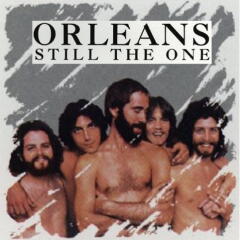
About the song
“Still the One” was a 1976 hit for the soft rock group Orleans; the song rose to #5 on Billboard’s Hot 100. In 1977, country singer and songwriter Bill Anderson released a cover version that peaked at #11 on Billboard’s Hot Country Singles list.