U.S. Northeast natural gas production has surged nearly 1.5 Bcf/d in the past four weeks as wells that were shut-in this spring came back to life. The supply gains have been matched by strong intraregional demand, which has posted at or near record highs on a monthly average basis in recent months. But the returning supply volumes raise the question: what happens when summer cooling demand begins to fade? Storage will only be able to absorb so much, as regional storage inventories are already well above year-ago levels and the historical average for this time of year. That leaves flows out of the region as the only other outlet for excess supply, and those may be limited as well, as pipeline issues and drastically reduced downstream demand from LNG exports have stymied outflows. So, is the Northeast gas market headed for a shoulder-season meltdown? Appalachian gas supply prices this month already have weakened relative to the national benchmark Henry Hub, and these dynamics suggest there is more tumult ahead. Today, we consider what’s in store for the Northeast gas market this fall given the latest fundamentals.
To understand the most recent gas market shifts in the U.S. Northeast — and their near-term implications — it’s worth putting them in the context of what’s transpired in the past few months.
As we discussed last month in The Waiting Game, gas prices were feeling the pressure of oversupply conditions well before COVID-19 and the oil price collapse. Appalachian producers last year already had trimmed their rig counts and capital spending budgets in response to sub-$2.00/MMBtu gas prices in the region and overall weakness in Henry Hub benchmark futures prices. Then came the mild winter that suppressed storage withdrawals and left a hefty surplus in storage compared with previous years. That was followed by the pandemic-induced stay-at-home directives and lockdowns, which disrupted gas consumption. And, by May, there was also the disruption of another major demand “sink” for domestic production, including from the Marcellus/Utica — U.S. LNG exports — as an existing global surplus of LNG combined with lockdowns abroad to slash global demand, wiping out margins for cargo liftings from U.S. ports, and leading to widespread cargo cancellations.

The NATGAS Appalachia weekly report provides the data and insights to monitor the northeast natural gas market’s twists and turns and identify the risks and opportunities along the way, including tracking supply-demand trends, outbound capacity and their impact on takeaway pipeline utilization, and regional prices.
About the song
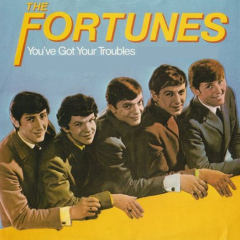
"You've Got Your Troubles" was written by Roger Greenaway and Roger Cook. It appears as the first song on side one of The Fortunes’ debut album, The Fortunes. Greenaway and Cook said they wrote the song in about two hours. Released as a single in August 1965, the song went to #7 on the Billboard Hot 100 Singles chart. Les Reed, who arranged the song, hired session musicians, with The Fortunes doing the vocals. Reed also arranged the trumpet and horn parts on the record. Noel Walker produced the song. There has been a bevy of other artists who have covered "You've Got Your Troubles" over the years. Personnel on the record were: Rod Allen (lead vocals), Glen Dale (backing vocals), and Barry Pritchard (backing vocals), supported by unlisted session players.
The Fortunes were an English pop band formed in Birmingham, England, in 1961. Original members in the band were: Rod Allen (lead vocals, bass), Barry Pritchard (backing vocals, lead guitar), Glen Dale (backing vocals, rhythm guitar), Andy Brown (drums), and David Carr (keyboards). Twenty different members have passed through the band since their formation. The Fortunes released 10 studio albums, one live album, and 25 singles. Rod Allen died in 2008, Barry Pritchard in 1999, Glen Dale in 2019, and David Carr in 2011. A four-piece group with no original members still tours as The Fortunes.