When it comes to getting crude oil to market, bottlenecks have always existed. Back in 2013-15, producers and shippers in the Rockies faced a serious lack of takeaway options. Midstreamers saw the problem and the money to be made, and quickly built more crude-by-rail capacity — and, over time, pipeline capacity — to fix things. Recently, major takeaway constraints emerged in the Permian, much to the detriment of netbacks at the wellhead. There was real concern for a few months that some producers might need to shut in production as there wasn’t any way to get incremental barrels out of the basin. Again, traders and midstream operators got savvy, restarted some dormant crude-by-rail options, initiated long-haul trucking out of Midland, and added more pipe capacity. But what if the next big bottleneck isn’t between two land-based trading hubs? What if there’s not enough export capacity at terminals along the Gulf Coast, the gateway to international markets? In today’s blog, we examine recent export and production trends, and discuss what those could mean for export infrastructure and logistics over the next five years.

Crude Oil Permian provides detailed analysis of the fundamental drivers impacting the Permian Basin crude oil market including weekly data, analysis and market intelligence updates of: Permian crude oil supply and demand, pipeline outflows and capacity, prices, and infrastructure updates.
U.S. crude oil export volumes have grown substantially since the ban on most exports was lifted in December 2015. Figure 1 shows that by 2017 exports averaged about 1.2 MMb/d, and that in 2018 the export pace increased to about 2 MMb/d. So far in 2019, the volumes being shipped abroad have been averaging just over 2.7 MMb/d, with exports hitting an all-time high of 3.6 MMb/d in February (yellow star to upper-right of bar chart). We’re not even halfway through the year and we’ve already had multiple weeks in 2019 when exports topped 3 MMb/d. Loading that much crude onto huge tankers is no easy task.
About the song
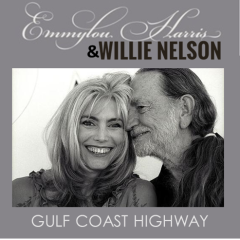
"Gulf Coast Highway" was written by Nanci Griffith, James Hooker and Danny Flowers. The song made its first appearance on Nanci Griffith's 1988 album, Little Love Affairs. Emmylou Harris recorded the song with Willie Nelson, and included it on her Duets album, which was released in July 1990. Duets went to #24 on the Billboard Top Country Albums chart. Harris also included the song on her comprehensive three-CD career retrospective album, Portraits, which she released in 1996.
Emmylou Harris is an American singer, songwriter, musician, and actress. She has released 26 studio albums, three live albums, 11 compilation albums, and 70 singles. Her record sales in the U.S. total more than 5.5 million copies. She has won four Grammy Awards, three Country Music Awards, and two Academy of Country Music Awards. Emmylou is a member of the Country Music Hall of Fame and the Grand Ole Opry. She holds an honorary doctorate of music from Berklee College of Music, and still records and tours to this day.
Willie Nelson is an American singer, songwriter, musician, actor, poet, and activist. He has released 98 — yes, 98! — studio albums, 12 live albums, two soundtrack albums, 42 compilation albums, and 130 singles. Willie has won 13 Grammy Awards, seven American Music Awards, 10 Country Music Awards, five Academy of Country Music Awards, and two BMI Awards. He is a member of the Country Music Hall of Fame and the National Agricultural Hall of Fame, the latter in recognition for his role in founding Farm Aid. He has also received Kennedy Center Honors and the Gershwin Prize from the Library of Congress. Nelson, now 86 years old, has sold more than 40 million records in the U.S. and still records and tours.