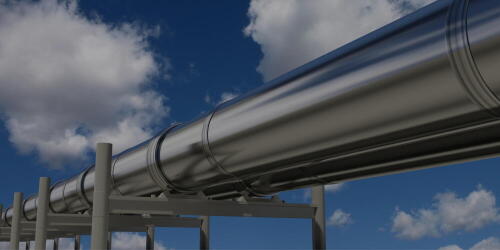
Over the next two years, increasing natural gas demand for Gulf Coast LNG exports will reverse flow patterns across the Southeast/Gulf region, resulting in supply/demand imbalances, pipeline capacity constraints and regional price aberrations. The most significant of these developments will occur in the backyard of Henry Hub, Louisiana, where growing supplies in the north of the state will compete for pipeline capacity to get down to coastal export facilities. More Louisiana north-to-south pipeline capacity is needed. The only questions are where the capacity is needed most, and who will build it? Today, we continue our review of Louisiana gas supply, demand and transportation capacity.
This is Part 6 of a blog series that we started about six weeks ago, in which we’ve been analyzing the effects of the major changes taking place in the Louisiana gas market — the decline in offshore gas production, the emerging demand from LNG exports, the influx of gas supply from the Marcellus/Utica and the rebound in local gas supply from the Haynesville and other regional gas supplies. These market developments will drive the overall U.S. gas supply-demand balance over the next several years, which makes understanding the Louisiana gas market a critical piece of the puzzle. Yet that is no small undertaking given that the Bayou State has the most dense, tangled network of natural gas pipes in the U.S.
NATGAS Billboard is a daily, early morning email and report that provides an up-to-the-minute view of the natural gas market outlook, including storage injections/withdrawals and price. Billboard’s models incorporate pipeline flow data, weather models, electricity demand data and more.
To make sense of the ongoing transformation in the region, we devised a seven-corridor framework for gas flows moving in and out of Louisiana, as we laid out in Part 1 of this series. In the subsequent three episodes (Part 2, Part 3 and Part 4), we did a deep-dive into the historical gas flows and what’s happened on each of the corridors.
Taken altogether, the takeaway from our analysis of historical flows is that the Louisiana gas market already is radically different than it was just a few years ago. Whereas gas was moving net north out of Louisiana as recently as 2015, it’s now flowing south into the state and flooding northern Louisiana. Much of these flows are Marcellus/Utica volumes moving southbound with the help of pipeline reversals and capacity additions. As we saw in Part 4 of this series, flows across Louisiana’s northern border over the past couple of years flipped from moving about 2.6 Bcf/d net outbound in 2013 to flowing nearly 2.0 Bcf/d net inbound into Louisiana in 2017.
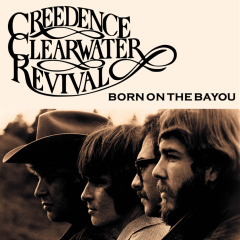
About the song
"Born on the Bayou" is the first song on side A of Creedence Clearwater Revival's second album, Bayou Country, written by John Fogerty. It was recorded in the late fall of 1968 at RCA Studios in Hollywood, CA, and released as the B side to CCR’s hit single, "Proud Mary,” in January 1969. "Born on the Bayou" would become the traditional set-opening song at most of CCR's concerts, and became a crowd favorite. It is a prime example of what critics would call "swamp rock." Other progenitors of this genre include Little Feat, J.J. Cale and Tony Joe White.