Big changes are coming to the new epicenter of the global LNG market: Texas and Louisiana. On top of the existing 12.5 Bcf/d of LNG export capacity in the two states, another 11+ Bcf/d of additional capacity is planned by 2028. The good news is that the two major supply basins that will feed this LNG demand — the Permian and the Haynesville — will be growing, but unfortunately not quite as fast as LNG exports beyond 2024. And there’s another complication, namely that the two basins are hundreds of miles from the coastal LNG terminals, meaning that we’ll need to see lots of incremental pipeline capacity developed to move gas to the water.
In observance of Presidents Day, we are giving our writers a break and revisiting a recently published blog on our Arrow Model. If you didn’t read it then, this is your opportunity to see what you missed!
If we break it down further, looking at Texas and Louisiana separately, we see quite different fundamental dynamics. On the Louisiana side, LNG exports are set to rise faster than production in the state, while in Texas, the pace of production growth generally matches the combo of LNG and Mexico exports for a few years, but eventually lags behind as new LNG terminals come online, requiring the state to pull more gas in from Oklahoma or send less to Louisiana. These developments will drive highly dynamic market conditions, with flow shifts that will impact price differentials, the need for new pipeline infrastructure, and the gas-sourcing strategies for LNG exporters.

As we explore in today’s RBN blog, understanding all of these changes requires a natural gas flow/capacity model specifically targeted to make sense out of the evolving market dynamics in Texas and Louisiana. We’ve got one, and we call it Arrow.
More on the Arrow Model in a minute. First, we want to drive home the point that the magnitude of the changes coming is enormous. There will be a slew of new LNG export terminals — even if the months-long pause on new gas-export licenses announced by the Biden administration on January 26 drags on. We will see rising gas production in both the Permian and the Haynesville. And there will be more pipeline projects than you can shake a stick at. There are a number of wrinkles that have made the outlook particularly dynamic over the past few months. Consider the following market-impacting examples:
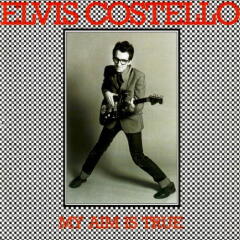
About the song
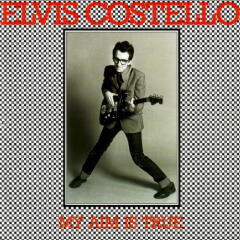
“Alison (My Aim Is True)” was written by Elvis Costello and appears as the fifth song on side one of Elvis Costello’s debut album, My Aim Is True. Costello claimed he wrote the song about a cashier at a grocery store. In what would become a Costello trait, the lyrics present a Raymond Chandleresque/film noir scenario about lost love and sentimental regret. The line, “My aim is true,” would be used as the title for his debut album. Released as a single in May 1977, the song didn’t chart in the U.S. but received plenty of airplay on U.S. album-oriented rock radio. Linda Ronstadt released her version as a single in April 1979 and it went to #30 on the Billboard Hot 100 Singles chart. Personnel on the Costello record were: Elvis Costello (vocals, rhythm guitar), John McFee (lead guitar), John Ciambotti (bass), Sean Hopper (keyboards), and Mickey Shine (drums).
My Aim Is True was recorded in 1976-77 at Pathway Studios in London and produced by Nick Lowe. Pathway was a small, eight-track studio favored by Stiff Records owners Dave Robinson and Jake Riviera. In addition to Costello, The Damned, Squeeze, Madness, and The Police recorded there. Costello was backed up on most of the album by members of the San Francisco band, Clover. While recording the album the band resided at Headley Grange outside of London, a place made infamous as the location for the recording of several Led Zeppelin albums because of its stone walls and unique acoustics. The album was recorded and mixed in a total of 24 hours. Since the time that the record was made, Clover member John McFee joined The Doobie Brothers, Sean Hopper was a member of Huey Lewis and The News, and John Ciambotti became a session bassist and chiropractor in Los Angeles (he died in March 2010). Producer Nick Lowe, a former member of popular British pub rock band Brinsley Schwarz, became a successful solo artist. Released in July 1977, the My Aim Is True LP went to #32 on the Billboard 200 Albums chart and has been certified platinum by the Recording Industry Association of America. Three singles were released from the LP.
Elvis Costello (Declan Patrick MacManus) is an English singer, songwriter, musician, record producer, author, and television host. He started playing professionally in the Liverpool folk rock band Rusty. After moving to London, he formed the pub rock band Flip City. While recording with Flip City at Pathway Studios in London, Costello met Dave Robinson from Stiff Records, who offered him a solo record deal in 1976. He has released 32 studio albums, six live albums, 16 compilation albums, two EPs, and 62 singles. Costello has won two Grammy Awards, two Ivor Novello Awards, an ASCAP Founder Award, and an MTV Video Music Award. He is a member of the Rock and Roll Hall of Fame and the Songwriters Hall of Fame. He continues to record and tour.