Oil and gas producers’ interest in each of the U.S.’s shale and tight-rock production areas has waxed and waned over the past quarter century or so. First it was the Barnett Shale, the birthplace of the Shale Revolution in the late 1990s. Then came the Fayetteville, Haynesville, Marcellus/Utica, Eagle Ford, Bakken, Permian, Denver-Julesburg (DJ) and SCOOP/STACK. And, as always, E&Ps are looking for “the next big thing.” The Uinta Basin in northeastern Utah certainly isn’t a Permian, Bakken or Eagle Ford, and it may not even be a DJ, but production of its unusual waxy crude has been on a tear lately, and a lot of people are asking how much further Uinta production can grow and how long those higher levels could continue. In today’s RBN blog, we discuss highlights from our new Drill Down Report on the Uinta.

In just a few years, the Uinta Basin has been transformed from a quirky, waxy-crude curiosity with only modest production volumes to a burgeoning unconventional play with output of about 180 Mb/d (see Figure 1 below) and initial production (IP) rates that compare favorably with the best wells in the Permian. But while Uinta producers have “cracked the code” for producing increasing volumes of waxy crude from horizontal drilling and hydraulic fracturing, there are serious questions about how much further the basin’s output can grow and how long large production volumes can be sustained.
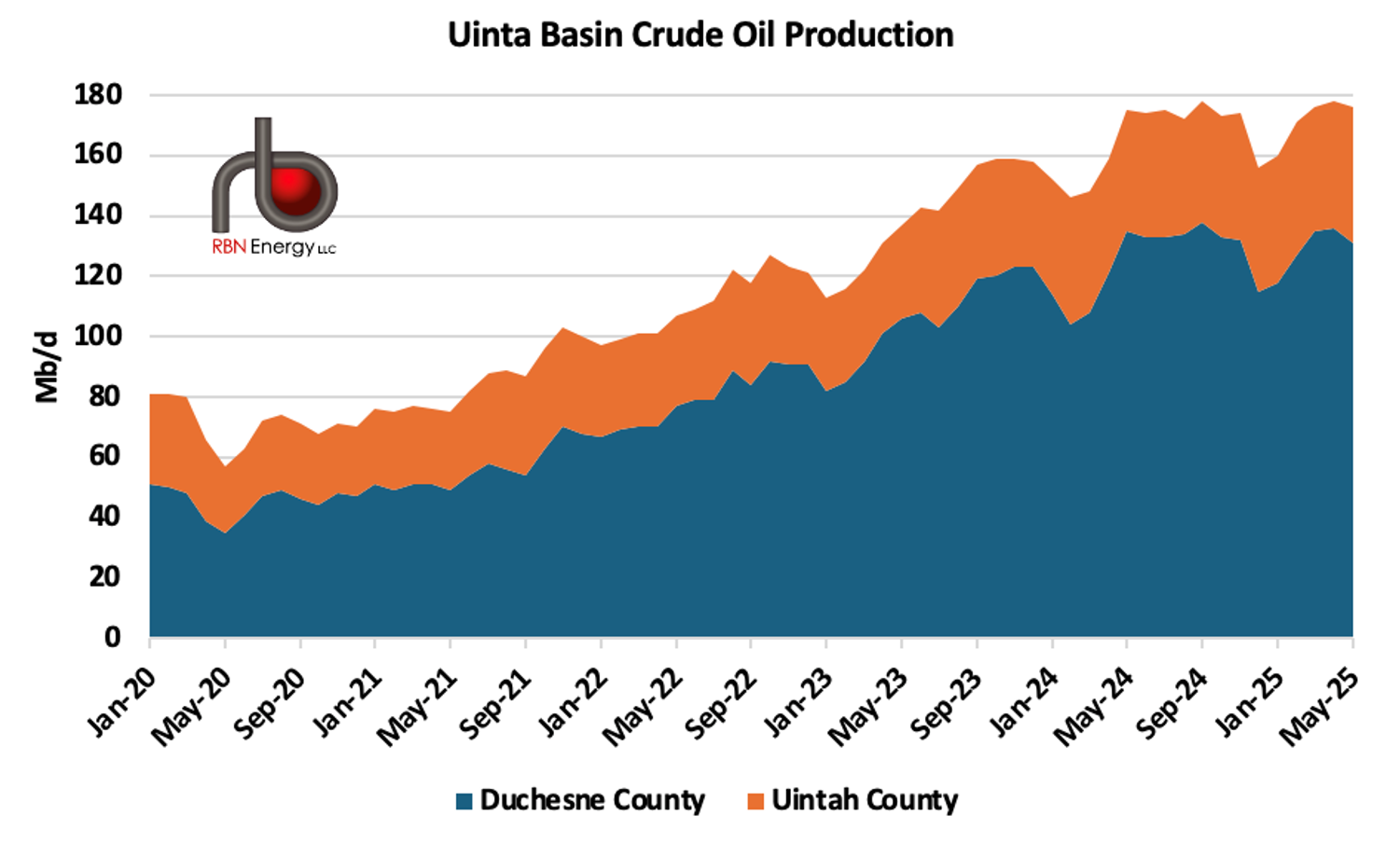
Figure 1. Uinta Basin Crude Oil Production. Source: Utah Division of Oil, Gas & Mining
For one thing, while the Uinta’s two types of waxy crude (black and yellow) have a number of very favorable characteristics — medium-to-high API gravity, very low sulfur and acid content, and ideal for making high-value lubricants — waxy crude’s semi-solid state at ambient temperatures presents a host of logistical challenges.
When it emerges from wells, it needs to be stored in heated tanks. To be transported to market, waxy crude needs to be loaded in insulated tanker trucks (often double-tankers) and driven either to one of the five refineries in the Salt Lake City area or to one of two rail terminals southwest of the basin for long-haul shipment in special insulated and coiled railcars. At refineries, waxy crude again is stored in heated tanks and moved within heat-traced pipes to prevent it from solidifying and literally gumming up the works.
About the song
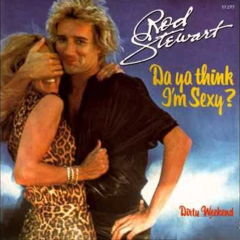
“Da Ya Think I'm Sexy” was written by Rod Stewart, Carmine Appice and Duane Hitchings, and appeared as the first cut on side one of Rod Stewart's ninth solo album, Blondes Have More Fun. Released as a single in November 1978, the song went to #1 on the Billboard Hot 100 chart. Co-writer Duane Hitchings in a 2007 interview said the song “was a spoof on the lounge lizards of the ‘Saturday Night Fever’ days.” As a side note, the late Ian McLagan — Rod Stewart's bandmate and keyboardist in The Faces — hated the song and refused to play it when he was the keyboardist in Stewart’s touring band. He would stand behind his organ with his arms crossed as the band performed the song. He said of the song, “It’s an insult to the mentality of any musician.” Personnel on the record were: Rod Stewart (lead vocals), Gary Grainger and Billy Peek (guitars), Jim Cregan (guitar, backing vocals), Phil Chen (bass, backing vocals), Carmine Appice (drums, backing vocals), Duane Hitchings (keyboards, synthesizer) and Del Newman (string arrangements). Blondes Have More Fun was produced by Tom Dowd. It went to #1 on the Billboard Top 200 Albums chart and has been certified Platinum by the Recording Industry Association of America.
Sir Rod Stewart — he was knighted in 2016 — is a British singer and songwriter. He was the lead singer in The Jeff Beck Group and The Faces, making two albums with the former and four studio LPs and one live album with The Faces. As a solo artist, Sir Rod has released 31 studio albums, four live albums and 147 singles. He has won one Brit Award, one Grammy Award and an ASCAP Founders Award, and has been inducted into the Rock and Roll Hall of Fame twice — once as a solo artist, and once as a member of The Faces. Stewart has sold more than 100 million records worldwide. He continues to tour and has dates scheduled into December, with stops planned in the U.S., Mexico, the Dominican Republic, Uruguay, Chile, Argentina, Germany, Switzerland, Austria, Bulgaria, Greece and the UEA.