A draft environmental impact statement (DEIS) tied to a key water crossing along the Dakota Access Pipeline (DAPL) has finally been completed and made public, thereby ending another chapter in the long-running drama about the ultimate fate of DAPL, which is by far the largest crude oil pipeline out of the Bakken. While the DEIS doesn’t finish the story, the document provides hints about possible outcomes — and an opportunity to review just how important the 750-Mb/d pipeline really is to Bakken producers and shippers. In today’s RBN blog, we discuss the latest developments regarding DAPL and Bakken production.
Join Backstage Pass, your gateway to exclusive industry insights, connections, and resources across energy markets. Gain direct access to RBN's extensive archive covering crude oil, NGLs, LNG, natural gas, refined products, renewables, and energy transition.
More than 10 years ago, in Express Yourself (Dakota), we blogged about Koch Industries’ plan to help pipe crude oil all the way from western North Dakota to the Gulf Coast. The plan was complicated. It called for the development of the 250-Mb/d Dakota Express — a combination of new and repurposed Koch pipe from the Bakken to the crude hub in Patoka, IL (via Minneapolis) — and a possible connection from Patoka to Energy Transfer’s proposed Eastern Gulf Crude Access Pipeline (EGCAP), which involved the repurposing of the Trunkline natural gas pipeline to St. James, LA, and maybe a run of new pipe from there to the Louisiana Offshore Oil Port’s (LOOP) onshore storage hub in Clovelly, LA.
New takeaway capacity out of the Bakken was desperately needed — production in the shale play (aka the Williston Basin) was growing by leaps and bounds through the first half of the 2010s, forcing many shippers to resort to more expensive crude-by-rail. Koch’s proposed Bakken-to-Patoka link never happened and was later replaced by DAPL (light blue line in Figure 1 map and inset), which came online in June 2017 as a 470-Mb/d facility (see What a Difference a DAPL Makes). EGCAP morphed into ETCOP (Energy Transfer Crude Oil Pipeline; red line in map), which terminated at Nederland, TX, (not St. James) and started up the same month. DAPL and ETCOP are collectively known as the Bakken Pipeline System and are co-owned by Energy Transfer (with a ~36% share), Enbridge (~28%), Phillips 66 Partners (25%), MPLX (~9%), and ExxonMobil (~2%).
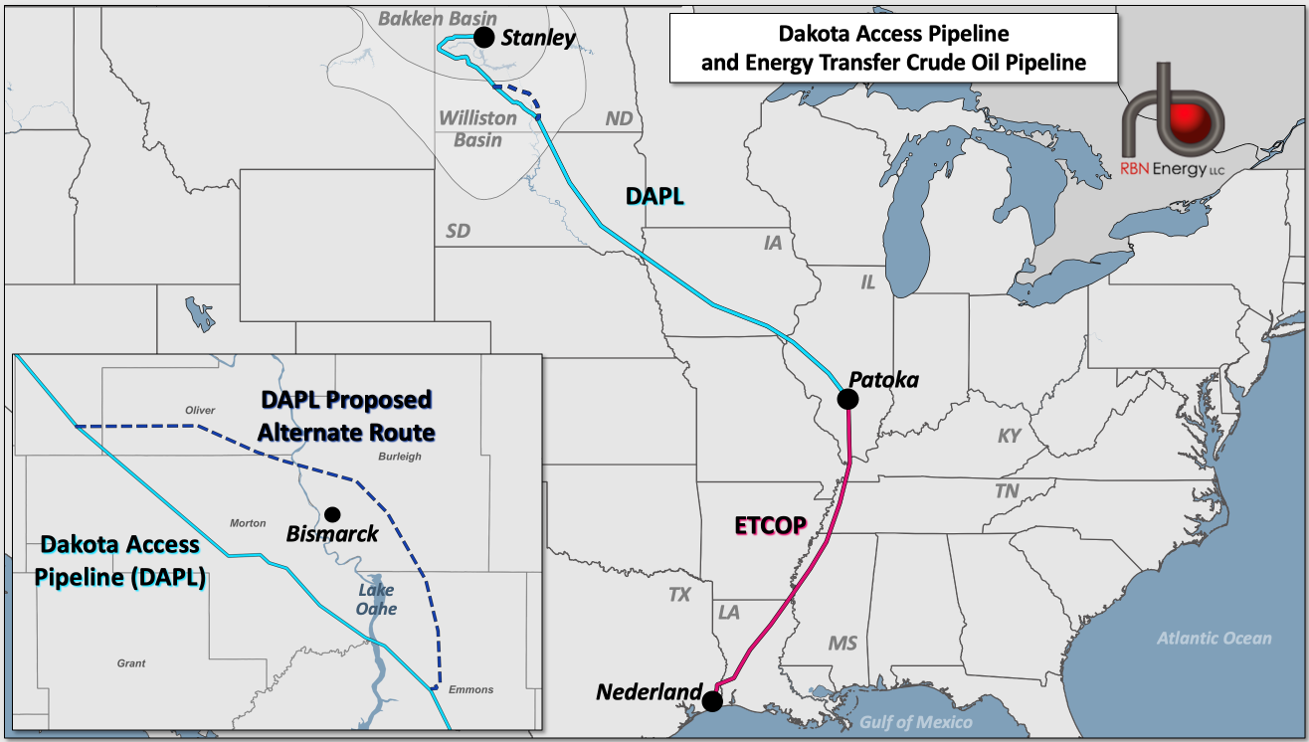
Figure 1. Dakota Access Pipeline and Energy Transfer Crude Oil Pipeline. Source: RBN
About the song
“Need You Now” was written by Josh Kear, Hillary Scott, Charles Kelley and Dave Haywood. It appears as the first song on Lady Antebellum‘s (now known as Lady A) second studio album of the same name. Released as a single in August 2009, it went to #1 on the Billboard Hot Country Songs, Adult Contemporary, and Adult Top 40 Singles charts and has been certified 11x Platinum by the Recording Industry Association of America (RIAA). The song, featuring lead vocals from Hillary Scott and Charles Kelley, won four Grammy Awards in 2011. Personnel on the record were: Hillary Scott, Charles Kelley (lead vocals), Dave Haywood (backing vocals, acoustic guitar), Chad Cromwell (drums), Jason Gambill (electric guitar), Rob McNelley (electric guitar, slide guitar), Michael Rojas (piano, synthesizer), Craig Young (bass), and Paul Worley (acoustic, electric guitar).
The album, Need You Now, was recorded during 2009 in Nashville with Paul Worley and Lady Antebellum producing. Released in January 2010, it went to #1 on the Billboard 200 and Top Country Albums charts and has been certified 4x Platinum by the RIAA. It was Lady Antebellum’s first album to debut at #1 on the Billboard 200 Albums chart. Four singles were released from the LP.
Lady Antebellum (Lady A) is an American country music group formed in Nashville in 2006 by Hillary Scott, Charles Kelley and Dave Haywood. The band abbreviated their name to Lady A in June 2020. They have released nine studio albums, two EPs and 23 singles. They have won eight ACM Awards, four American Music Awards, two Billboard Music Awards, six CMA Awards, and seven Grammy Awards. The band continues to record and tour and will begin a new tour starting with an appearance at the Grand Ole Opry House in Nashville on September 20, 2023.