Many U.S. hydrocarbon production basins have experienced major ups and downs the past few years — the Haynesville, Eagle Ford, Bakken, and SCOOP/STACK, to name just a few. The Permian hasn’t been entirely immune from bad times either — crude oil and associated gas production there plummeted in the early days of the COVID-19 pandemic last year and again during the Deep Freeze in February this year — but it would be fair to say that the play’s Midland Basin has been among the energy industry’s surest bets during the Shale Era, with strong, highly predictable gains in output that producers and midstreamers alike can pretty much bank on. As a result, a number of gas-and-NGL-focused midstream companies have been taking the long view in their planning for new gathering systems, gas processing plants, and connections to a multitude of takeaway pipelines. In today’s blog, we discuss one company’s development of a now-massive and flexible hub-and-spokes network in the heart of the Midland.
As we said in Part 1 of this blog series on Permian gas processing, production in the broader, West Texas/southeastern New Mexico production region has doubled to 13.4 Bcf/d over the past four years. To keep pace with that growth, the midstream sector has spent many billions of dollars on new gas-gathering systems, processing plants, and gas and NGL pipelines, with virtually all of that investment backed by long-term commitments from producers and other market players. Thanks to that build-out, the Permian now has sufficient takeaway capacity — at least for another couple of years. But despite the 50-plus processing plants that have come online in the play’s Delaware and Midland basins in recent years, still more processing capacity is needed, as evidenced by the more than 1.3 Bcf/d of new or relocated plants scheduled to begin operating in the Permian over the next 16 months.

The Natural Gas Master Class is a one-day online event focusing on understanding flow analysis, interpreting pipeline data and forecasting future flows. This course is designed to equip you with the knowledge and skills to effectively analyze the complexities of natural gas markets, flow analysis, and pipeline modeling. Join us online
October 21 | Online
More than 900 MMcf/d of that incremental processing capacity will be added in the Midland Basin portion of the shale play, where gas production now averages 4.9 Bcf/d and — according to RBN’s new Mid scenario — is forecast to increase to 5.7 Bcf/d by December 2022 and 6.1 Bcf/d by December 2023. The private equity-backed midstream company we focus on today — Navitas Midstream Partners, headquartered in The Woodlands, TX — has been playing an important role in facilitating that growth with a gathering and processing system that, from its very beginning, was designed with expansion, flexibility, and redundancy each step of the way.
About the song
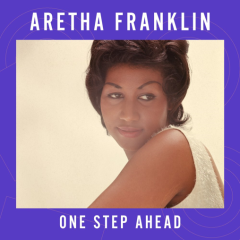
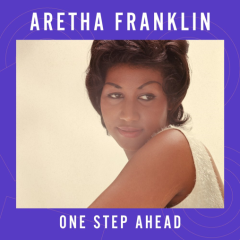
“One Step Ahead” was written by Eddie Snyder and Charles Singleton. It appeared as the A-side of a single for Aretha Franklin that was released by Columbia Records in May 1965. The single went to #18 on the Billboard Hot Rhythm & Blues Singles chart. Since the song never appeared on any of her albums at the time, it remains one of the rarest and collectible of Franklin’s singles. Hip-hop producer Ayatollah sampled the chorus from the song and used it in the “Ms. Fat Booty” single for Mos Def.
Aretha Franklin was an American soul singer, songwriter, and pianist. Dubbed “The Queen of Soul,” Franklin's professional career started at the age of 18, when she signed with Columbia Records. She released 38 studio albums, six live albums, 62 compilation albums, and 131 singles. Franklin won 18 Grammy Awards and received a Grammy Award Living Legend and Lifetime Achievement Award. She was awarded the National Medal of Arts and the Presidential Medal of Freedom, and is a member of the Rock and Roll Hall of Fame, the Gospel Music Hall of Fame, the UK Music Hall of Fame, and the National Women’s Hall of Fame. Franklin passed away at her home in Detroit in August 2018 at the age of 76.