MPLX’s July 31 announcement that it has reached an agreement to acquire Northwind Midstream for $2.375 billion puts a spotlight on two undeniable trends. First, the acquisition is the latest in what by now is a long series of multibillion-dollar deals by midstream giants to expand their Permian-to-Gulf, “wellhead-to-water” networks that gather, process, transport and export crude oil, natural gas and/or NGLs. Second, Northwind has been a pioneer in gathering and processing unusually sour associated gas in the prolific Northern Delaware Basin, an area of particular interest to a growing number of E&Ps. In today’s RBN blog, we discuss the deal and what it brings to MPLX.

The Natural Gas Master Class is a one-day online event focusing on understanding flow analysis, interpreting pipeline data and forecasting future flows. This course is designed to equip you with the knowledge and skills to effectively analyze the complexities of natural gas markets, flow analysis, and pipeline modeling. Join us online
October 21 | Online
First, the 411 — i.e., the details, for some older readers — on the prospective MPLX/Northwind Midstream transaction. MPLX, the midstream-focused master limited partnership formed by Marathon Petroleum in 2012, said it has reached a definitive agreement to acquire Northwind Delaware Holdings LLC (aka Northwind Midstream) for $2.375 billion in cash. MPLX plans to finance the acquisition with debt and expects the deal to close in Q3 2025, subject to customary closing conditions, including clearance under the Hart-Scott-Rodino Act. The company noted in its announcement that it expects the transaction to be “immediately accretive to distributable cash flow and represents a 7X multiple on [MPLX’s] forecast 2027 EBITDA.”
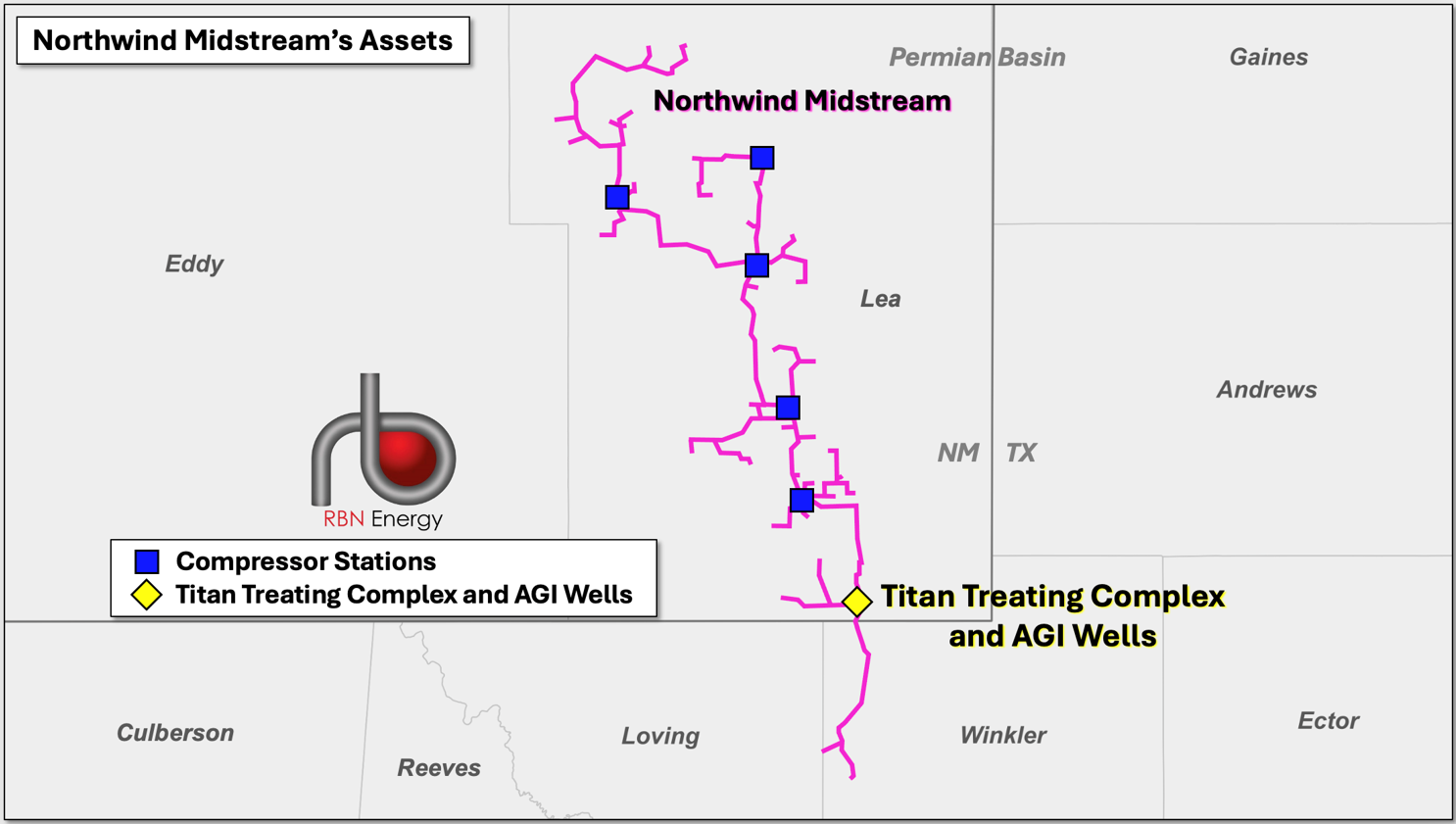
Figure 1. Northwind Midstream’s Assets. Source: RBN
Northwind Midstream, backed by private-equity investor Five Point Infrastructure LLC, was established in 2022 to develop, own and operate “off-spec” gas infrastructure in the Permian. As shown in Figure 1 above, Northwind has developed more than 220 miles of sour-gas gathering pipelines (mostly in Lea County, NM; pink lines), 200 MMcf/d of sour-gas amine treating capacity at its Titan Treating Complex in Lea County (yellow diamond in map; photo below) and two nearby acid-gas injection (AGI) wells with a combined capacity of 20 MMcf/d. (More on all this in a moment.) The gas gathering and treatment system has more than 200,000 dedicated acres and is supported by minimum volume commitments (MVCs) from several leading producers.
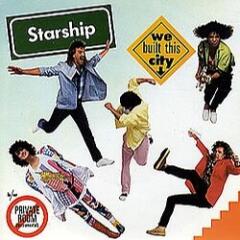
About the song
“We Built This City” was written by Bernie Taupin, Martin Page, Dennis Lambert and Peter Wolf. It appears as the first song on side one of Starship’s debut album, Knee Deep in the Hoopla. Despite the song’s huge commercial success, Starship vocalist Grace Slick has publicly stated that she felt it was “the worst song ever” and that, coupled with the increasing pop/commercial direction the band was taking, led to her departure from the band in 1988. The video for the song features Slick and co-vocalist Mickey Thomas amid a cast of various characters that look like they were sent by central casting when the call went out for “young, new wave types” and included two cases of Aqua Net Extra Hold hairspray. Most of the music on the song was done on a Synclavier synthesizer, with vocals by Thomas and Slick, and a few guitar licks by Craig Chaquico. Released as a single in September 1985, it went to #1 on the Billboard Hot 100 Singles chart and has been certified Gold by the Recording Industry Association of America (RIAA). It won a Grammy Award for Best Rock Vocal Performance by a Duo or Group in 1986. Personnel on the record were: Mickey Thomas (lead, backing vocals), Grace Slick (lead, backing vocals), Craig Chaquico (guitars), Pete Sears (bass), Donny Baldwin (programmed drums, backing vocals), Peter Wolf (Synclavier synthesizer), and Les Garland (DJ voice).
Knee Deep in the Hoopla was recorded at the Record Plant in Sausalito, CA, and Music Grinder in Los Angeles in 1984-85. Starship was the continuation of Jefferson Starship, with a decidedly more pop/commercial sound. Produced by Peter Wolf, Jeremy Smith and Dennis Lambert, the album was released in September 1985. It went to #7 on the Billboard 200 Albums chart and has been certified Platinum by the RIAA. Four singles were released from the LP.
Starship is an American rock band formed in San Francisco. Their lineage includes Jefferson Starship and Jefferson Airplane. Vocalist Mickey Thomas is the only original member still in the group. They have released four studio albums, six compilation albums, and 16 singles. Twenty eight members have passed through the group since its formation in 1984. The band, now billed as Starship featuring Mickey Thomas, still tours and will be appearing at various venues across the U.S. in August through November.