Any time there’s a step-change in technology, it presents intrepid industrialists with tremendous opportunities. Just looking at U.S. history, this has played out many times, with railroads, oil, automobiles, computers, and the internet being a few obvious examples. The Shale Revolution provided significant opportunities of its own, not just for the savviest producers but for midstreamers who jumped at the chance to develop the pipelines, gas processing plants, fractionators, and other infrastructure that was desperately needed to transport and process rapidly growing volumes of crude oil, natural gas, and NGLs. Master limited partnerships (MLPs) led the way, boosted by their advantaged access to capital, but they got an important assist from private-equity-backed developers, who were willing to take big risks in the hope of creating successful businesses. In today’s RBN blog, we continue our look at midstream dealmaking — and midstreamers’ prospective role in the coming lower-carbon economy — this time with a focus on the private equity (PE) side.
In Part 1 of this blog series, we discussed the evolution of the midstream sector over the past couple of energy economic cycles, focusing on the tremendous opportunities presented to MLPs in particular during the Shale Era. With hydrocarbon production taking off in the Bakken, the Eagle Ford, the Marcellus/Utica, and other shale basins — especially the Permian — there was an urgent need for midstream infrastructure. And midstream MLPs, with their advantaged access to capital, jumped in with two feet, and through the 2010s built out much of the infrastructure that the industry depends on today. As effective as they were, many of them grew into behemoths and their focus was increasingly on huge, multibillion-dollar deals.
That left an opening for smaller companies to get in there and exploit lucrative midstream niches. And into that void stepped another group of daring capitalists. These are the independent, usually PE-backed companies looking to get a toehold in the market, build up their business, and then flip it for a profit, often to an infrastructure fund or strategic buyer. They frequently begin with smaller-scale, greenfield developments (less than $1 billion) and often focus on gathering and processing, terminals or connecting pipelines that develop over time. Alternatively, they may be centered on legacy assets spun off by other upstream or downstream players. As we said last time, these developers are like farm teams in baseball, whereby assets with high potential are developed before being called up to the big leagues.

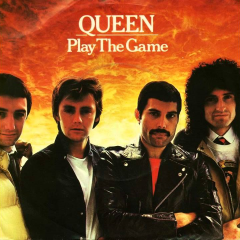
About the song
“Play the Game” was written by Freddie Mercury and appears as the first song on side one of Queen’s eighth studio album, The Game. Released as a single in June 1980, the power ballad went to #42 on the Billboard Hot 100 Singles chart. Personnel on the record were: Freddie Mercury (lead, backing vocals, piano, synthesizer), Brian May (guitars, backing vocals), Roger Taylor (drums, backing vocals), and John Deacon (bass).
The Game was recorded in 1979-80 at Musicland in Munich, Germany, with Queen and Reinhold Mack producing. It was the first Queen album to use a synthesizer on the recordings. Five singles were released from the LP, two of them: “Another One Bites the Dust” and “Crazy Little Thing Called Love,” reached #1 on the Billboard Hot 100 Singles chart. Released in June 1980, the album went to #1 on the Billboard 200 Albums chart. It has been certified 4x Platinum by the Recording Industry Association of America. It is the first and only Queen album to reach #1 in the US.
Queen is a British rock band formed in London in 1970 by Brian May, Roger Taylor, Freddie Mercury, and John Deacon. They have released 15 studio albums, 10 live albums, 16 compilation albums, two EPs, two soundtrack albums, and 72 singles. They have won four Brit Awards and four Ivor Novello Awards. Queen has been inducted into the Rock and Roll Hall of Fame, Songwriters Hall of Fame, UK Music Hall of Fame, and the Grammy Hall of Fame. They have won a Grammy Lifetime Achievement Award and have a star on the Hollywood Walk of Fame. After Freddie Mercury’s death in November 1991, Brian May and Roger Taylor have continued to tour and record as Queen with Paul Rodgers, then Adam Lambert as lead vocalist. Original bassist John Deacon retired from the music business in 1997. Queen has released new studio recordings with both Rodgers and Lambert featured on vocals. Queen, with Adam Lambert on vocals, will begin a scheduled European Rhapsody Tour beginning in May 2022.