In just a few years, the Montney Formation has become the most prolific natural gas production region in Western Canada. Starting from zero in 2005, the Montney has been the primary growth engine for gas supplies and continues to challenge producers to deal with its vast geographic extent and enormous reserve potential. Spread across swaths of Canada’s two westernmost provinces, the formation’s unique geology has meant that its gas production growth has moved at different speeds depending on location, geology, and pipeline access. In this first part of a three-part series, we take a closer look at this important formation.
It wasn’t so long ago that Western Canada’s natural gas production growth was thought to be largely tapped out. After an initial surge in output from the late 1990s into the mid-2000s, production began to slip, as output from conventional shallow gas wells that had driven the jump in supply flattened and then started falling. The hope for coalbed methane-based production that emerged in the mid-2000s was quickly dashed, leaving gas producers searching for new areas to explore with greater intensity and new technologies.
Join Backstage Pass, your gateway to exclusive industry insights, connections, and resources across energy markets. Gain direct access to RBN's extensive archive covering crude oil, NGLs, LNG, natural gas, refined products, renewables, and energy transition.
The declines in gas production spurred higher average prices, which had the same effect in Canada as they did in the U.S., allowing producers to shift toward higher-cost unconventional resources to explore for natural gas. Though it had been known to producers since the 1950s, one of the unconventional gas plays that began to attract greater attention in the 2000s was the Montney Formation, which straddles the provincial border of British Columbia (BC) and Alberta (left map in Figure 1). The Montney was a revelation, given the magnitude of its reserves and the highly favorable economics of its wells.
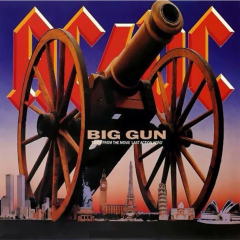
About the song
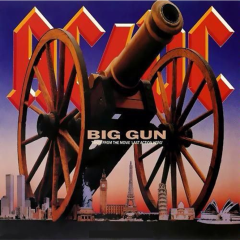
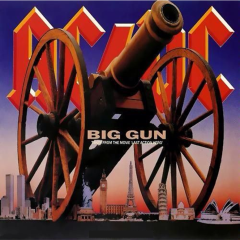
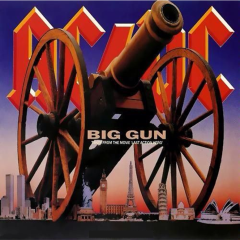
“Big Gun” was written by Malcolm Young, Angus Young, and Brian Johnson. Performed by AC/DC, it appears as the first track on the Last Action Hero: Music from the Original Motion Picture soundtrack album, released in June 1993. “Big Gun” was the first single from the LP, released in May 1993 to coincide with the movie’s release. The film starred Arnold Schwarzenegger, who is also in the video for the song, which features AC/DC performing the tune at a mock concert setting. (Interestingly, the band has never performed the song live in a concert setting since.) The Rick Rubin-produced single went to #1 on the Billboard Mainstream Rock chart and #65 on the Billboard Hot 100 Singles chart. Personnel on the record were: Brian Johnson (lead vocals), Angus Young (lead guitar), Malcolm Young (rhythm guitar, backing vocals), Cliff Williams (bass, backing vocals), and Chris Slade (drums). "Big Gun" would later appear in the AC/DC boxset, Backtracks.
AC/DC is an Australian rock and roll band formed in Sydney in 1973 by brothers Angus and Malcolm Young. The band has released 17 studio albums, three live albums, two soundtrack albums, one EP, and 47 singles and has sold over 200 million records worldwide. They have won one Grammy Award. Twenty-one members have passed through the ranks of AC/DC since its formation. Bon Scott died in 1980 and Malcolm Young in 2017. The band continues to record and tour.