Brent is by far the most important crude oil benchmark in the world, with well over 70% of all global crudes tied either directly or indirectly to the North Sea crude’s price. But the original Brent crude oil production is almost played out, with all of the offshore Brent producing platforms soon to be decommissioned. This might seem to be a big problem, but in the world of crude oil trading, it is a total non-issue, because Brent is no longer simply a grade of crude oil. It is a multi-layered matrix of trading instruments, pricing benchmarks, and standard contracts linked together by price differentials traded across a number of mechanisms and platforms that form the foundation of a robust, vibrant, and extremely important marketplace. Today, we delve further into the mechanics of the Brent complex, the key components that make it work, and the transactional glue that binds them together.

The Crude Oil Billboard keeps readers at the forefront of the U.S. crude oil market by offering access to data and information moments after its release. Say goodbye to PDF reports that come out after the market has already moved on.
This is the second part of our series on the Brent crude market. What follows will make more sense if you read Part 1 first. In that episode, we explored the history of Brent, from discovery of the prolific North Sea oil field in 1971, through the development of protocols for the sale and trading of physical Brent cargoes loaded at the Sullom Voe terminal near Shetland, Scotland; the development of Brent as a benchmark price for both North Sea and other global crudes; the role of PRAs (price reporting agencies) — primarily Platts — in the assessment of the benchmark; and the decline of physical Brent crude production in the 1980s and 1990s. The four Brent platforms shown below in Figure 1 will soon be decommissioned, and physical Brent crude will be no more.
About the song
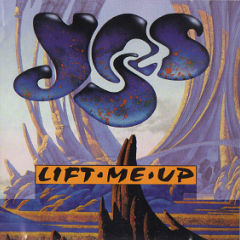
"Lift Me Up" was written by Trevor Rabin and Chris Squire, and appears as the fourth song on Yes's 13th album, Union. Released as the first single from the album in April 1991, the song went to #1 on the Billboard Rock Album Tracks, and #86 on the Hot 100 Singles chart. Personnel on the record were: Jon Anderson (lead, backing vocals), Bill Bruford (drums), Alan White (drums), Steve Howe (guitars), Trevor Rabin (guitars, lead, backing vocals), Chris Squire (bass, backing vocals), Tony Kaye (keyboards), and Rick Wakeman (keyboards).
Union was recorded between 1989 and 1991 at Studio Guillaume Tell in Paris; SARM Studios in London; Record Plant Studios in Los Angeles, CA; Vision Sound Studios in New York City; and Langley Studios in Devon, England. The album was produced by Eddie Offord, Jonathan Elias, Steve Howe, Trevor Rabin, and Mark Mancina. The album was titled Union, because it combined eight musicians from different eras of Yes's history to make the album. It went to #15 on the Billboard Top 200 Albums chart and has been certified Gold by the Recording Industry Association of America.
Yes is an English progressive rock band formed in London in 1968 by Jon Anderson, Chris Squire, Peter Banks, Tony Kaye, and Bill Bruford. Nineteen people have passed through Yes's ranks since its inception. They have released 21 studio albums, 14 live albums, 35 compilation albums, one EP, and 28 singles. They have sold over 13.5 million records in the U.S. The band has won one Grammy Award and has been inducted into the Rock and Roll Hall of Fame. Original members Peter Banks and Chris Squires died in 2013 and 2015, respectively. Yes, now fronted by lead vocalist Jon Davison, with Steve Howe, Alan White, Geoff Downes, and Billy Sherwood, still records and tours, with current touring plans postponed due to COVID.