


Normal butane is an important gasoline blendstock, with a great combination of high octane and relatively low cost. It also has a high Reid vapor pressure, or RVP, which is a good news/bad news kind of thing because while regulators allow higher-RVP gasoline — that is, gasoline with higher levels of butane — to be sold during the colder months of the year, they forbid its sale during the warmer months, thereby forcing butane levels in gasoline to be kept to a minimum. As we discuss in today’s RBN blog, air-quality regulations and seasonal shifts in butane blending may add complexity to gasoline production and marketing, but they also create opportunities to increase gasoline supply and earn substantially larger profits through much of the year.

You might say that maximizing the profitability of motor gasoline production and sales is akin to running a five-star restaurant — a surprisingly complicated endeavor that requires a mix of knowledge, planning and skill, not to mention a heightened awareness of the seasons and how they impact your ingredients. Gasoline is, after all, one of the most complex hydrocarbon products out there, with as many as a dozen specifications — each with its own characteristics, such as octane, RVP, distillation points, aromatics, olefins, etc. — that when combined need to meet the exacting standards of regulators and, at the same time, turn as fat a financial return as possible. And, to keep things interesting, the allowable RVP level ratchets down each spring and up in late summer (often to different levels in different markets, and even at different dates), providing savvy refiners, midstream companies and marketers with select, seasonal opportunities to significantly goose their bottom line (often by many millions of dollars a year) by blending in as much low-cost, high-RVP butane as the standards for specific areas will allow.
There’s a lot to unpack here before we get to our main topic: namely, how gasoline market players optimize their butane blending to maximize profits. We’ll begin with the well-known fact that, for many decades now, the Environmental Protection Agency (EPA) has regulated gasoline to improve air quality and protect public health. The primary goals of the agency’s regulations, which are based on the Clean Air Act, are to minimize toxic emissions and to reduce smog, or ground-level ozone. Vapors from gasoline contribute to smog formation, especially during warmer weather, so the EPA regulates gasoline’s RVP — a measure of how easily gasoline evaporates — with stricter (lower) RVP limits from late spring to late summer and somewhat relaxed (higher) limits the rest of the year. The lower RVP limits during warmer months also help prevent vapor lock, which can make it difficult to start your car, SUV or pickup, and the higher limits during the colder months ensure that gasoline can combust easily even at low temperatures.
Because certain parts of the U.S. face more serious challenges regarding smog than others, EPA sets national baseline standards for RVP in gasoline — 9 pounds per square inch (psi) during the warmer months — but also has designated areas where even stricter limits are enforced. As you might expect, these include densely populated, traffic-choked metropolitan areas like Los Angeles, New York City and Chicago, but also many less populated areas where the weather is warmer for longer and/or where geographical features such as mountain ranges can trap pollutants, thereby making lower RVP limits necessary.
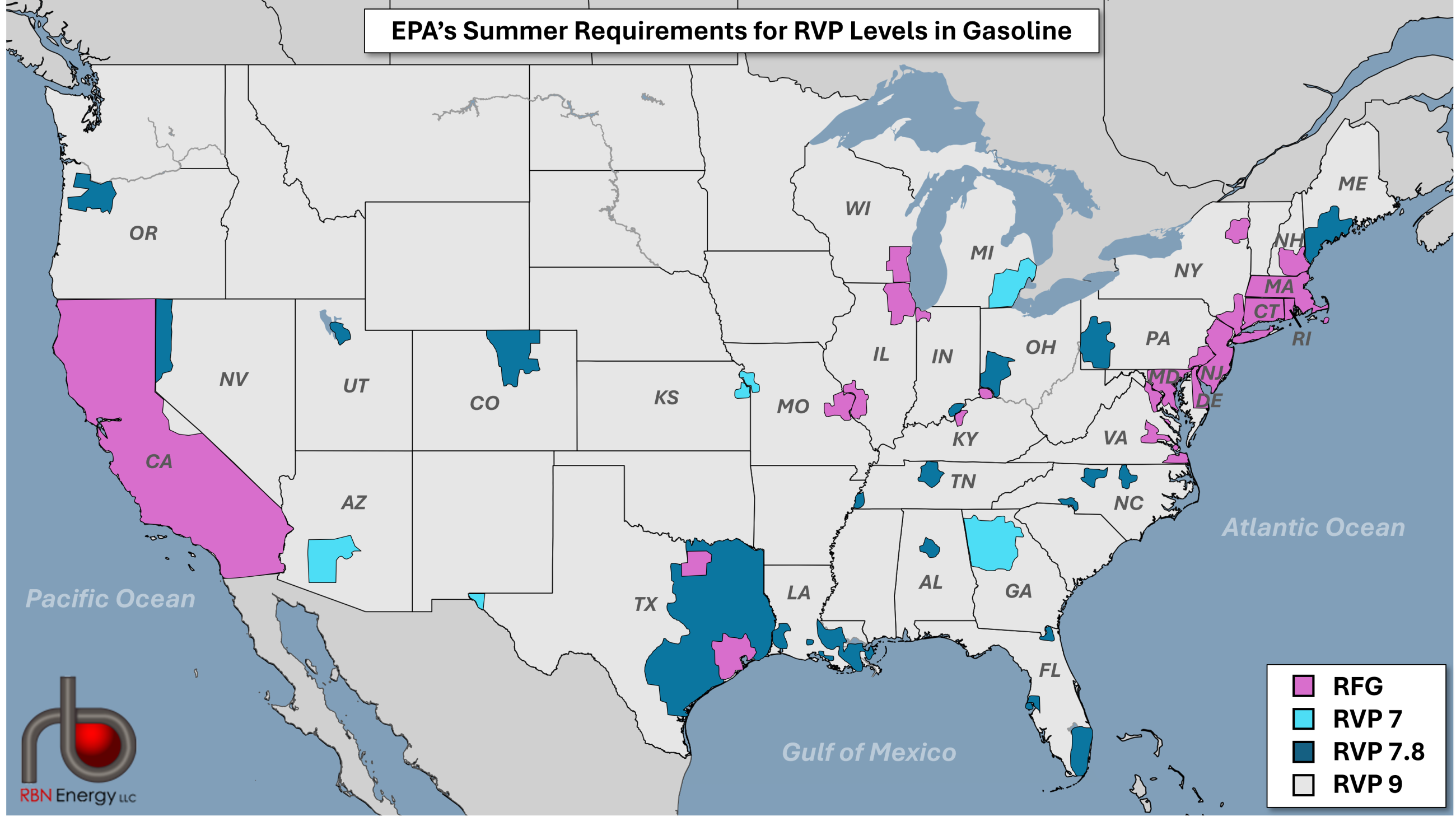
Figure 1. EPA's Summer Requirements for RVP Levels in Gasoline. Source: EIA
About the song
“Margaritaville” was written by Jimmy Buffett and appears as the first song on side two of Jimmy Buffett’s seventh studio album, Changes in Latitudes, Changes in Attitudes. With the catchy sing-along chorus of: “Wasting away again in Margaritaville” and lyrics describing the laid-back lifestyle of living in the tropics, Buffett composed the theme song that helped define his music career. Released as a single in February 1977, it went to #1 on the Billboard Easy Listening chart and #8 on the Billboard Hot 100 Singles chart. Personnel on the record were: Jimmy Buffett (lead, backing vocals, acoustic guitar), Greg “Fingers” Taylor (harmonica), Michael Utley (keyboards), Harry Dailey (bass, backing vocals), Ken Buttrey (drums), Michael Jeffry (lead guitar, backing vocals), Farrell Morris (percussion), Billy Puett (recorder, flute), and David Bryan (backing vocals).
Changes in Latitudes, Changes in Attitudes was recorded in November 1976 at Criteria Recording Studios in Miami and Quadraphonic Sound in Nashville with Norbert Putnam producing. Released in January 1977, it went to #2 on the Billboard Top Country Albums chart and #12 on the Billboard 200 Albums chart. It has been certified Platinum by the Recording Industry Association of America and remains Buffett’s top-selling album. Two singles were released from the LP.
Jimmy Buffett was an American singer, songwriter, author, actor, and restauranteur. He released 32 studio albums, 14 live albums, 11 compilation albums, one soundtrack album and 67 singles and sold more than 20 million records worldwide. His devoted fans are known as “Parrotheads.” Buffett died at his home in Sag Harbor, NY, in September 2023 at the age of 76.







Comments
Nice article and analysis. Some other interesting nuances that might be relevant:
Mixed Butane or Field Grade butane's IC4 contend adds more RVP, but also provides further Octane kick. Generally the blenders like to keep IC4 content <40%.The backwardation curve in RBOB on the CME has increased the cost of gasoline storage considerably. This has reduced the ability to plan blends well forward to some extent. This leaves us with "just in time" butane supplies as very popular.The butane seasonality (getting more expensive in the late summer shoulder, getting cheaper in the early spring shoulder) extends to the delivered differentials on top of the MtB actual quotes.We're well short of butane storage in the Northeast. And you cannot put your butane into an empty gasoline tank ... needs to be quite a bit of blendstock in a tank to begin accepting butane.Et aliaJohn