Cold weather and spiking demand from Midwest and Great Plains farmers trying to dry their late-maturing, soggy crops have sent the PADD 2 propane market into a tizzy. Supply is not a major issue — propane inventory levels in the region are only a little below average, and stocks are plentiful along the Gulf Coast in PADD 3 — but distributing propane by rail and truck for crop-drying use has been a bigger-than-normal problem. As a result, farmers are scrambling to get more of the fuel, and propane prices in the U.S. heartland have been skyrocketing. Worse yet, Canada may not be able to come to the rescue as it has in the past, because its propane exports to Asia are up and its inventories are down. Today, we review recent developments on the fuel front in the nation’s breadbasket.
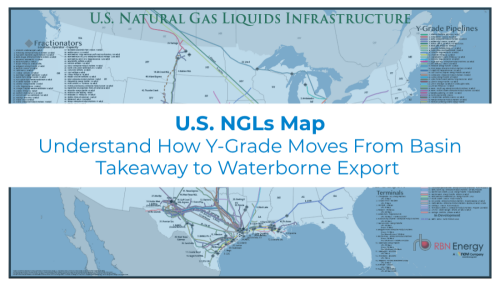
Visualize the infrastructure behind U.S. NGL movement.
The U.S. NGLs Map provides a comprehensive view of the transport, processing, and export networks moving NGLs across the U.S.
As anyone who traveled across the Midwest or Great Plains this past holiday weekend knows all too well, winter has arrived, spurring demand for propane from the many residential and commercial customers in PADD 2 — the big triangle of states between Ohio, Oklahoma and North Dakota — who depend on the fuel for space heating, not to mention for cooking Thanksgiving dinners and heating up leftovers. As we said in our Can’t Get Next to You blog, the other big demand center for propane in the Midwest and Great Plains is drying harvested corn and other crops before they are stored or shipped. Propane demand for crop drying varies from year to year, depending on, among other things, the size of the crop, the crop-maturation rate (is it an early, late or normal harvest), and the weather during the harvest. 2019 has been a pretty good year from a crop production standpoint, but a wet spring delayed planting, crop maturation was slower than normal, and farmers are still in the midst of an unusually late harvest (see navy blue lines for 2019 in Figure 1). That complicates things because it means crop-drying demand for propane has been spiking just as heating demand is ramping up.
About the song
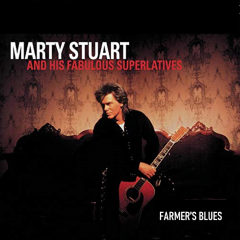
"Farmer's Blues" was written by Marty Stuart and his wife Connie Smith. It appears as the seventh cut on Stuart's 11th studio album, Country Music. The song is a duet with country music icon Merle Haggard, and it’s about the plight of the American farmer.
Country Music was produced by Stuart with Justin Niebank. It is the first album to feature Stuart's touring band, The Fabulous Superlatives. Released in July 2003, the album went to #40 on the Billboard Top Country Albums chart. Personnel on the record were: Marty Stuart (lead vocals, guitar, fiddle, mandolin), Kenny Vaughan (guitar), Harry Stinson (drums, backing vocals) and Brian Glenn (bass, backing vocals).
Marty Stuart is an American country music singer-songwriter and a multi-instrumentalist. There’s an interesting side note about Stuart's electric guitar: it’s a 1954 sunburst Fender Telecaster that once belonged to former Byrds and country rock guitarist Clarence White. The guitar has the original prototype B-Bender that White and Gene Parsons designed and patented in 1967. The B-Bender is a device the allows the "B" string on the guitar to be raised a whole step to simulate a steel guitar. Stuart has owned the guitar since 1980. He has released 18 studio albums, two live albums, seven compilation albums, one soundtrack album and 33 singles, and has won an Academy of Country Music Award and five Grammy Awards. Stuart continues to record, and he and his band will be on tour on weekends through April 2020.