The recently passed Inflation Reduction Act (IRA) offers a lot of incentives, mostly in the way of tax credits, to advance the Biden administration’s clean-energy initiatives and reduce greenhouse gas (GHG) emissions. There are inducements for everything from carbon capture and electric vehicles to renewable energy and hydrogen production, but very few penalties. One exception is included in the new law’s Methane Emissions Reduction Program (MERP), which features the federal government’s first-ever fee on the emissions of any GHG. In today’s RBN blog, we look at recent attempts to mitigate methane emissions, how the new methane charge will work, and how it could one day be replaced by new federal rules.
GHG emissions have become a frequent topic at RBN over the past couple of years. Quite often the focus has been on carbon dioxide (CO2), the most prevalent GHG, from a focus on cleaner transportation fuels (see our Come Clean series) to the increasing investment into large-scale carbon-capture projects (see our Way Down in the Hole series) in an effort to efficiently lower GHG emissions. Methane is an important part of those discussions because it’s a particularly potent GHG, with a Global Warming Potential (GWP) that is 25-36 times that of CO2 when normalized to a 100-year timeline. (But methane emissions are neutralized in the atmosphere at a much quicker pace, meaning that their initial GWP is much higher, more like 86 times that of CO2 if normalized to a 20-year timeline.) A tricky part of the problem is that the actual level (and sources) of methane emissions can be hard to accurately identify and quantify, in large part because estimates can vary greatly depending on how they’re conducted, as we discussed in Part 1 of this series.

The NATGAS Appalachia weekly report provides the data and insights to monitor the northeast natural gas market’s twists and turns and identify the risks and opportunities along the way, including tracking supply-demand trends, outbound capacity and their impact on takeaway pipeline utilization, and regional prices.
Recent attempts to regulate emissions at the federal level began under President Obama in 2016. That year the Environmental Protection Agency (EPA) adopted New Source Performance Standards (NSPS) that were designed to mitigate methane emissions from new oil and natural gas facilities (those constructed after September 2015), including production, processing, transportation and storage. The EPA estimated the new rules would cut methane emissions by 11 million metric tons of CO2 equivalent (MMtCO2e; 581 MMcf/d) in 2025. The EPA then began work on regulations on existing facilities, but that ended when President Trump took office in 2017. Instead, the Trump administration began a review of the NSPS, which was rescinded in 2020. The U.S. approach to methane regulations reversed again when President Biden was inaugurated in January 2021. Congress passed a resolution that essentially reinstated the NSPS rules and later that year the EPA announced plans to bolster the NSPS and establish regulations for existing facilities as well. That proposal has not been finalized, however, so this is where the IRA comes into play.
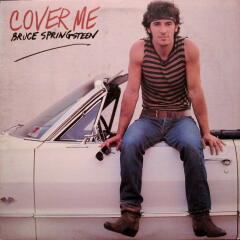
About the song
“Cover Me” was written by Bruce Springsteen and appears as the second song on side one of Springsteen’s seventh studio album, Born in the USA. Released as a single in July 1984, the song went to #2 on the Billboard Mainstream Rock and #7 on the Billboard Hot 100 Singles charts. It has been certified Gold by the Recording Industry Association of America. The song was recorded at the Hit Factory in New York City in January 1982. Springsteen had originally written “Cover Me” for Donna Summer, but his manager, Jon Landau, decided to keep the song for Springsteen’s Born in the USA album because of its hit potential. Personnel on the album were: Bruce Springsteen (lead vocals, lead guitar, acoustic guitar), Roy Bittan (piano, synthesizer, backing vocals), Clarence Clemons (sax, percussion, backing vocals), Danny Federici (organ), Garry Tallent (bass, backing vocals), Steven Van Zandt (rhythm guitar, acoustic guitar, backing vocals), Max Weinberg (drums, backing vocals), and Richie Rosenberg (backing vocals).
Born in the USA was recorded between January 1982 and March 1984 at The Hit Factory and Record Plant in New York City. Produced by Jon Landau, Chuck Plotkin, Bruce Springsteen and Steven Van Zandt, the album was released in June 1984. It remains Springsteen's biggest-selling album with sales of over 30 million copies worldwide. Recorded with the E Street Band, the album went to #1 on the Billboard 200 Albums chart and has been certified 15x Platinum by the RIAA. Seven singles were released from the LP.
Bruce Springsteen is an American rock singer, songwriter and musician. Nicknamed “The Boss,” he is known for his song lyrics and high-energy concerts, some that have lasted over four hours. He has released 21 studio albums, 23 live albums, eight compilation albums, one soundtrack album, seven EPs, and 77 singles, most of which feature his E Street Band. He has sold more than 140 million records worldwide. He has won one Academy Award, two Golden Globes, 20 Grammy Awards, and is a member of the Rock and Roll Hall of Fame and Songwriters Hall of Fame. He has received Kennedy Center Honors, the Presidential Medal of Freedom, and the National Medal of Arts. Springsteen continues to record and begins an extensive international tour with his E Street Band on April 28 in Barcelona, Spain.