The November 4 decision by the Organization of the Petroleum Exporting Countries and its collaborators — collectively known as OPEC+ –– to stay the course on crude oil production surprised few and disappointed many. Officials from leading oil-consuming nations, including the U.S., Japan and India, want the group to relax its production restraint by more than the scheduled 400 Mb/d in December. They see extra crude supply as an antidote for high prices that have been hampering recovery from the global economic slump caused by the COVID-19 pandemic. But OPEC+ leaders made clear that they’re in no mood to accelerate their phase-out of production cuts. They know the market pressures now elevating crude prices won’t last forever and can change unexpectedly. They also face internal strains that might weaken the quota discipline that has kept the group’s supply management intact, despite the occasional upset, for nearly five years. One of those strains is the number of OPEC+ participants already producing as much crude as they can while falling short of existing ceilings — a number that grows as the ceilings rise. Today’s RBN blog looks at oil-market expectations underlying OPEC+ members’ cautious approach and at the growing divide among those unable to keep up with output targets and the relatively few but volumetrically overpowering counterparts with capacity to spare.
In the tug-of-war between consumers and supply managers over crude oil production, OPEC+ leaders are taking the long view — both backward and forward. They remember the painful price crash that followed their mid-2014 decision to raise production when crude prices were even higher than they are now, which we blogged about in Crying Time At OPEC? In fact, it was in response to that stubbornly oversupplied crude market that OPEC and cooperating oil exporters began limiting their production at the start of 2017 to hasten the market’s rebalancing (Is This The Real Life? Is This Just Fantasy?). It is easy to lose sight of how long OPEC+ supply management has been in place, given how recent memory tends to be dominated by the pandemic-related swoon of the oil market and by the exporter group’s sometimes rocky responses to that surprise, which we summarized in Third Dimension. But it’s easy to see that the OPEC+ collaboration, at times held together with concessions and compromise, succeeded in keeping supply in check while demand recovered — to the extent that speculation has risen about when crude prices might once again exceed $100/bbl (How Long Can This Keep Going On?).

Canadian crude output is rising, requiring new export routes. As traditional pathways face constraints, the U.S. Rockies—especially the Guernsey, WY hub—are emerging as key corridors for moving Canadian heavy crude to downstream markets, including the Gulf Coast.
With spot Brent crude trading above $80/bbl through all of October and West Texas Intermediate crude within that range during the last three weeks of the month, consumers’ appeals for new supply are understandable, even predictable. Before their early November videoconference, however, OPEC+ decision-makers had good reason to worry that the market might shed its price-hoisting pressures fairly soon on its own. October projections from the International Energy Agency (IEA), U.S. Energy Information Administration (EIA), and OPEC — all published before the OPEC+ meeting — indicated an oil market in 2022 much different from supply-challenged 2021.
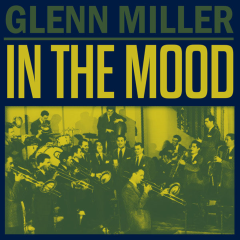
About the song
"In The Mood" was made popular by Glenn Miller and His Orchestra. The song’s melody is based on the composition "Tar Paper Stomp" by Wingy Manone. Its authorship is copyrighted to Joe Garland and Andy Razof. The first recording of "In the Mood" was released in 1938 by Edgar Hayes and His Orchestra. It was released as a single by Glenn Miller and His Orchestra in September 1939 on the RCA-owned Bluebird label. Miller's version of the song became the best-selling swing instrumental of all time. It was inducted into the Grammy Hall of Fame in 1983, and the Library of Congress National Recording Registry in 2004. Personnel on the record were: Glenn Miller, Al Mastren, Paul Tanner (trombone), Legh Knowles, Dale McMickle (trumpet), Wilbur Schwartz (clarinet), Hal McIntyre (alto sax), Tex Beneke, Al Klink, Harold Tennyson (tenor sax), Chummy MacGregor (piano), Richard Fisher (guitar), Rowland Bundock (bass), and Moe Purtill (drums).
Glenn Miller was an American trombonist, arranger, composer, and band leader during the Swing Era. His orchestra was the most popular band with the most best-selling records from 1939 to 1942. In four years, Miller had 16 #1 records, and 60 Top 10 hits. He released 266 singles, 24 V-Discs, and 37 EPs. In 1942 Miller volunteered to join the U.S. Army Air Forces to entertain the troops. In December 1944, en route to Paris, the military aircraft in which Miller was flying disappeared over the English Channel. Miller was 40 years old. He was posthumously awarded the Bronze Star Medal in 1945.