Statewide shelter-in-place orders, worldwide business shutdowns, market meltdowns, medical calamities. Much of what is going on right now is unprecedented in the modern era, and there are no guideposts to help predict what happens next to the world as we knew it. But in the boom-bust energy sector, it is déjà vu all over again. We have seen steep drops in prices, drilling activity and production enough times to have some idea about how this is likely to play out. Granted, this time around it is particularly bad, but that doesn’t change the sequence of events that we are likely to experience over the coming months and years. Today, we’ll look back at what happens to Shale-Era basins after a price collapse, focusing on the inherent lag between a major reduction in activity level and the inevitable production response.
Anybody who thought the $4.85/bbl increase in crude oil prices on Thursday was anything other than a head fake was kidding themselves. The price of CME/NYMEX Cushing WTI crude oil for April delivery (the last day of trading for the contract) fell by the end of the day to $19.46 before the settlement was posted at $22.43/bbl, down $2.79/bbl. The WTI May contract closed at $22.63, down $3.28/bbl. Forget fundamentals. Crude oil prices are now totally dependent on the next news flash, press release, rumor or stock-price shock. About the only thing we can be sure of is that it is likely to be a long while before we see the sunny side of $50/bbl crude oil again.
As we detailed in Paint It Black on Friday, producers are responding to that harsh reality by cutting their capex budgets even deeper than their initial 2020 plans. Even before last week’s price carnage, the 42 E&Ps that we cover in the RBN blogosphere had announced that their total capital spending would be cut by 26% from previous guidance and a reduction of 36% versus 2019. No doubt we’ll see many more cuts in the coming weeks. But there are a couple of important things to note. First, with only a few minor exceptions, E&Ps are still drilling, collectively planning to spend tens of billions of dollars to bring more oil and gas to the market. Second, these companies are in survival mode. Consequently, those billions are being spent drilling the sweetest of the sweet spots using the most productive drilling and completion equipment out there, so volumes are not falling off nearly as fast as are capex dollars. For example, on March 16, EOG Resources announced a 31% capex reduction but said that it expects 2020 production to be flat compared to last year. Granted that’s down from their previous guidance of 10%-14% growth, but it is not a decline. When all the guidance comes in with first-quarter results, we expect that our universe of companies will come in collectively somewhere around a 6-8% decline in production targets. Down, but not out.

Canadian crude output is rising, requiring new export routes. As traditional pathways face constraints, the U.S. Rockies—especially the Guernsey, WY hub—are emerging as key corridors for moving Canadian heavy crude to downstream markets, including the Gulf Coast.
About the song
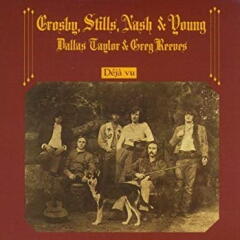
"Déjà Vu" was written by David Crosby and appears as the first track on side two of the second studio album of the same name by Crosby, Stills, Nash & Young. Personnel on the song were: David Crosby (lead vocals, guitar), Stephen Stills (backing vocals, guitar, keyboards), Graham Nash (backing vocals), Neil Young (backing vocals), Dallas Taylor (drums), Greg Reeves (bass) and John Sebastian (harmonica).
Dèjà Vu was recorded at Wally Heider's Studio C in San Francisco, and Wally Heider's Studio III in Los Angeles between July 1969 and January 1970, with Crosby, Stills, Nash and Young producing. The album was released in March 1970, and went to #1 on the Billboard Top 200 Albums chart. It would remain on the charts for 88 weeks. It has been certified 7x Platinum by the Recording Industry Association of America. Four singles were released from the LP, three of them charting on the Billboard Hot 100 Singles chart. The album cover for Déjà Vu was shot in front of a tree by the pool of David Crosby's rental house in Novato, CA, by Tom Gundelfinger. The tree, pool and house still exist there in Novato.
Crosby, Stills, Nash & Young are a folk rock band formed in Los Angeles in 1968. David Crosby, Stephen Stills and Graham Nash decided to form a band after singing together for the first time in Joni Mitchell's kitchen in her Laurel Canyon home. Neil Young joined the band in 1969. The band released eight studio albums, five live albums, six compilation albums and 19 singles. They have sold over 20 million records worldwide. Crosby, Stills & Nash were inducted into the Rock and Roll Hall of Fame in 1997, and all three members have also been inducted for their work in their previous bands (The Byrds, Buffalo Springfield and The Hollies). Neil Young has been inducted into the hall as a solo artist, and as a member of Buffalo Springfield. Crosby, Stills, Nash & Young have broken up and reformed with various members over the years. The last tour they did together was as Crosby, Stills & Nash in 2016. According to Graham Nash in March 2019, no one in the group is currently speaking to David Crosby. Members of the group still record as solo artists.