A major component of the formula used to set the price of Maya—Mexico’s flagship heavy crude, and a key staple in the diet of many U.S. Gulf Coast refiners—was changed earlier this month, raising new questions about this important price benchmark for nearly all heavy sour crude oil traded along the U.S. Gulf, and points beyond. The change came as Maya production volumes continue to fall, and as Maya is facing increasing competition from Western Canadian Select (diluted bitumen) from Western Canada. Today we conclude a two-part series on Maya crude oil, the new price formula and its potential effects.
As we said, in Part 1, Mexico currently produces about 2.2 million barrels a day (MMb/d) of crude oil, about half of which (~1.1 MMb/d) is exported—three-fifths of which goes to the U.S. P.M.I. Comercio Internacional S.A. de C.V. (PMI) is the crude oil marketing entity of state-controlled Petróleos Mexicanos (PEMEX) and manages the export of four distinct quality grades of crude oil, ranging from Altamira (an asphalt grade) and Maya on the lower end of the quality spectrum, to Isthmus in the middle, and Olmeca at the higher end. Most of Mexico’s crude oil exports to the U.S. Gulf Coast are Maya blends, as Mexico tends to retain most of its lighter grades (Isthmus and Olmeca) for domestic refinery consumption. However, the share of Maya exports headed for the U.S. has been falling fast—from 78% in 2013 to only 44% through the first nine months of 2016; the share of Maya bound for Europe has more than doubled over the same period and the share shipped to the Far East has more than tripled.
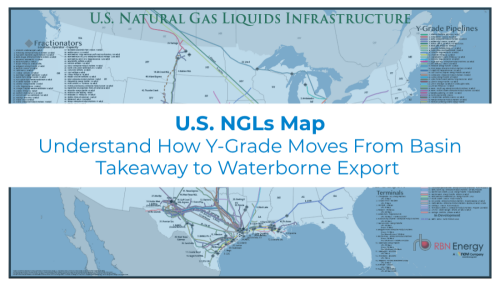
Visualize the infrastructure behind U.S. NGL movement.
The U.S. NGLs Map provides a comprehensive view of the transport, processing, and export networks moving NGLs across the U.S.
In today’s blog, we take a look at historical pricing for Maya and how that price has been determined through the use of the PMI official selling price formula. We will also examine how the changes to the fuel oil component of the formula, major changes in fuel oil (or bunker fuel) specifications, and the availability of heavy Canadian crude oils could potentially impact the Maya price.
Historical Maya Pricing
About the song
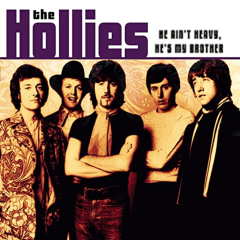
"He Ain't Heavy, He's My Brother" was written by Bobby Scott and Bob Russell. The song was originally released by Kelly Gordon in early 1969, but it was The Hollies’ release of the song as a single in September 1969 that made it a worldwide hit. “He Ain’t Heavy” was the second song on side two of the U.S. release of The Hollies’ ninth studio album of the same name. The song was recorded at Abbey Road Studios in London between June and August 1969, with Ron Richards producing. It went to #7 on the Billboard Hot 100 Singles chart. Personnel on the record were: Allan Clarke (lead vocal, harmonica), Tony Hicks (lead guitar, backing vocals), Terry Sylvester (rhythm guitar, backing vocals), Bernie Calvert (bass, keyboards), Bobby Elliott (drums), and Elton John (piano).
The album He Ain't Heavy, He's My Brother was released in the U.S. in December 1969. It was released in the UK one month prior, under the title Hollies Sing Hollies. The re-named U.S. version included the hit single, which was not included on Hollies Sing Hollies. It would be the first Hollies album released since the departure of Graham Nash in late 1968. The album went to #32 on the Billboard Top 200 Albums chart.
The Hollies are a British rock band formed in Manchester in 1962 by Allan Clarke and Graham Nash. They have released 21 studio albums, 22 compilation albums, seven EPs, and 67 singles. They have had 21 singles chart in the Billboard Hot 100 and 13 albums chart in the Billboard Top 200. They are members of The Rock and Roll Hall of Fame and Vocal Group Hall of Fame. The band still tours with founding members Tony Hicks and Bobby Elliot, joined by touring musicians.