Back in the early days of the Space Race, popular culture envisaged aerospace technology that might one day have us all zooming around town like George Jetson in his flying car. That hasn’t turned out to be the case, but developments that have evolved from rocket technology could one day play a different role here in the 21st century, where producing cleaner power and managing the energy transition are two key global goals. In today’s RBN blog, we look at an innovative “bioenergy with carbon capture and sequestration” (BECCS) project being undertaken in California by Clean Energy Systems (CES) and its partners, how the company’s technology is designed to work, and what “carbon-negative energy” might mean.
The history behind CES starts with rocket pioneer Rudi Beichel, who worked under the famed Wernher von Braun and was one of 1,600 German scientists brought to the U.S. at the close of World War II as part of Operation Paperclip. Beichel played a critical role in the development of the U.S. space program during the height of the Cold War, helping to design the rocket that took Alan Shepard into space in 1961 and the engines that powered the Space Shuttle. The initial CES team of seven — each with a different specialty — was formed by Beichel in 1993 with an eye toward using the group’s aerospace expertise to develop new power plant technologies. It received its first patent in 1998, a year before Beichel died, and has continued to advance its technology through pilot projects and demonstrations, including U.S. Department of Energy (DOE) funding to develop its industrial-scale oxy-fuel turbine, which was successfully tested in 2013.
The oxy-fuel combustion system, adapted from the same principles of rocket propulsion developed in the 1960s, is at the core of CES’s technology. The central feature is the ability to burn fossil fuels with oxygen at near-stoichiometric conditions (meaning that all combustible elements are burned near maximum efficiency with no oxygen remaining in the combustion air), a process that can produce steam at very high temperatures. The process itself is very flexible, in that it can burn a wide variety of fuels, from natural gas and syngas to biomass waste and landfill gas. Carbon dioxide (CO2) and steam are the primary products of the combustion process, with the CO2 able to be captured for permanent storage using carbon capture and sequestration (CCS), a process we have discussed in our Way Down in the Hole series.
About the song
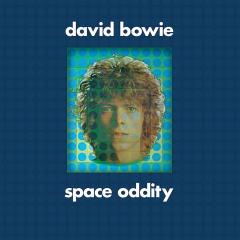
“Space Oddity” was written by David Bowie and first released as a single in July 1969. It would later appear as the first track on side one of Bowie's second studio album, David Bowie. In 1972, after the success of Bowie's The Rise and Fall of Ziggy Stardust and the Spiders from Mars album, RCA re-titled the album Space Oddity and re-released the song as a single. This time it reached #5 on the UK Singles chart and #15 on the Billboard Hot 100 Singles chart. Over the years the song has been covered by a variety of artists. Perhaps the most interesting rendition is that of Canadian astronaut Chris Hadfield, who performed the song aboard the International Space Station (ISS) in May 2013. Having come full circle, it was the first song to be recorded in space. Personnel on the record were: David Bowie (vocals, 12-string acoustic guitar, Stylophone, handclaps), Mick Wayne (lead guitar), Herbie Flowers (bass), Jerry Cox (drums), Tony Visconti (flues, woodwinds), Rick Wakeman (Mellotron), and Paul Buckmaster (string arrangement).
David Bowie/Space Oddity was recorded between June and October 1969 at Trident Studios in London, with Tony Visconti and Gus Dudgeon producing. Originally released in November 1969, the album would reach #17 on the UK Albums chart and #16 on the Billboard 200 Albums chart after its re-release in 1972. “Space Oddity” is the only single released from the LP.
David Bowie (David Robert Jones) was an English singer, songwriter, musician, and actor. He released 26 studio albums, 21 live albums, 46 compilation albums, 10 EPs, three soundtrack albums, and 128 singles and has sold over 100 million records worldwide. Bowie appeared in 11 television shows and 23 motion pictures, and has won five Brit Awards, one Daytime Emmy Award, six Grammy Awards, four Ivor Novello Awards, and four MTV Video Music Awards. A member of the Rock and Roll Hall of Fame, Bowie left this planet in January 2016.