The latest weather forecasts for the second half of December have taken the edge off the U.S. natural gas market and reduced the chance of a true doomsday storage scenario. But U.S. gas storage inventories nonetheless remain at historically low levels, and long-term weather forecasts are notoriously fickle. So this winter could still see a resurgence in volatility before the market finds a balance. And while Henry Hub prices went on a wild ride earlier this month before settling back in below $4/MMBtu, for most of December thus far, Eastern gas prices have traded at levels that make LNG exports from there uneconomic. In today’s blog, we continue our review of the winter U.S. gas market with a closer look at how Cove Point Liquefaction (CPL) might respond to high prices.
In Part 1, we analyzed how low gas storage inventories heading into winter set the market up for more gas price upside — and more gas price volatility — than has been the case in recent years, particularly if winter weather turns unusually cold. And indeed, as cold weather materialized early in the 2018-19 heating season, the NYMEX Henry Hub gas price took off, then bounced up and down within the $4-5/MMBtu range through November before mild December weather forecasts brought the January contract down to about $3.75/MMBtu. In Part 2, we pointed out that the traditional governor for gas prices — switching between gas and coal in U.S. power generation — may not materialize in the same way it has in recent years, due to low coal inventories and some structural changes in the coal market. And in Part 3, we outlined the economics (and logistics) of turning off Sabine Pass LNG exports, coming to the conclusion that Henry prices would need to reach at least $5.50/MMBtu before we saw a material reduction in feedgas volumes.

The Natural Gas Master Class is a one-day online event focusing on understanding flow analysis, interpreting pipeline data and forecasting future flows. This course is designed to equip you with the knowledge and skills to effectively analyze the complexities of natural gas markets, flow analysis, and pipeline modeling. Join us online
October 21 | Online
Cove Point, though, is different. As we covered in Down by the Seaside, Dominion repurposed its Cove Point regasification terminal in Calvert County, MD (green diamond in Figure 1), into a one-train liquefaction plant. When the plant completed commissioning in April of this year, we laid out its feedgas dynamics in What’s Going On; the facility gets its feedgas supply from Dominion’s Cove Point Pipeline (purple line), which in turn sources supply from Transco (green line) and Columbia Gas (tan line). The two primary offtakers at Cove Point, Japan’s Sumitomo and India’s GAIL, have each signed long-term supply deals with a major Northeast producer — Sumitomo with Cabot Oil and Gas, while GAIL has signed with Antero Resources. And this fall, two major Northeast takeaway projects have been completed: Atlantic Sunrise, where Cabot has capacity on Transco to its interconnect with Cove Point Pipeline at Pleasant Valley, VA, and WB XPress, where Antero has capacity on Columbia Gas to its interconnect with Cove Point Pipeline in Loudoun County, VA (black dots).
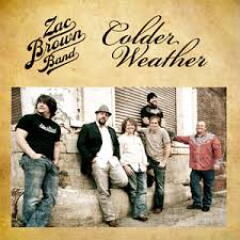
About the song
"Colder Weather" was a #1 hit for Zac Brown Band, an American country music group. The song, written by Zac Brown, Coy Bowles, Wyatt Durrette and Levi Lowrey, was the second single released off the band's second studio album, You Get What You Give. "Colder Weather" was released as a single in December 2010, and rose to the top of the Billboard Hot Country Songs chart. It also reached #29 on the Billboard Hot 100. Personnel on the record were: Zac Brown (lead vocals and acoustic guitar), Coy Bowles (electric guitar and organ), Clay Cook (electric guitar, organ, pedal steel guitar, piano, mandolin and background vocals), Jimmy de Martini (fiddle and background vocals), John Driskell Hopkins (bass and background vocals), and Chris Fryar (drums). The You Get What You Give LP reached #1 on both the Billboard Country Albums and the Billboard Top 200 Albums charts. It has sold nearly two million 1.9 million copies to date.
Zac Brown Band was formed in Atlanta in 2002. The group has released seven studio albums, two live albums, and one greatest hits album. They have had 16 charted singles to date, and have won one Country Music Award, two CMT Music Awards, three Academy of Country Music Awards, and three Grammys. The band completed their "Down the Rabbit Hole Live" North American tour in September.