


On Monday, front-month WTI at Cushing cratered to a negative $37.63/bbl. On Tuesday, the same futures price rose by nearly $48 to close at about $10/bbl — a positive $10, that is. As for WTI to be delivered in June, it lost well over a third of its value on Tuesday, ending up at less than $12/bbl, but over the past two days it has roared back to over $16/bbl. No doubt the WTI futures market will see more wild times in the days and weeks ahead as traders look to avoid the traps that ensnared the market as the May contract approached expiry. If there’s a lesson to be learned from the past week, it’s that it really helps to understand the ins and outs of the futures market — especially when it is so volatile. Perhaps the most important thing to wrap your head around is that while the futures market mostly involves financial players who will never take physical delivery of oil, the two markets — financial and physical — are fundamentally linked. Prompt-month futures converge on spot prices over time, while physical contracts are settled in part based on NYMEX futures, so producers will feel the sting of Monday’s negative prices when physical April deliveries are invoiced. Today, we begin a two-part blog series examining U.S. spot crude pricing mechanisms.
The Chicago Mercantile Exchange (CME) NYMEX (formerly New York Mercantile Exchange, or “Merc”) WTI is the most liquid (widely and actively traded) commodity futures contract in the world. So far this year, the market has traded more than 1.5 billion barrels per day of crude across all delivery months for the contract and on Tuesday that volume spiked to over 4 billion barrels. The NYMEX WTI crude price is so ubiquitous that it also underpins the domestic U.S. crude spot market. At the same time, futures traders must be mindful of what happens in the spot market. In a strange symbiotic relationship, not only do cash crude prices heavily influence futures prices, but the cash price for most U.S. crude is indexed to the futures price. Sort of a “do-loop”, for you programmers. Differences between futures and physical trading, as well as the delivery mechanism that links the two markets, make pricing physical WTI complicated.
At various points throughout RBN’s history, we’ve asked the question whether a U.S. crude price could be based on anything other than the West Texas Intermediate (WTI) benchmark at Cushing, OK. We asked that question in our eight-part Oklahoma Swing blog series and Drill Down Report, and most recently in a blog considering new projects around the hub, the aptly named That Was Then, This Is Now. Our answer to that question has always been a resounding “no” –– Cushing will almost certainly retain its benchmark status for as far out as the eye can see. WTI will remain dominant, largely because of its role as the benchmark delivery grade for the Cushing CME/NYMEX crude futures contract. [Any crude stream that meets the product specifications for Light Sweet Crude Oil as defined in the NYMEX Rulebook Chapter 200 can be delivered against the NYMEX contract, as long as they can be physically delivered at Cushing. We detailed CME/NYMEX quality specifications versus the Houston competition — Magellan East Houston (MEH) –– specs in The Race is On.] As a result, the daily settlement price or “close” for the nearby NYMEX crude futures contract acts as the benchmark price for the U.S. domestic crude oil spot market.
About the song
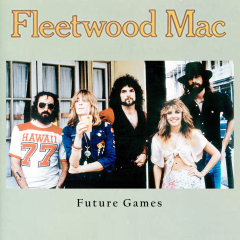
"Future Games" was written by Bob Welch and appears as the fourth song on side one of Fleetwood Mac's fifth studio album of the same name. Personnel on the record were: Danny Kirwan (guitar, vocals), Bob Welch (guitar, vocals), Christine McVie (keyboards, vocals), John McVie (bass) and Mick Fleetwood (drums, percussion).
The Future Games album was recorded at Advision Studios in London between June and August 1971, with Fleetwood Mac producing. It was the first album to feature American guitarist/vocalist Bob Welch and British keyboardist/vocalist Christine McVie. Released in September 1971, the album went to #91 on the Billboard Top 200 Albums chart and has been certified Gold by the Recording Industry Association of America.
Fleetwood Mac is an American/British rock band formed in London in 1967. The group has sold more than 120 million records worldwide. Eighteen members have passed through the ranks of Fleetwood Mac since its inception. The band has released 18 studio albums, nine live albums, 23 compilation albums, one EP and 62 singles. Fleetwood Mac has won three American Music Awards, two Brit Awards, one Grammy Award and are members of the Rock and Roll Hall of Fame. The band still records and tours.




Comments
Huge amount of good content. But what I'm missing or would want to know earlier in the series is what is the connection of the spot market to the prompt. Especially most recently.
And, for instance, if one looks at the EIA spot price data series, where did that data come from? And how does one get current spot prices? (CME futures prices are free on the net.) Also, really what is the spot market? Is it some sort of financial abstraction or is there a block in a square with tanker cars changing label plates or what?
I was a bit surprised by the following statement in today's blog: "The dynamic of linking the spot market to futures is unique to crude oil trading and one which developed over time (more on that backstory at the bottom of this blog)."
Natural gas spot markets are commonly linked to futures markets.
Good blog as usual.