A primary objective of the federal Renewable Fuel Standard (RFS), when it was expanded back in 2007, was to stimulate by 2022 the production of at least 16 billion gallons/year of gasoline and diesel made from cellulosic biomass in conversion plants resembling small refineries. After getting lots of headlines in the early days of renewable fuels, that vision faded into the background and attention shifted to the use of ethanol in gasoline and the production of diesel from soybean oil, but cellulosic biofuels — non-food crops and waste biomass like animal manure, corn cobs, corn stalks, straw and wood chips — are back in the spotlight thanks to a regulatory quirk. In today’s RBN blog, the first in a series, we review the unusual history of the D3 Renewable Identification Number (RIN), the subsidy designed to stimulate cellulosic biofuel production, and the recent impact on heavy-duty trucking.

The Future of Fuels bi-annual report by RBN's Refined Fuels Analytics provides an in-depth analysis of the U.S. and global refinery industries, focusing on crude oil and fuel market dynamics, supply and demand, alternative fuels, refinery capacities, and price forecasts to help stakeholders navigate the evolving energy landscape.
The RIN has long been the tool to force renewable fuels derived from biomass into U.S. gasoline and diesel. A creation of the RFS, RINs act as a variable subsidy that enables profitable production of mandated minimum volumes of renewable fuels that would not otherwise be economically justified. The RIN subsidy is funded by a tax on the supply of petroleum-derived gasoline and diesel to the U.S. transportation market. The RIN is also a financial asset that is traded in secondary markets, where RIN prices are set by the workings of supply and demand. There are four basic types of RINs. The D6 RIN applies to the blending of corn-based ethanol into refined gasoline but also includes the other types of biofuel production, as shown in the RIN “nesting scheme” illustrated in Figure 1 below (see The Big Bang Theory). The D5 RIN includes advanced biofuels; within that group are the D4 RIN (biomass-based diesel) and the D3/D7 RINs (cellulosic biofuel and cellulosic diesel, respectively). Each category has its own mandated minimum volumes of annual production, set by the Environmental Protection Agency (EPA), which generally increase over time. (See our Misunderstanding series and Land of Confusion Drill Down Report for more about how the system works.)
Renewable Fuel Categories Under the Renewable Fuel Standard

Figure 1. Renewable Fuel Categories Under the Renewable Fuel Standard. Source: House of Representatives Energy and Commerce Committee
By design, the market price of a RIN adjusts to the level that provides the necessary incentive to stimulate production of the mandated volume of its corresponding biofuel. But in the case of cellulosic biofuel, it became clear early on that this market-based mechanism would not work — the cellulosic biofuel market never got off the ground. In 2024, the U.S. is expected to produce only 1 billion gallons of the originally targeted 16 billion gallons/year. Why? Because high costs and other barriers (technical, economic and political) to large-scale production of gasoline from wood chips — long viewed as the most logical and economic feedstock — have proved to be more daunting than anticipated back in 2007. (We’ll go into more detail on that in Part 2.)
About the song
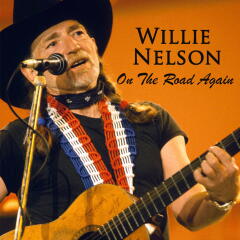
“On the Road Again” was written by Willie Nelson and appears as the first song on side one, record one of Willie Nelson and Family’s Honeysuckle Rose soundtrack album. Nelson had his first starring role in the movie Honeysuckle Rose and, while on a flight, the film’s producer, Jerry Schatzberg, asked Nelson to come up with a theme song for the movie. Nelson wrote the lyrics for “On the Road Again” on an air-sickness bag before they landed. The song was recorded on Brian Ahern’s Enactron Truck Mobile Studio in Hollywood in the fall of 1979. “On the Road Again” was released as a single in August 1980 and went to #1 on the Billboard Hot Country Songs chart, #7 on the Billboard Adult Contemporary chart, and #20 on the Billboard Hot 100 Singles chart. It won Nelson a Grammy Award for Best Country Song. Personnel on the record were: Willie Nelson (lead vocal, guitar), Jody Payne (guitar), Bobbie Nelson (piano), Chris Ethridge (bass), Paul English (drums), and Mickey Raphael (harmonica).
Honeysuckle Rose, the soundtrack album by Willie Nelson and Family, is a double album featuring songs from the film performed by a number of artists, including Emmylou Harris, Johnny Gimble, and Jeannie Seely. Recorded in the fall of 1979 and produced by Willie Nelson, the album was released in July 1980. It went to #1 on the Billboard Top Country Albums chart and #11 on the Billboard 200 Album chart. Three singles were released from the LP.
Willie Nelson is an American country music singer, songwriter, guitarist and actor. One of the founding figures of the “outlaw country” movement in the seventies, Nelson is one of the most popular and recognized figures in country music. He has released 102 studio albums, 14 live albums, 51 compilation albums, two soundtrack albums, and 132 singles. He has appeared in 57 motion pictures and television shows. He is a member of the Country Music Hall of Fame, Rock and Roll Hall of Fame, and the National Agricultural Hall of Fame. He is the recipient of Kennedy Center Honors and the Gershwin Prize from the Library of Congress. Nelson continues to record and tour and is currently on tour in the U.S.