The Gulf of Mexico (GOM) has seen more than its share of stormy weather, and — both literally and figuratively — so have crude oil producers active there. Earlier this century, production growth in the offshore GOM was set back by Katrina and other major hurricanes, then by the Deepwater Horizon spill. Starting in 2014, and for five years after that, the Gulf's output ratcheted up, only to be set back again, this time by the double-whammy of COVID and bad storms. Now, the GOM appears to be poised for another period of steady growth — the only question is, with the global push to decarbonize, and with at least of couple of large producers planning to exit the region, will this be Gulf producers' last stretch of good weather? In today's RBN blog, we begin a short series on the ups and downs of GOM production, the new projects starting up this year and beyond, and the Gulf's longer-term prospects.
Canadian crude output is rising, requiring new export routes. As traditional pathways face constraints, the U.S. Rockies—especially the Guernsey, WY hub—are emerging as key corridors for moving Canadian heavy crude to downstream markets, including the Gulf Coast.
The offshore Gulf of Mexico is a very different animal than the shale and tight-oil plays that dominate discussions about U.S. crude oil and natural gas production. Unlike E&Ps in the Permian, Bakken and Marcellus/Utica, who, up until the recent supply-chain and labor disruptions, have had the ability to ratchet up their output in response to higher prices by activating more rigs and completing more wells within the span of a few months, producers in the Gulf base their big, upfront investments in new platforms or subsea tiebacks on very long-term oil-price expectations. Also, unlike shale wells, whose production peaks early then trails off, wells in the GOM typically maintain high levels of production for years and years.
That doesn't mean that production in the Gulf can't nosedive — if there's a good reason. In fact, when you look back at GOM crude oil output over the past 22 years (see Figure 1), you see a number of sharp declines, most of them tied to strong hurricanes whose approach spurred the evacuation of manned offshore platforms. The biggest downward spikes in monthly output occurred in the fall of 2005 (with hurricanes Katrina and Rita; dashed red oval) and the fall of 2008 (with hurricanes Gustav and Ike; dashed green oval); there also was the 18-month slide in production after the Deepwater Horizon incident (dashed yellow oval).
About the song
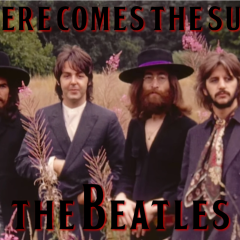
"Here Comes the Sun" was written by George Harrison and appears as the first song on side two of The Beatles' 11th studio album, Abbey Road. Harrison wrote the song at the Surrey country estate of his friend Eric Clapton in April 1969. The song was recorded in July and August 1969 at EMI (Abbey Road) studios in London. When released as a digital download single in 2019, it went to #3 on the Billboard Hot Rock Songs Singles chart. The song has been covered by many artists such as Richie Havens (whose 1971 release went to #16 on the Billboard Hot 100 Singles chart), Nina Simone and Peter Tosh. Harrison performed the song with Paul Simon on Saturday Night Live in 1976. Personnel on the record were: George Harrison (lead, backing vocals, acoustic guitar, electric guitar through Leslie speaker, harmonium, synthesizer), Paul McCartney (backing vocals, bass), Ringo Starr (drums), George Martin (orchestral score and arrangement for strings and horns).
Abbey Road was recorded between February and August 1969 at EMI (Abbey Road), Trident and Olympic studios in London, with George Martin producing. It was the last album The Beatles recorded, although its release in 1969 preceded their album, Let It Be, which was released in 1970 when the band publicly called it quits. Released in October 1969, Abbey Road went to #1 on the Billboard 200 Albums chart and has been certified 12x Platinum by the Recording Industry Association of America. One single, "Something," backed by "Come Together," was released from the LP.
The Beatles were an English rock band formed in Liverpool in 1960. With John Lennon, Paul McCartney, George Harrison and Ringo Starr, the band is considered the most successful rock band in history. They released 17 studio albums, six live albums, 54 compilation albums, 36 EPs and 63 singles, and have sold more than 600 million records worldwide. They have won an Academy Award, four Brit Awards, seven Grammy Awards, 15 Ivor Novello Awards and three World Music Awards. The Beatles are members of the Rock and Roll Hall of Fame (as a group and individually), the UK Music Hall of Fame and the Vocal Group Hall of Fame. They are members of the Grammy Hall of Fame and have a Grammy Lifetime Achievement Award. The bank members received MBEs from Queen Elizabeth in 1965. The Beatles officially broke up in 1970. All of the members went on to successful solo careers. John Lennon was killed in December 1980 and George Harrison died in November 2001. Paul McCartney and Ringo Starr still record and tour as solo artists.