Global natural gas and LNG prices have spent the summer going from high to higher to the highest on record. The major European indices hit post-2008, and then all-time highs multiple times throughout the summer — even surpassing Asian prices on a handful of days. At the same time, Asian prices have set all-time seasonal records and are now sitting just below the previous single-day high settle from this past January. Usually, as the weather cools heading into fall, so do prices, but that’s unlikely this year as the European gas storage inventory is at the lowest level for this time of year than we’ve seen in recent history, and the time to replenish stocks for the winter is rapidly running out. The incredible bull run for global gas prices has been underpinned by high demand for LNG and the cascading effect of a supply squeeze in Europe, brought on by the triple threat of low domestic production, decreased imports from Russia, and a scarcity of incremental LNG cargoes. Not only is this driving record-high gas prices and increased volatility now, but the low inventory means sustained high prices for the heating season ahead. In today’s blog, we take a look at recent global gas price trends and the precarious European storage situation ahead of what is shaping up to be an incredibly bullish winter.
After being decimated by COVID-19 and the subsequent oil price crash in 2020, global gas markets made a startling recovery this year. Prices swung from all-time lows last summer to record highs this year. A confluence of factors led to the bullish reversal in market fundamentals, including weather events and operational issues that disrupted LNG cargoes just as COVID lockdowns were easing. It started with a record-breaking Atlantic hurricane season last year that curtailed U.S. LNG production and interrupted marine traffic in the fall, particularly from the Louisiana facilities (see Such Great Heights). This occurred right around the time when overseas offtakers are typically building up LNG stocks or, in the case of Europe, filling gas storage for the winter ahead. While the U.S. was experiencing LNG production shortfalls from the storms, extended outages were also impacting terminals in Australia and Norway, further reducing global LNG supply.
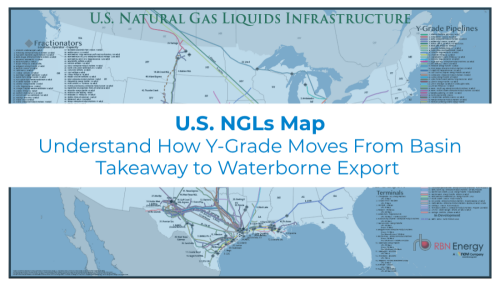
Visualize the infrastructure behind U.S. NGL movement.
The U.S. NGLs Map provides a comprehensive view of the transport, processing, and export networks moving NGLs across the U.S.
Then, just as colder-than-average winter weather was boosting heating demand in Europe and Asia, another constraint emerged: prolonged delays for U.S. cargoes transiting the Panama Canal — the fastest, most economical shipping route between the U.S. Gulf Coast and Asia (see Bottleneck Blues). The delays were partially caused by COVID-related restrictions but also were a natural side effect of increased traffic through the canal caused by pent-up demand following months of cargo cancellations from the Gulf Coast last summer. Whether the LNG carriers waited out the delays at the Panama Canal or diverted to the Suez Canal or took the extremely long trip around Africa’s Cape of Good Hope, the result was longer voyage times, which, in turn, lowered the overall supply of LNG tankers available to take more cargoes. The vessel shortage likely restrained spot market cargoes even as international gas/LNG prices at the time were the highest they had been in a while. There were simply no extra ships available to carry export cargoes.
About the song
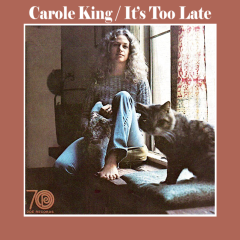
Toni Stern wrote the lyrics, and Carole King wrote the music for "It's Too Late." The song appears as the third song on side one of Carole King's second studio album, Tapestry. Released as a single in April 1971, the song went to #1 on the Billboard Hot 100 and Adult Contemporary Tracks Singles charts. It has been certified Gold by the Recording Industry Association of America (RIAA). Toni Stern said she wrote the lyrics to the song in one day, after her love affair with James Taylor had ended. The single won a Grammy Award for Record of the Year in 1972. Personnel on the record were: Carole King (vocals, piano), Curtis Amy (soprano sax), Danny Kortchmar (guitar, conga), Charles Larkey (bass), Joel O'Brien (drums), and Ralph Schuckett (electric piano).
Tapestry was recorded at Studio B at A&M Studios in Hollywood during January 1971. Produced by Lou Adler, the album was released in February 1971. It went to #1 on the Billboard Top 200 Albums chart and has been certified 13x Platinum by the RIAA. It has sold more than 25 million records worldwide and earned four Grammy Awards in 1972. The two singles released from the album both spent five weeks at #1 on the Billboard Hot 100 and Easy Listening Singles charts.
Carole King (Carol Joan Klein) is an American singer-songwriter who has written or co-written 118 charting singles on the Billboard Hot 100 Singles chart. She started as a staff writer at the Brill Building in New York City in 1958, partnering in songwriting with her future husband, Gerry Goffin. She has released 17 studio albums, four live albums, seven compilation albums, one soundtrack album, and 33 singles. She has won four Grammy Awards, a Grammy Lifetime Achievement Award, a Library of Congress Gershwin Prize for Popular Song, and a Kennedy Center Honor. She is a member of the Rock and Roll Hall of Fame with Gerry Goffin, and as a solo artist. King is also a member of the Songwriters Hall of Fame and has a star on the Hollywood Walk of Fame. She has sold more than 75 million records worldwide. King still records and performs occasionally.