2020 has been as anomalous as it can get for energy markets, but that’s especially the case for the LNG sector, which was battered by COVID-related demand destruction. U.S. export volumes, in particular, experienced wild swings this year, going from steady increases and close to 100% utilization over the past few years as new export capacity was added, to operating at barely 30% of capacity this past summer as national lockdowns decimated demand and led to historically low gas prices abroad. Contracted cargoes were canceled en masse for the first time since the U.S. began exporting in 2016, amounting to over 500 Bcf between June and September that was pushed back into the U.S. natural gas market and into storage. But these events only exaggerated what was already a growing risk; with each new train being commercialized, domestic markets are increasingly exposed to the demand swings and other fundamentals in the export markets it serves. Today, we look at how seasonal demand patterns in the U.S.’s primary destination markets could translate to increased volatility at home.
While COVID turned the LNG market upside down this year, the reality is that there was trouble afoot even before the pandemic swept across the globe and stripped demand from the market. In fact, concerns about worsening oversupply conditions already were brewing last year, and international price spreads had begun shrinking as global demand growth was showing signs of easing. Then, after the mild winter of 2019-20, things turned still more bearish. European gas storage levels soared, while U.S. gas storage also exited last winter with a large surplus. Up to that point, U.S. LNG exports had remained steady, with little to no impact to volumes (see Steady As She Goes). While the global market appeared to be heading for a rebalancing of sorts, just what that would look like, particularly for the U.S. — the newest entrants — was far from clear.
Well, thanks to a perfect storm of COVID-related demand destruction and world oil price declines this year, that reckoning came faster and more furiously than anyone expected, providing a microcosm of hyper-oversupply conditions and a window into what that would mean for the U.S. market (see Undone). Global gas prices plunged, at one point to less than the U.S.’s Henry Hub benchmark price, wiping out netbacks for U.S. offtakers, and leading to more than 150 cancellations of Gulf Coast cargoes, which, as we mentioned above, equates to over 500 Bcf of gas supply, or 150 cargoes x 3.6 Bcf per standard cargo. (See Sultans of Swing and As Long As the Price Is Right for more on how netbacks are calculated and what drives offtakers’ decision to cancel or lift cargoes. We took an in-depth look at the market impacts during our Virtual Fall 2020 School of Energy conference a couple weeks ago; the Encore edition is now available online, for those who missed it.)

About the song
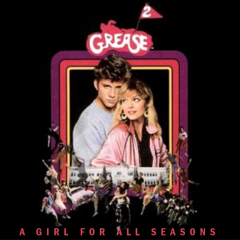
"A Girl for All Seasons" was written by Dominic Bugatti and Frank Musker, and appears as the fourth track on side one of the soundtrack album to the film, Grease 2. The song was featured in a scene in the movie at a talent show featuring The Pink Ladies: Michelle Pfeiffer, Maureen Teefy, Lorna Luft, and Alison Price. Personnel on the record were: The Pink Ladies (vocals), Tim May (guitars), Andy Muson (bass), Denny Sewell (drums), Louis St. Louis (keyboards), and Michael Gibson (orchestrations).
Grease 2 was recorded in 1981 at Evergreen Recording Studios in Burbank, with Louis St. Louis producing. It was released in June 1982, and went to #71 on the Billboard Top 200 Albums chart. The single from the album, "Back to School Again," featuring the Four Tops, also went to #71 on the Billboard Hot 100 Singles chart.
Grease 2 is a 1982 American musical romantic comedy that is a sequel to the 1978 hit film, Grease. Featuring Maxwell Caulfield and Michelle Pfeiffer, it was produced by Allan Carr and Robert Stigwood, and directed and choreographed by Patricia Birch. The action in the movie takes place two years after the original film at Rydell High School in the 1961-62 school year. Grease 2 was panned by the critics and was only nominally successful at the box office. Plans for a third sequel never developed.