Talk about whiplash! Not that long ago, the global LNG market was reeling from the effects of the pandemic: stunted demand, severe oversupply, brimming storage, and record low prices, all of which led to a squeeze on offtaker margins and mass cancellations of U.S. cargoes. Within a matter of months, however, the market has done a 180. Global supply has tightened significantly as cargoes can’t get delivered fast enough, and international LNG prices are near two-year highs. U.S. LNG exports and domestic feedgas demand are at record highs in December, for the second straight month. That’s not to say U.S. LNG producers and the domestic gas market are out of the woods. Cancellations are rearing their heads again — not because the demand isn’t there, but because of logistical constraints and a severe vessel shortage, which are injecting more uncertainty into the market. Today, we provide an update on domestic LNG exports and the immediate factors driving them.

The LNG market has come a long way since the summer. Earlier this year, the pandemic wreaked havoc on the international LNG trade. International prices had already weakened considerably since mid- to late-2019 as oversupply conditions were gradually worsening with the export capacity additions in the U.S. and Australia. The pandemic combined with high storage levels in Europe quickly exacerbated those conditions several fold. Lockdowns decimated demand in destination markets and closed some ports. The market became severely oversupplied and storage constraints loomed. Cargoes in mid-voyage were left looking for a home. The result was a convergence in global prices with Henry Hub near $2/MMBtu. Price spreads collapsed to almost nothing and even reversed, with destination prices trading below Henry at times (dashed gray oval in Figure 1). Something had to give, and it was U.S. LNG exports (see LNG Interruption) that were marginalized. Given the farther voyage distances from the U.S. and narrow spreads, transportation economics from the U.S. became untenable. U.S. offtakers were left to weigh economics against long-term obligations and make the difficult decision of foregoing contracted cargoes or taking their chances in the spot market. A spate of U.S. cargo cancellations followed from May through September. We detailed the economics of LNG exports in Sultans of Swing.
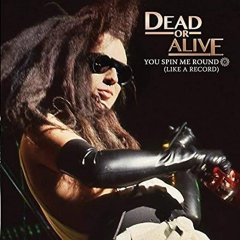
About the song
"You Spin Me Round (Like a Record)" was written by Pete Burns, Steve Coy, Wayne Hussey, Tim Lever, and Mike Percy. The song appeared as the first cut on Dead or Alive's second studio album, Youthquake. Released as a single in November 1984, the song rose to #4 on the Billboard Hot Dance Club chart and #11 on the Billboard Hot 100 Singles chart. According to Dead or Alive's singer Pete Burns, their record company was so unenthusiastic about "You Spin Me Round (Like a Record)," that the band took out a loan to finance the recording of the song and made the video themselves. Several remixes of the song have been released over the years. Dope and Jessica Simpson have each released cover versions of it. Personnel on the record were: Pete Burns (vocals), Mike Percy (bass, guitars), Tim Lever (keyboards), and Steve Coy (drums).
Youthquake was recorded between July 1984 and January 1985. Produced by Stock Aitken Waterman, the album was released in May 1985. It went to #31 on the Billboard Top 200 Albums chart. Four singles were released from the album.
Dead or Alive were a British pop band formed in Liverpool in 1980 by Pete Burns, Mike Percy, Tim Lever, and Steve Coy. Billboard Magazine ranked them as the 96th most successful dance artists of all time. "You Spin Me Round (Like a Record)" was a #1 dance hit in the charts in the UK in 1985 and went to the top of the UK charts again in 2006 after singer Pete Burns’ appearance on the television reality show, Celebrity Big Brother. Nine members passed through Dead or Alive before its discontinuation following the death of Pete Burns in 2016 at the age of 57. They released seven studio albums, five compilation albums, and 28 singles. They have sold over 30 million records worldwide. Steve Coy died in 2018 at the age of 56.