While the crude oil market meltdown has taken center stage in recent weeks, and for good reason, the natural gas market is bracing for its own fallout. The CME/NYMEX Henry Hub April futures price, which was already at a multi-year low, buckled last week, falling to as low as $1.602/MMBtu on March 23, and expired Friday at $1.634/MMBtu, the lowest April expiration settle since 1995. On its first day in prompt position, the May futures contract yesterday eked out a late-day, 1.9-cent gain that brought it back up near $1.70/MMBtu as traders continued weighing competing market factors. Gas futures earlier in March were initially buoyed by the assumption that the low oil-price environment would slow associated gas production — and it will, eventually. But that initial bullish sentiment was quickly usurped by the more immediate effects of demand losses resulting from the economic slowdown caused by COVID-19, as well as from mild weather. Today, we look at how these developments are shaping gas supply-demand fundamentals heading into the gas storage injection season.
Amid the many daily, sometimes hourly twists and turns of the market in recent weeks, we’ve homed in on a number of key emerging dynamics. At the beginning of March, in Free Fallin’ and Wipe Out, we took an early look at the collapse in the crude oil market and what the crumbling OPEC-Plus alliance and the COVID contagion could mean for energy markets. Then in Save It for Later, we examined how the changing structure of the crude oil forward curve is already significantly affecting the value and utilization rates of storage versus transportation assets. And in the past week or so, we’ve provided our latest analysis on the looming effects of depressed oil prices on E&P companies and their output. In Paint It Black, we assessed the slew of capital spending cuts being announced in recent days and weeks, on top of the earlier cuts already known to the market, and what they would mean for capex and production trends in 2020. Déjà Vu put the current environment in the context of previous historical downturns to understand how long it takes for drilling cuts to translate to a flattening or decline in production volumes — in short, it can take months or even years.

Canadian crude output is rising, requiring new export routes. As traditional pathways face constraints, the U.S. Rockies—especially the Guernsey, WY hub—are emerging as key corridors for moving Canadian heavy crude to downstream markets, including the Gulf Coast.
In yesterday’s We Ain’t Seen Nothin’ Yet, we discussed how associated gas and liquids from U.S. crude production have driven much of the growth in gas and NGLs supply over the past half-decade or so, and how that dynamic will change in a post-COVID world. No doubt there’s much more volatility to come in the oil sector, and we’ll continue updating our fundamental and equity analysis here in the RBN blogosphere and at our upcoming Virtual School of Energy. Today, though, we turn our focus to how recent events, along with weather and storage fundamentals, are playing out in the Lower-48 natural gas market.
About the song
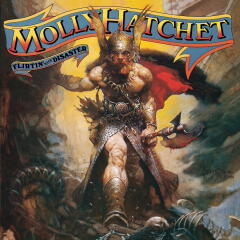
"Flirtin' with Disaster" was written by Danny Joe Brown, Dave Hlubek and Banner Thomas, and appears as the first cut on side two of Molly Hatchet's second studio album of the same name. Released as a single in March 1980, the song went to #42 on the Billboard Hot 100 Singles chart. Over the years, the song has appeared in motion pictures, television shows and video games. Personnel on the record were: Danny Joe Brown (vocals), Dave Hlubek (guitar), Steve Holland (guitar), Duane Roland (guitar), Banner Thomas (bass) and Bruce Crump (drums).
The Flirtin' with Disaster album was recorded at Bee Jay Recording Studios in Orlando, and the Record Plant in Los Angeles in 1979, with Tom Werman producing. Released in September 1979, the record went to #19 on the Billboard Top 200 Albums chart. It has been certified 2x Platinum by the Recording Industry Association of America. Three singles were released from Flirtin' with Disaster, which would become Molly Hatchet's best-selling album.
Molly Hatchet is an American Southern rock band formed in Jacksonville, FL, in 1971 by guitarist Dave Hlubek. They have released 14 studio albums, seven live albums, six compilation albums and nine singles. Thirty-one people have passed through Molly Hatchet's ranks since its inception in 1971. Original member Danny Joe Brown died in March 2005, Duane Roland in May 2006, Bruce Crump in March 2016, Banner Thomas in April 2017, and guitarist and founding member Dave Hlubek in September 2017. A version of Molly Hatchet with no original members will start a new U.S. tour on April 26 (subject to change due to COVID-19).