The U.S. and its European allies have been working on ways to move away from Russian energy supplies after Russia’s invasion of Ukraine, with increased LNG exports to Europe expected to play an important role in that transition. And with global demand for LNG at an all-time high, it has put some important U.S. export projects closer to reaching a final investment decision (FID). But even with U.S. LNG production surging, questions remain about how much more LNG Europe can realistically handle. Warning — today’s RBN blog is an advertorial in which we discuss the highlights from our new Drill Down Report on the global LNG market.
The fallout from Russia’s full-scale invasion of Ukraine has been immense, with the human tragedy front and center. The effects have also reverberated across world economies as governments moved quickly to impose sanctions against Russia and corporations cut their ties with it. In a bid to minimize the impact on energy supplies and prices, the U.S. and Europe have been grappling with how best to wean themselves from Russian crude oil and natural gas. That was relatively easy for the U.S. — the ban on Russian oil imports announced in March by President Biden is likely to have only minor side effects. But the challenges for Europe are far greater due to its dependence on Russian supplies, especially natural gas.
In concert with the U.S., the UK followed with its own plan to ban imports of oil and refined products from Russia, but using a more phased approach, with the goal to stop them by the end of 2022, given its heavier dependence on Russian oil. The UK plan does not include natural gas or LNG, although it is less dependent on Russian gas than Europe as a whole, as can be seen in the recent separation between prices at UK benchmark National Balancing Point (NBP) and the European Dutch Title Transfer Facility (TTF; see You’re The Best Around). The European Commission (EC), which represents the 27 countries in the European Union (EU), announced plans to reduce natural gas imports from Russia by two-thirds by the end of this year. The plan is built on a strategy outlined by the International Energy Agency (IEA) for the EU to reduce Russian gas imports by more than one-third within a year.
About the song
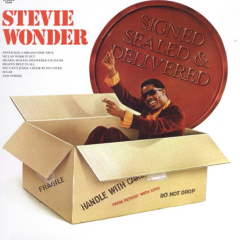
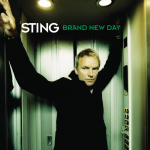
“Brand New Day” was written by Sting and appears as the 10th song on Sting’s sixth solo studio album of the same name. Released as a single in September 1999, it went to #2 on the Billboard Adult Alternative and #3 on the Billboard Bubbling Under Hot 100 Singles charts. The song won a Grammy Award for Best Male Pop Vocal Performance in 2000. Stevie Wonder played the harmonica solo on the song. Personnel on the record were: Sting (vocals, bass, Roland VG-8 guitar synthesizer), Kipper (keyboards, drum programming), Jason Rebello (acoustic piano, Claivinet), Don Blackman (Hammond organ), David Hartley (Hammond organ, string arrangements, conductor), Dominic Miller (guitar), B.J. Cole (pedal steel guitar), Vinnie Colaiuta, Manu Katche (drums), Mino Cinelo (percussion), Ettamri Mustapha (darbouka), Branford Marsalis (clarinet), Chris Botti (trumpet), Kathryn Tickell (Northumbrian pipes, fiddle), Stevie Wonder (harmonica), and Farhat Bouallagui (string arrangements).
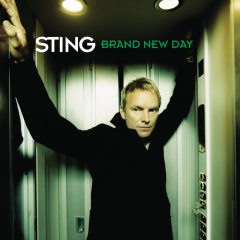
The album Brand New Day was recorded from June 1998-June 1999 at The Villa Il Palagio in Tuscany; Studio Mega in Paris; Right Track Recording and Avatar Studios in New York City; and Air Lyndhurst Hall in London. Produced by Sting and Kipper, the album was released in September 1999. It went to #9 on the Billboard 200 Albums chart and has been certified 3x Platinum by the Recording Industry Association of America. The LP won a Grammy Award for Best Pop Vocal Album in 2000. Three singles were released from the album.
Sting (Gordon Matthew Thomas Sumner) is an English musician, singer, songwriter and actor. He was the front man, singer and bassist for The Police from 1977 to 1984. He launched his solo career in 1985 with music that includes elements of worldbeat, jazz, reggae, new age and pop. With The Police, he released five studio albums, two live albums, four soundtrack albums, seven compilation albums, one EP and 26 singles. The Police sold more than 100 million records worldwide. As a solo artist Sting has released 15 studio albums, six live albums, seven soundtrack albums, 10 compilation albums, five EPs and 51 singles. He has won 25 American Music Awards, three Brit Awards, one Billboard Music Award, one Golden Globe Award, 18 Grammy Awards, seven Ivor Novello Awards and two MTV Video Music Awards. He is a recipient of Kennedy Center Honors and is a member of the Songwriters Hall of Fame. Sting was inducted into the Rock and Roll Hall of fame as a member of The Police in 2003. He has been a featured player in 18 motion pictures and appeared in several television show. He has also appeared in three Broadway shows. He continues to record and tour.