Drilling techniques originally developed to unlock oil and gas from shale formations are increasingly being adapted to access and extract heat from deep underground rock formations, enabling the generation of electricity from geothermal sources. And while geothermal’s share of total U.S. electricity generation remains quite small, it may be poised to accelerate, opening up new opportunities for companies in the oil and gas sector. In today’s RBN blog, we explain the basics of geothermal energy, its main advantages and drawbacks, and how U.S. expertise in oil and gas comes into play.
To begin our discussion of geothermal energy, we need to start with a quick trip back to basic geology. Geothermal energy is produced by the slow decay of radioactive particles in the earth’s core, a process that happens in all rocks. The earth has four major sections: an inner core of solid iron, where temperatures can reach an astounding 10,800 degrees Fahrenheit (°F); an outer core about 1,500 miles thick; a mantle of magma and rock about 1,800 miles thick; and a crust of solid rock that is 15-35 miles thick under the continents and three to five miles thick under the oceans. Underground temperatures are relatively stable near the surface at 50°F to 60°F and generally increase by 72°F to 87°F for every mile (5,248 feet) of depth.
The replay of our Fall 2026 School of Energy (September 9 & 10, Houston) is now available online!
Learn from RBN experts, participate in hands-on Excel modeling, connect with industry peers, and gain a stronger understanding of today's interconnected energy markets.
People have directly used geothermal energy for bathing and cooking for millennia — via hot springs — and have more recently used it to heat buildings and in certain industrial applications. (Geothermal energy can also make its way to the surface via volcanoes and geysers.) But there are also naturally occurring reservoirs of geothermal energy that can be found deep underground and are largely undetectable from the surface. Geologists use various methods to find them, although drilling a well and testing the temperature deep underground is the most reliable method. Those reservoirs can be tapped to generate electricity through an enhanced geothermal system (EGS), which is the step we want to focus on next.
A naturally occurring geothermal system, also known as a hydrothermal system, requires three key elements to generate electricity: heat, fluid and permeability, which is the ability of fluid to move freely through underground rock, similar to oil and gas drilling. (Much more on that comparison to come.) In many areas, the underground rock is hot enough but there is not enough natural permeability or fluids present. In such cases, an EGS can be used to create a reservoir to tap that heat for energy. In an EGS, water is injected deep underground under controlled conditions (#1 in Figure 1 below) to create new fractures and reopen pre-existing fractures, thereby enhancing permeability. Operators pump the hot water to the surface to produce steam (#2), where it then spins a turbine connected to a generator to produce electricity (#3). The steam then heads to a cooling tower (#4) and is pumped back below the surface (#5). It’s more complicated in real life, of course, and there are several variations of power plants, but that’s the basic approach.
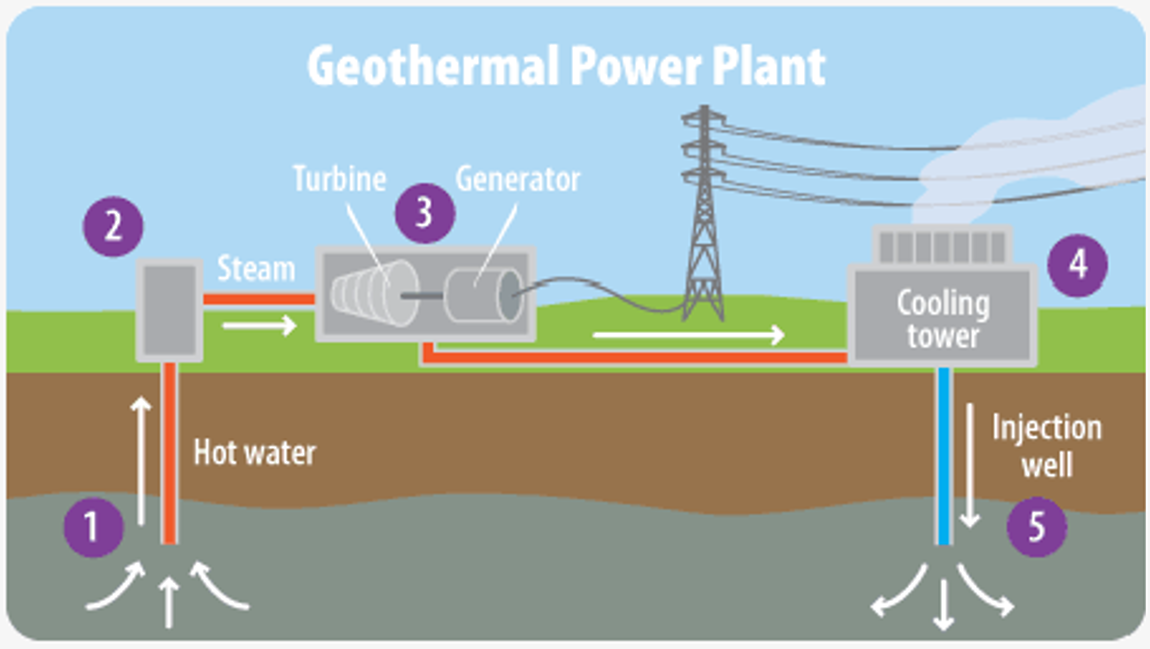
Figure 1. Geothermal Power Plant Schematic. Source: Environmental Protection Agency
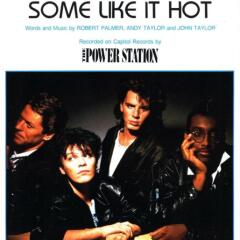
About the song
“Some Like It Hot” was written by Andy Taylor, John Taylor and Robert Palmer. It appears as the first song on side one of The Power Station’s eponymous debut studio album. Bassist John Taylor said they wanted to write a song that featured the talents of drummer Tony Thompson, so he and guitarist Andy Taylor flew down to the Nassau home of singer Robert Palmer and played him their demo. Palmer helped write the lyrics and finish the song. Released as the first single from the album in March 1985, it went to # 6 on the Billboard Hot 100 Singles chart. Personnel on the record were: Robert Palmer (lead, backing vocals), Andy Taylor (guitars), John Taylor (bass) and Tony Thompson (drums).
The album, The Power Station, was recorded at the Power Station in New York City in 1984 and produced by Bernard Edwards. The original concept for the band was to use Taylor, Taylor and Thompson and bring in different vocalists for each track. After teaming up with Palmer, things clicked, and he joined the project as the sole vocalist. The album was released in March 1985 and went to # 6 on the Billboard 200 Albums chart. Ironically, as the album was rising in the charts, Palmer quit the band to focus on his solo LP, Riptide, which featured Andy Taylor, Tony Thompson and Bernard Edwards playing on the record, and sounded very much like The Power Station album. Three singles were released from the LP.
The Power Station was a British-American pop group formed in New York City and London in 1984. It featured Robert Palmer on vocals, bassist John Taylor and guitarist Andy Taylor from Duran Duran, and Chic drummer Tony Thompson. This lineup's only live appearance was on Saturday Night Live in February 1985. Palmer left the band and was replaced by actor and ex-singer for Silverhead, Detective, and Chequered Past, Michael Des Barres. The group did a summer tour of the U.S. that included an appearance at the Live Aid charity concert in Philadelphia. They released two studio albums, one compilation album and four singles. The band broke up in late 1985. Andy Taylor went on to a solo career, John Taylor continues to play with Duran Duran, and Michael Des Barres continues to act, sing and DJ on Little Steven’s Underground Garage. He recently released a studio album of glam-era covers. Bernard Edwards died in Tokyo, Japan, in April 1996 at the age of 43. Robert Palmer died in