
Global natural gas demand disruptions and high storage levels resulting from the COVID crisis have turned international LNG markets upside down. Price spreads for U.S. LNG exports, which were well above $1/MMBtu two months ago, have disappeared and even flipped to negative, with the UK NBP and Dutch TTF price benchmarks — and briefly also Asia’s JKM index — trading below the U.S. benchmark Henry Hub for the first time since the U.S. began exporting LNG in early 2016. Despite the uneconomic price spreads, U.S. cargo liftings have slowed only modestly so far. That’s likely to change in the coming months as both Cheniere Energy and Sempra have confirmed cancellations or modifications to lifting schedules by some offtakers, and other terminal operators are likely facing the same pressure. However, many U.S. cargoes will still move, regardless of prices. What are the economics of cancelling versus lifting a seemingly out-of-the-money cargo? Today, we begin a short series examining the factors affecting U.S. LNG cargo liftings.
A few months ago, the idea of U.S. LNG cargo cancellations was implausible. While technically possible — U.S. LNG contracts afford offtakers the ability to cancel, though not without penalty — cancellations seemed the least likely of scenarios, especially given that (1) U.S. LNG contracts are take-or-pay, meaning offtakers would pay certain fees associated with the cargo whether they lift it or not, (2) long-term, committed offtakers also have contractual obligations tied to their offtake agreements, such as long-term vessel charters and delivery commitments with utility consumers in destination markets who rely on the gas, and (3) the contracts provide plenty of flexibility on what happens to the cargo once offtakers take possession of it. These factors kept U.S. cargo liftings steady and even rising to new heights through 2019 and early 2020, as additional liquefaction trains were completed and commercialized. This, even as international price spreads shrunk.
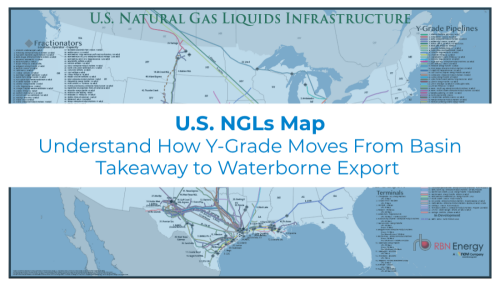
Visualize the infrastructure behind U.S. NGL movement.
The U.S. NGLs Map provides a comprehensive view of the transport, processing, and export networks moving NGLs across the U.S.
Then the unimaginable happened: a worldwide pandemic that throttled back oil and gas demand just about everywhere, and the collapse of the OPEC+ coalition — all at the same time. Together, these two events have ricocheted across global gas markets. Among the impacts abroad have been rapidly filling storage and rock-bottom prices in Europe and Asia, by far the biggest markets for U.S. LNG. Gas prices in the U.S., on the other hand, have remained relatively supported, even rising during this period in anticipation of declining production, as the oil price collapse is spurring a sharp pullback in drilling and completion activity along with shut-ins of existing wells.
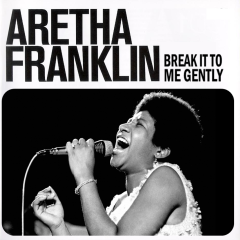
About the song
"Break It to Me Gently" was written by Carole Bayer Sager and Marvin Hamlisch. It appears as the first song on side one of Aretha Franklin's 23rd studio album, Sweet Passion. Released as a single in May 1977, it went to #1 on the Billboard Hot Soul Singles chart, and #85 on the Billboard Hot 100 Singles chart. The single was mixed at Studio 55 in Los Angeles. Personnel on the record were: Aretha Franklin (vocals), Joe Clayton (congas), Harold Mason (drums), Chuck Rainey (bass), David Paich and Sylvester Rivers (keyboards), and Ray Parker Jr. and Lee Ritenour (guitars).
Sweet Passion was recorded at ABC Recording Studios and Whitney Recording Studios in Los Angeles during 1976-77. It was produced by Marvin Hamlisch, Carole Bayer Sager, Aretha Franklin and Lamont Dozier. Released in May 1977, the album went to #49 on the Billboard Top 200 Albums chart.
Aretha Franklin was an American singer, songwriter, pianist and actress. Also known as "Lady Soul," she has sold more than 75 million records worldwide. She released 38 studio albums, six live albums, 45 compilation albums and 131 singles. She has won 18 Grammy Awards, a Grammy Legend and a Lifetime Achievement Award. She is a Kennedy Center Honoree and the recipient of the National Medal of Honor, Presidential Medal of Freedom and a Pulitzer Prize Special Citation, and was inducted into the Rock and Roll Hall of Fame in 1987. Franklin died at her home in Detroit in August 2018.