It’s unusual, to say the least, for an energy-industry acquisition valued at “only” $1.25 billion to be transformational. But that’s surely the case with Expand Energy’s newly announced purchase of Twin Eagle Holdings, which will make Expand — the largest natural gas producer in the U.S. — the nation’s #1 gas marketing and optimization firm as well. The deal, expected to close in Q3 2026, also will dramatically increase the marketing reach of Expand, whose approximately 7.5 Bcfe/d of production is focused on two major shale plays: the Marcellus/Utica and the Haynesville. In today’s RBN blog, we discuss the transaction and its far-reaching implications.
Before we look at the deal and the significance of Expand Energy’s growing role in gas marketing, we’ll provide thumbnail sketches of both Expand and Twin Eagle.

The Natural Gas Master Class is a one-day online event focusing on understanding flow analysis, interpreting pipeline data and forecasting future flows. This course is designed to equip you with the knowledge and skills to effectively analyze the complexities of natural gas markets, flow analysis, and pipeline modeling. Join us online
October 21 | Online
As we said in Finally, the then-newly named Expand Energy emerged from the October 2024 combination of Chesapeake Energy and Southwestern Energy, two upstream companies that — after a series of strategic missteps in the 2010s — righted themselves in the early 2020s and became very logical merger partners, each with major holdings in Appalachia and the Haynesville. In 2026, Expand expects to produce an average of about 3.2 Bcfe/d in the Haynesville, 2.675 Bcfe/d in the “dry” Marcellus in northeastern Pennsylvania and 1.625 Bcfe/d in the “wet” Marcellus/Utica in southwestern Pennsylvania, northern West Virginia and eastern Ohio.
Novi Labs, RBN’s corporate parent, said in a recent note that the Chesapeake/Southwestern combination “effectively consolidated the core of the (Haynesville) play,” providing Expand with about 36 million lateral feet of remaining inventory, equivalent to about 32 years of production at the 2025 drilling cadence. Expand has about 27 million lateral feet remaining in the dry Marcellus — ~19 years of inventory at the 2025 pace — and in the wet Marcellus/Utica it has ~ 24 years of inventory. Just as important, the NPV25 median breakeven for Expand’s overall asset base is an enviable $2.77/Mcf: a rock-bottom $2.56/Mcf in the Haynesville and a highly competitive $3.06/Mcf and $3.10/Mcf in the dry Marcellus and wet Marcellus/Utica, respectively. (NPV25 refers to net present value with a 25% discount; in other words, the price at which the investment would earn a 25% internal rate of return, or IRR.)
When the Chesapeake/Southwestern merger was consummated, the folks at Expand Energy said the deal would give them a platform to increase their gas marketing activities and reach more markets. According to data compiled by our friends at Natural Gas Intelligence (NGI), Expand was the 11th-largest gas seller in 2025, with FERC Form 552 sales of 5 trillion btu/day (Tbtu/d; dark-blue bar segment to center-right in Figure 1 below). (Form 552 sales refer to wholesale sales of physical natural gas executed at commercial trading hubs or pipeline points where gas is bought, sold and traded before it reaches a final end user.) Expand also posted 4 Tbtu/d of mostly retail “non-Form 552” sales to commercial & industrial (C&I) and other customers (extension of bar segment outlined by dashed dark-blue line). Most of Expand’s marketed volumes were associated with its equity production.

About the song
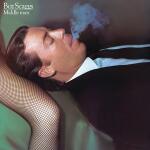
“Middle Man” was written by Boz Scaggs and David Foster and appears as the first song on side two of Boz Scaggs’s ninth studio album of the same name. The song is about a smooth-talking outsider looking to be a side dish in a romantic relationship. If the song has a similar sound and feel to the soft-rock band Toto, it is because most of the band are featured players on the album. Members of that band would be featured on four of Scaggs’s most successful albums. Personnel on the record were: Boz Scaggs (lead vocals, guitar), David Foster (synthesizers, keyboards, string arrangements), David Paich (keyboards), David Hungate (bass), Jeff Porcaro (drums), Michael Boddicker, Larry Fast, Steve Porcaro (synthesizer programming), Lenny Castro (percussion), and Vanetta Fields, Paulette Brown, Juliet Tillman Waters, Oren Waters (backing vocals).
The album, Middle Man, was recorded in 1979 at Sunset Sound, Cherokee, and Studio 55 in Los Angeles, with Bill Schnee producing. The soul-influenced soft-rock album was released in April 1980 and went to #8 on the Billboard 200 Albums chart. It has been certified Platinum by the Recording Industry Association of America. Two singles were released from the LP.
Boz Scaggs (William Royce Scaggs) is an American singer, songwriter and guitarist. He met fellow musician Steve Miller when they were teens in Dallas. After playing in bands with Miller as a vocalist, Scaggs moved to Europe, busking and securing a record deal with a Stockholm label that released his debut album, Boz, to no commercial success. He rejoined Miller in San Francisco in 1967 and appeared on Miller’s first two studio albums. Scaggs went solo in 1968 and signed with Atlantic Records, which released his second studio album, Boz Scaggs, in 1969. It wasn’t until 1976 and the Silk Degrees album that he received multi-Platinum success. He has released 20 studio albums, one live album, four compilation albums and 17 singles and has sold more than 60 million records worldwide. He won a Grammy Award in 1977. He continues to record and will begin a tour in the U.S. in September.
"About the Song" -- written by Mickey McMahan , RBN Director of Musicology