For many years, the exploration and production sector of the oil and gas business was notorious for its profligate ways. When energy prices were high and money was flowing in, many E&P companies would spend like Beyoncé. But the commodity price volatility of the past few years gave E&Ps a new-for-them financial discipline. Even when prices rebounded, they held down their capital spending, and focused on paying down debt and returning cash to shareholders in the form of stock buybacks and dividends. But there’s been a shift in all that lately, with a bigger share of the inflowing money now being used to build cash balances. In today’s RBN blog, we analyze recent cash flow allocation by the 38 E&Ps we monitor and examine what this new shift may mean.

The Natural Gas Master Class is a one-day online event focusing on understanding flow analysis, interpreting pipeline data and forecasting future flows. This course is designed to equip you with the knowledge and skills to effectively analyze the complexities of natural gas markets, flow analysis, and pipeline modeling. Join us online
October 21 | Online
As we’ve highlighted in several blogs, most recently in Take It Easy, the E&P sector that outspent cash flows by tens of billions of dollars in recent years has undergone a remarkable conversion. Through the first quarter of 2021, our universe of 38 major E&P companies adhered to their strategic commitments to maintain maintenance-level capital outlays at 50% to 60% of operating cash flows to maximize funds available for debt reduction and shareholder returns. The coffers got even fuller in the second quarter, as soaring commodity prices boosted cash flows from operations by a whopping 41%, from $15.3 billion to $21.6 billion, and asset sales resulted in another $4.2 billion gain, up from $500 million in the first quarter. Although capital investment by the E&Ps increased by $2.8 billion in the second quarter, the percentage of cash flow allocated to capex fell from 57% to 52% (dark-blue slice in Figure 1), moving further toward the lower range of average guidance. Surprisingly, the cash allocated to dividends and share repurchases added up to only 10% of cash flow (yellow plus gray slices), compared with 14% in the first quarter, and cash allocated to debt reduction (orange slice) plummeted from 30% to 12%.
So where did the cash go? Producers took the remaining $5.5 billion in cash flow, 26% of the total (light-blue slice), plus a net $3.6 billion from divestitures, to increase their cash balances by $9.1 billion. That’s up from a negligible $690 million in the first quarter, which represented under 2% of cash flow plus a net $303 million from asset sales. The companies’ second-quarter earnings releases and conference calls yielded little direct information about the change in allocation. E&Ps strongly reiterated their commitments to raising shareholder returns over time as well as reducing debt. So, what’s up? The cash reserve could reflect a conservative building of cash balances as protection for future commodity price volatility. Also, some company boards are weighing the institution of variable dividends and may be stockpiling cash in anticipation of higher payouts. Yet another possibility is that E&P stock prices, as reflected by the S&P E&P Index, have risen nearly 90% in the last 12 months and 20% in the last three months, which may have triggered a reevaluation of share-repurchase programs. Or the motivation for certain producers to hoard cash may be related to acquisition plans. A case in point: in late September, ConocoPhillips announced an agreement to acquire Shell’s Permian Basin assets for $9.5 billion in cash, including $3.8 billion the company had added to its reserves in the second quarter.
About the song
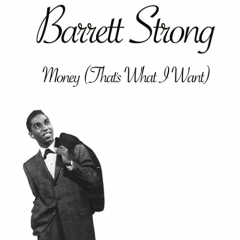
"Money (That's What I Want)” was written by Berry Gordy and Janie Bradford. The song was recorded at Hitsville USA in Studio A by Barrett Strong and released as a single in August 1959. Produced by Berry Gordy, the song was released on Gordy's Tamla label, the precursor to his Motown label, both out of Detroit. It went to #2 on the Billboard Hot R&B Singles chart and #23 on the Billboard Hot 100 Singles chart, and has been certified Gold by the Recording Industry Association of America. Personnel on the record were: Barrett Strong (vocals, piano), Berry Gordy (piano), Eugene Grew (guitar), Benny Benjamin (drums), and Brian Holland (tambourine). Other musicians on the record are uncredited.
The Beatles recorded the song in July 1963 at EMI Studios in London, with George Martin producing. It was included on the With the Beatles LP in the UK, and The Beatles’ Second Album in the U.S. The UK band The Flying Lizards recorded a new wave version of the song and released it as a single in July 1979. It charted at #5 on the UK charts and #50 on the Billboard Hot 100 Singles chart in the U.S.
Barrett Strong is an American R&B singer and songwriter. His version of "Money (That's What I Want)" was the first hit single for Berry Gordy's Motown records enterprise. In the mid-1960s, Strong became a lyricist for Motown, penning lyrics for artists such as The Temptations, Gladys Knight and the Pips, Edwin Starr, Marvin Gaye, and others. He has released four studio albums and 16 singles. Strong is a member of the Songwriters Hall of Fame. At the age of 80, he is semi-retired from the music business.