One of the major shocks of the pandemic was walking into supermarkets to see vast stretches of bare shelves where, for decades, stacks of toilet paper, diapers, infant formula, cooking oil, and even white flour used to magically repopulate overnight. The fix turned out to be relatively easy: Get people back to work and work out the kinks in delivery networks. (Now our only concern is how expensive everything is!) Rebuilding inventories in the oil and gas industry, in contrast, is an ever-present concern, longer-term in nature and more complicated, involving a wide range of variables and uncertainties. In today’s RBN blog, we examine the challenges that exploration and production (E&P) companies face in their efforts to more efficiently and cost effectively replace their oil and gas reserves — and we highlight some early warnings signs of potential future inventory issues.
The replay of our Fall 2026 School of Energy (September 9 & 10, Houston) is now available online!
Learn from RBN experts, participate in hands-on Excel modeling, connect with industry peers, and gain a stronger understanding of today's interconnected energy markets.
We recently examined the crucial issue of oil and gas reserves and what they tell us about the longevity of U.S. production in Say You’ll Be There. EIA estimates of “proved” reserves, which are assumed to have at least a 90% chance of eventual recovery under existing economic and operating conditions, imply about 10 years of remaining volumes of crude oil and condensate and 10-17 years of remaining volumes of natural gas in the major producing basins. While these estimates (at least on the liquids side) may seem concerning, estimated current hydrocarbon recovery is only about 10%-15% in most basins, meaning there’s still a lot of resources left in the ground beyond proved reserves. Also, it's important to remember that technological advances — such as the implementation of horizontal drilling and hydraulic fracturing — triggered a Shale Revolution that transformed the U.S. E&P industry and it’s likely that technology and productivity will continue to improve, making the recovery of additional volumes very likely.
With that as a preface to the industry-wide concerns, it’s helpful to drill down past the basin level to look at the individual E&Ps and their strategies to approach the issue of reserves and reserve replacement. The level and effectiveness of reserve replacement spending by U.S. E&Ps are key to their profitability — and survival — and also help to determine the longevity of domestic oil and gas production as a whole. In this blog series, we will take a detailed look at the reserve replacement performance of the major public E&P companies we track. We’ll start with a detailed example of how a company’s reserve replacement can be measured using a top-tier E&P — Diamondback Energy.
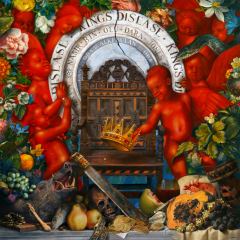
About the song
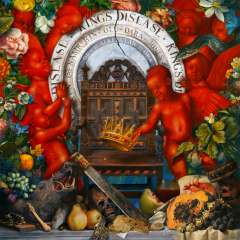
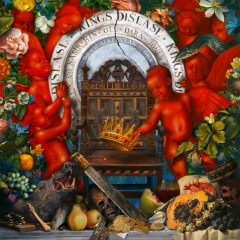
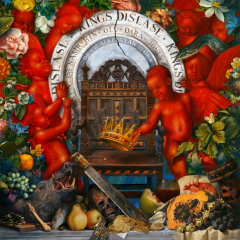
“Replace Me” was written by Nas, Sean Anderson, Caleb Toliver, Hollis, Rashad Muhammad, Ella Mai, Varren Wade, Quinton Q. Gulledge and Dijon McFarlane. It appears as the sixth song on Nas’s 12th studio album, King’s Disease. The song features fellow rap artists Don Toliver and Big Sean appearing with Nas. Released as a single in August 2020, it went to #49 on the Billboard R&B/Hip-Hop Songs Singles chart. A video directed by Christian Sutton and featuring Nas, Don Tolliver, Big Sean and Hit-Boy was released to support the single. Personnel on the record were: Nas, Don Toliver and Big Sean (vocals), MonoNeon (bass, sampling, programming), and Hit-Boy, Exit Goodchild and Gabriel Zardes (sampling, programming).
King’s Disease was recorded during early 2020 and produced by Hit-Boy, Gabriel Zardes, Audio Anthym, Corbett, Cyanca, G.Ry, Haze, J. Pelham, Pat Junior, Penthouse Parti and Roget Chahayed. Released in August 2020, the album went to #5 on the Billboard 200 Albums chart. The album won a Grammy Award for Best Rap Album at the 63rd Annual Grammy Awards. Three singles were released from the LP.
Nas (Nasir bin Olu Dara Jones) is an American rapper rooted in East Coast hip hop. He is the son of American jazz musician Olu Dara. Nas began his hip hop career in 1989, and released his debut album, Illmatic, in 1994. He has released 16 studio albums, five compilation albums, one EP and 79 singles. He has sold more than 35 million records worldwide. Nas has also appeared in a few films and television shows. He continues to record and tour.