Credit is the lifeblood for most individuals and corporations, especially capital-intensive entities like oil and gas producers. The credit score that so strongly impacts our ability to finance a house or car, get approved for an apartment, or qualify for our dream job, is not simply based on how much we own, but several other factors, including metrics that compare our debt load with our net worth and the assets being financed, and consider the percentage of our income needed to service that debt. For E&Ps, similar metrics involving the value of their oil and gas reserves and the relationship between their income and interest payments determine the size of their revolving credit facilities, their ability to access debt capital markets, and the cost of capital they pay. Today, we analyze COVID’s impact on the credit metrics of oil and gas producers and discuss the pace and scope of the ongoing recovery.

We documented the dramatic impact of the pandemic-induced oil price crash on E&P companies just over a year ago in Spring Breakdown. Producers responded by making steep cuts in capital and operating budgets, shutting in wells, and halting — or at least postponing — future development. Thanks to the quick response, fears of a significant increase in gross debt proved unfounded, as the 39 E&Ps we monitor exercised capital discipline and actually reduced total year-end 2020 net liabilities by nearly $14 billion to $151 billion. The topic of capital discipline is one that we covered in detail in A Well Respected Man and subsequently in Take It Easy. We’ve also referenced the topic frequently, as it affects RBN’s outlook for crude production (see last Tuesday’s blog about the prospects for $100/bbl oil) — an outlook, by the way, that was quickly adopted by some in the mainstream business media as their own. Despite producer’s efforts, however, they were helpless to prevent a major deterioration in certain credit metrics caused by the oil price implosion, two of which we’ll discuss in this blog. First, sharply lower oil prices forced companies to write down the total value of their oil and gas reserves — the major component of their corporate asset value — by approximately $100 billion (or 20%) to $389 billion. The result was an increase in their debt-to-capital ratio (or net asset value), a metric used by bank syndicates in determining the revolving credit commitment for producers. Second, sharply lower realizations slashed E&Ps’ income, which reduced their ability to repay debt, as reflected in their interest coverage, a.k.a. their EBITDA-to-interest ratio. Interest coverage is an important factor in a company’s ability to place new debt and to generate sufficient free cash flow for capital investment and shareholder returns.
Before we do the numbers, let’s talk about why it matters. First, companies with low credit ratings, like the rest of us, have sharply reduced access to capital and face much higher interest rates for the funds they are able to access. The cost of capital directly affects producers’ bottom lines. In the longer term, limited access to capital, which is reflected in the size of lender commitment to their revolving credit facility, can hamstring a producer’s prospects for future growth. Exploration and production is, by its nature, a capital-intensive and long-cycle business. Companies that can’t invest in the future risk ending up in a death spiral in which lower outlays lead to lower production which begets revenue/borrowing base … and the cycle continues until they default somewhere. So it’s important that E&Ps protect these metrics. Next, we’re going to go through the credit metrics of our three E&P peer groups: Oil-Weighted, Diversified, and Gas-Weighted.
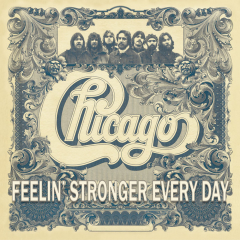
About the song
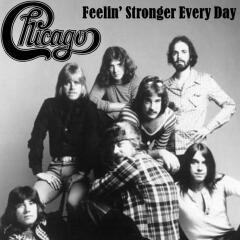
"Feelin' Stronger Every Day" was written by Peter Cetera and James Pankow. It appears as the fifth cut on side two of Chicago's fifth studio album, Chicago VI. (Roman numerals are confusing on Chicago albums due to the fact that their actual fourth album — the four-record box set, Chicago at Carnegie Hall — had no numerals assigned to it.) "Feelin' Stronger Every Day" was released as a single in June 1973, and went to #1 on the Billboard Hot 100 Singles chart. Personnel on the record were: Peter Cetera (lead vocals, bass), Robert Lamm (keyboards, backing vocals), Terry Kath (guitar, backing vocals), Danny Seraphine (drums), James Pankow (trombone), Lee Loughnane (trumpet), and Walter Parazaider (tenor sax).
Chicago VI was the first album the band recorded at producer James Guercio's newly completed Caribou Studios in Nederland, CO; it would be the band's recording base for the next four years. Recorded during February 1973, the LP was released in June 1973. It went to #1 on the Billboard Top 200 Albums chart, and has been certified 2X Platinum by the Recording Industry Association of America.
Chicago is an American rock band formed in Chicago in 1967. The band was originally called The Big Thing, but changed its name to Chicago Transit Authority in 1968 and shortened it to Chicago the following year. They have released 24 studio albums, seven live albums, 11 compilation albums, and 64 singles. They have won two American Music Awards, five Grammy Awards, three Billboard Awards, and a Grammy Lifetime Achievement Award, and are members of the Rock and Roll Hall of Fame, Songwriters Hall of Fame, and Grammy Hall of Fame. Thirty-two members have passed through the band’s ranks since its formation. Original members Robert Lamm, Lee Loughnane, and James Pankow, along with eight other band members, still record and tour as Chicago.