As U.S. E&Ps deal with a slew of shorter-term challenges such as broken supply chains, labor shortages, and infrastructure constraints, they’re also paying increasing attention to a longer-term concern: “inventory exhaustion.” There is a growing chorus of analysts asserting that oil and gas producers’ inventory of top-tier drilling locations has been significantly depleted as the nation’s major unconventional resource plays mature. Many producers have continued to rein in their capital spending and husband their current resources and several have boosted inventories through bolt-on acquisitions. Premier E&P EOG Resources has taken a different approach, emphasizing organic exploration that has led to the discovery of two new significant plays over the past two years, including the recent announcement of a new Utica Shale combo play that it describes as being “almost reminiscent” of the early Delaware Basin. In today’s RBN blog, we discuss EOG’s dramatically different approach to building inventory and dive into the details of its new Utica discovery.
From the onset of the Shale Revolution, E&Ps funded double-digit annual growth that boosted output from 5.5 MMb/d in 2010 to nearly 13 MMb/d in 2019 before the pandemic-induced demand destruction disrupted the industry. Despite soaring crude prices, booming markets, and ever-improving drilling-and-completion technology, post-pandemic U.S. oil production recovery has proceeded at a much more tepid pace, frustrating politicians and consumers in the process. U.S. crude oil production may finally reach 2019’s average level next year, although the Energy Information Administration (EIA) has twice reduced its 2023 growth forecast to a current 4%, or 480 Mb/d.
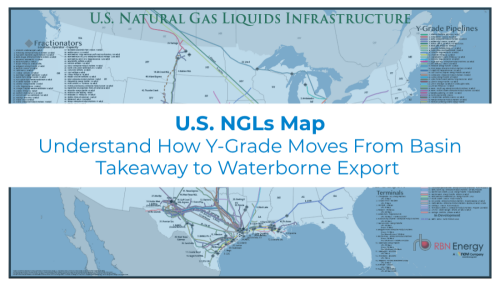
Visualize the infrastructure behind U.S. NGL movement.
The U.S. NGLs Map provides a comprehensive view of the transport, processing, and export networks moving NGLs across the U.S.
Major factors in the anemic rebound include producers’ new laser-focus on cash returns, plus shortages in labor and materials, sharply higher costs and (in some areas) insufficient pipeline takeaway capacity. There are longer-term worries too — not just the uncertain timing and impacts of the energy transition, but also that, after more than a decade of aggressive development, the inventory of top-tier drilling locations in maturing resource plays appears diminished. According to one recent analysis, the number of highly productive locations in the U.S.’s top five plays have been cut in half since 2016.
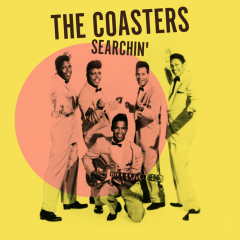
About the song
“Searchin’” was written by Jerry Leiber and Mike Stoller and appears as the first song on side one of the Coasters' debut album, The Coasters. Released as a single in March 1957, the song went to #1 on the Billboard R&B Songs chart and #3 on the Billboard Hot 100 Singles chart. “Searchin’,” along with its B-side, “Youngblood,” helped launch The Coasters from the R&B market into a chart-busting rock and roll group. Personnel on the record were: Bobby Nunn, Richard Berry, Billy Richard and Roy Richard (vocals), Mike Stoller (piano), Gil Bernal (saxophone), Barney Kessel (guitar, mandolin), Ralph Hamilton (bass), Jesse Sailes and Abe Stoller (drums), and Joe Olivera (percussion).
The Coasters was the debut album for the group of the same name. Released in May 1957 on Atco Records, the LP was a compilation of previous hit singles released by the group along with cuts done by The Robins, a group in which two of The Coaster previously participated.
The Coasters are an American rhythm and blues/rock and roll vocal group formed in Los Angeles in October 1955, when two of The Robins signed a new record deal with Atco Records in L.A. They were named The Coasters because they went back and forth from the West Coast to the East. The original Coasters were vocalists Billy Guy, Leon Hughes, Carl Gardner, and Bobby Nunn, along with guitarist Adolph Jacobs. In 1957 Nunn and Hughes moved to New York City and joined with Cornell Gunter and Dub Jones to form an updated version of the group. Their association with the songwriting team of Leiber and Stoller was an immediate success, resulting in a string of hit records. In 1987, The Coasters became the first group inducted into the Rock and Roll Hall of Fame. In 1999 they were inducted into the Vocal Group Hall of Fame. They released three studio albums, five compilation albums, and 15 singles. Twenty-one members have passed through the group since its formation. Carl Gardner Jr.’s widow, Vera Gardner, owns the rights to The Coasters’ name. The group still tours, with no original members.