U.S.-based companies soon may have expanded opportunities in Mexico’s liquefied petroleum gas market—not just in supplying LPG from U.S. natural gas processing complexes and oil refineries but in storing and delivering the propane/butane mix to customers. The emerging opportunities are tied largely to Mexico’s efforts to open up and deregulate its energy sector, whose LPG sub-sector has long been dominated by the government-owned Petroleos Mexicanos and hamstrung by LPG price controls. Today, we conclude our series on propane/butane supply, demand and infrastructure South of the Border.
LPG (mostly propane but including some butane, two members of the natural gas liquids – NGL – family) is relatively inexpensive—at least it is right now—but delivering it to market isn’t easy. LPG has a low boiling point (somewhere between 30 degrees Fahrenheit and -43 degrees F, depending on the propane/butane mix), and it has to be kept under pressure to remain a liquid for cost-effective transportation. That means delivering LPG in pressurized pipelines, ships, railcars and/or trucks, and ultimately (when delivered to residential and small commercial customers) by truck-mounted hoses into mounted or buried tanks or by hand in small, pressurized tanks similar to those attached to millions of U.S. barbecue grills. Delivering LPG in Mexico can be particularly challenging; LPG pipeline infrastructure there is modest (at best), and the common use of LPG for cooking and heating--even in many major metropolitan areas—means the retail truck supply chain is extensive.
As we said in Episode 1, Mexico is the world’s seventh-largest consumer of LPG; it uses 280 Mb/d, on average, about 60% of that use is residential, 14% commercial and 9% industrial, including petrochemical production (another 10% is for LPG use as a fuel for trucks and cars). About two-thirds of the LPG consumed in Mexico is produced there; the rest (about 93 Mb/d) is imported, with about 70% of imports (66 Mb/d; or nearly one-fourth of Mexico’s total needs) coming from the U.S. We also discussed the Mexican government’s plan—part of a larger energy sector deregulation effort—to eliminate (in January 2016) the current mandate that Petróleos Mexicanos (Pemex) serve as the middleman on all LPG imports to Mexico, and to end (in January 2017) the long-standing practice of a government-set retail LPG price.
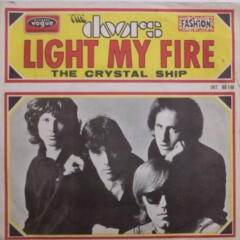
About the song
“Light My Fire” was an important 1967 hit by The Doors; it spent three weeks at the top of the Billboard Hot 100, and was later ranked by Rolling Stone magazine as the 35th Greatest Song of All Time. In 1968, José Feliciano released his cover of the song; his version peaked at Number 3 on the Billboard Hot 100.