
A federal judge in Delaware on November 29 signed the sale agreement on a $5.9 billion cash bid from hedge fund Elliott Investment Management to purchase three coveted CITGO refineries, along with a number of associated midstream assets. This is the latest — and potentially last — turn in an eight-year legal fight over CITGO’s parent, PDV Holding, and names Elliott affiliate Amber Energy as the winning bidder for the plants, which have a combined refining capacity of more than 800 Mb/d. In today’s RBN blog, we’ll discuss Amber’s plans for the CITGO refineries.
Let’s start with some background. As we detailed in I’ll Be Around, there’s been a primarily below-the-radar battle playing out in the U.S. District Court for the District of Delaware since 2017 about how best to help satisfy the claims of a dozen-plus creditors who collectively lost more than $20 billion when the government of Venezuela — the de facto owner of CITGO Petroleum and its parent company, PDV Holding (PDVH) — defaulted on its bonds. (In 2019, control of CITGO was transferred away from the ruling Maduro regime in Venezuela to the opposition “shadow” government, then led by Juan Guaidó.) In May 2021, U.S. District Court Judge Leonard P. Stark appointed Robert B. Pincus as a special master tasked with devising a plan to sell PDVH/CITGO to satisfy at least some portion of the outstanding claims. After a two-round bidding process that concluded in June 2024, Pincus recommended in September 2024 that the district court approve Amber Energy and its $7.3 billion bid for CITGO and its three refineries (Lake Charles, LA; Lemont, IL; and Corpus Christi, TX). However, instead of ending the drama, the court restarted the bidding from scratch in December 2024, citing issues with the auction process.

The Future of Fuels bi-annual report by RBN's Refined Fuels Analytics provides an in-depth analysis of the U.S. and global refinery industries, focusing on crude oil and fuel market dynamics, supply and demand, alternative fuels, refinery capacities, and price forecasts to help stakeholders navigate the evolving energy landscape.
As a result of the new bidding round, the court in July recommended a $7.4 billion bid from Dalinar Energy, the U.S. subsidiary of Canadian miner Gold Reserve. But by August 30, that deal was overtaken by what the court described as a “superior” proposal from Amber Energy — even though its bid included less cash. (Amber’s offer included $5.86 billion in cash and $2.86 billion in strategic debt settlements; together with $105 million of break fees paid to writ holders, it equates to a total value of $8.821 billion.) Pincus approved Amber’s bid, saying that Dalinar’s proposal did not match or exceed it despite a last-minute attempt to improve the terms (Dalinar later raised its bid to $7.9 billion).
Earlier this fall, several parties were pushing to scrap the auction and start from scratch (again). Judge Stark heard testimony on October 21-22 from CITGO, PDVH and the Venezuelan government, which argued that Amber Energy’s bid was far too low. But on November 25, Stark dismissed the objections and gave Amber the green light, giving parties until November 28 to submit any remaining objections. Several entities filed objections, but the court entered a sale order on November 29 authorizing the transfer of PDVH’s shares to Amber. The transfer is subject to U.S. regulatory and Treasury Department approvals and could face appeals by Venezuela and other parties. The sale is expected to close next year, assuming the required approvals are obtained and any appeals do not result in a reversal. Then, proceeds will be distributed to Venezuela‑linked creditors in line with the court’s priority schedule.
Before we dive into Amber Energy’s plan, let’s briefly highlight each refinery. The 479-Mb/d Lake Charles Refinery in southwestern Louisiana (refinery icon at bottom of Figure 1 below) is the seventh-largest in the U.S. and CITGO’s most valuable asset. Using various criteria, RBN’s Refined Fuels Analytics (RFA) practice ranks it among the 10 most competitive refineries along the Gulf Coast. The Lake Charles facility is highly complex, with a broad range of downstream processing units, which allow it to profitably process a wide variety of crudes and other feedstocks into valuable refined products, including various grades of gasoline, jet fuel, ultra-low-sulfur diesel (ULSD), benzene, propylene and other products. Also, the refinery’s multiple processing trains give it significant additional operating flexibility, enhancing its ability to respond effectively to changing market conditions and crude and product differentials. CITGO completed a very cost-effective, 38-Mb/d expansion of the refinery in Q1 2023 and recently increased capacity by another 16 Mb/d in a similarly efficient way to reach its current level as it continues to invest in the facility to improve its capabilities, competitiveness and market responsiveness.
About the song
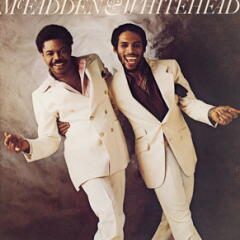
“Ain’t No Stoppin’ Us Now” was written by Gene McFadden, John Whitehead and Jerry Cohen. It appears as the first song on side one of McFadden & Whitehead’s eponymous debut album. The disco song, like Gloria Gaynor’s “I Will Survive,” which was released a few months prior, is a driving dance tune about positivity in the face of oppression. Considered an anthem of black pride by many, singer/songwriter John Whitehead said it was written by a desire to have more independence from Philadelphia International Records owners Gamble and Huff, who wanted the duo as songwriters, but not initially as recording artists. Kudos must be given to bass player Jimmie Williams on the song, whose P-Bass propels the tune into a deep dance groove. Released as a single in April 1979, it went to #1 on the Billboard R&B and #13 on the Billboard Hot 100 Singles charts. It has been certified 2X Platinum by the Recording Industry Association of America. Personnel on the record were: Gene McFadden (lead vocals), John Whitehead (lead vocals), James Harris, Bobby Eli (guitar), Jimmie Williams (bass), Jerry Cohen (keyboards), Keith Benson (drums), Barbara Ingram, Carla Benson, Evette Benton (backing vocals), and Don Renaldo and his String and Horn Sections (orchestral accompaniment).
The album, McFadden & Whitehead, was recorded in 1978-79 at Sigma Sound in Philadelphia. Produced by Gene McFadden, John Whitehead and Jerry Cohen, it was released in May 1979 and went to #5 on the Billboard R&B and #23 on the Billboard 200 Albums charts. Three singles were released from the LP.
McFadden and Whitehead were an American R&B vocal duo best known for the hit “Ain’t No Stoppin’ Us Now.” The duo met while in high school in the 1960s and formed a group called The Epsilons. Gamble and Huff groomed the duo as a songwriter and production powerhouse for Philadelphia International Records. They were responsible for co-writing and producing such hits as “Back Stabbers” for The O Jays, “Bad Luck” by Harold Melvin and the Blue Notes, and “Let’s Mend What's Been Broken” by Gloria Gaynor. They released three studio albums, a compilation album and eight singles. John Whitehead was murdered outside his home in Philadelphia in May 2004. He was 55. Gene McFadden died in Philadelphia in January 2006 at 56.
"About the Song" -- written by Mickey McMahan , RBN Director of Musicology