With natural gas production growth outpacing gas-demand growth in both the U.S. and Canada, gas producers in both countries are engaged in an increasingly fierce and costly fight for market share. Until recently, there were only skirmishes. For instance, when burgeoning Marcellus/Utica shale gas supplies lowered Northeast destination prices, TransCanada cut transportation rates on its mainline to help Western Canadian suppliers compete. When Northeast supply eventually exceeded Northeast demand on an annual basis, Canadian producers and shippers redirected more gas exports to the Midwest and West markets. But now, supply congestion on both sides of the U.S.-Canada border is worsening in every border region, to the point where options to maneuver into alternative markets are shrinking. This is war, folks — competition for U.S. gas market share between Canadian and U.S. producers is about to get much stiffer and the price discounts much deeper — deep enough to eventually price some production basins out of the market. Today, we discuss highlights from RBN’s new Drill Down Report on the subject.

The Crude Oil Billboard keeps readers at the forefront of the U.S. crude oil market by offering access to data and information moments after its release. Say goodbye to PDF reports that come out after the market has already moved on.
Combined Lower-48 U.S. and Canadian natural gas production has increased to a staggering 96 Bcf/d, but gas demand within the two countries has not kept up. On the Canadian side, there is a growing imbalance between supply and demand in Alberta (where 80% of Canada’s natural gas is produced), which is exacerbated by the constraints for gas moving from the supply area to intra-provincial destination markets, namely the oil sands demand area in eastern Alberta. Gas production has been climbing for the better part of this decade, and just last November (2017) it breached the 16 Bcf/d mark, returning to the highest level since 2008, after it had dropped back to less than 14 Bcf/d in 2012.
Intra-provincial demand for gas in Alberta has been on the rise as well, from the two largest gas-consuming sectors: bitumen production in Alberta’s oil sands, which depends on large volumes of gas-generated steam, and gas-fired power generation. But demand hasn’t grown quite as fast as production, and, what’s more, the incremental demand there has been challenging to get to, considering that shippers rely on one main legacy gathering and transportation system in Alberta — TransCanada’s NOVA Gas Transmission Ltd. (NGTL) — that wasn’t originally designed to move that gas from west to east within Alberta. (Alliance Pipeline also provides takeaway capacity from the Alberta producing area, but it bypasses local demand markets and moves the gas directly into the U.S. Midwest.) NGTL has faced punishing constraints in the past nine months or so, at times sending Alberta gas prices at the AECO hub into negative territory (see Figure 1).
|
Special Interactive Map Access! This Drill Down Report includes four interactive maps – three regional maps that zero in specific infrastructure discussed in the report and one comprehensive map that ties it all together and shows how the pipelines interrelate. The maps are built with RBN’s Midstream Infrastructure Database Interface (MIDI). MIDI users can zoom in on the import and/or export pipelines connecting Canada with specific U.S. regions (the Northeast, Midwest and West); highlight international border points; add satellite imagery; and reveal additional information about the pipelines. |
About the song
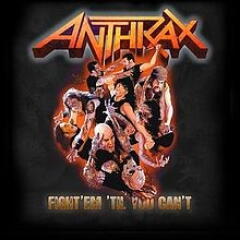
"Fight 'Em 'Til You Can't" was the first single from American heavy metal band Anthrax's 2011 album Worship Music. The song was the first new recording featuring original Anthrax singer Joey Belladonna since 1991. It was released as a free download to fans on their website in June 2011 as a thank you for being patient while they finished recording the Worship Music LP, which they released two and a half months later. The personnel on this record are: Joey Belladonna (lead vocals), Rob Caggiano (lead guitar), Scott Ian (rhythm guitar and background vocals), Frank Bello (bass and background vocals), and Charlie Benante (drums).
Anthrax was formed in the borough of Queens in New York City in 1981 by Scott Ian and the group’s original bassist, Dan Liker. The group was a pioneer in the thrash metal scene in the 1980s — others were Slayer, Metallica, and Megadeth. Anthrax has had 29 different band members during their 37-year history, with Scott Ian being the only remaining founding member. Ian and Charlie Benante are the only band members to appear on every Anthrax album. They have recorded 11 studio albums, 26 singles, and have sold 2.5 million records in the U.S. and over 10 million worldwide. Anthrax, along with Lamb of God, will be the opening act for Slayer's final tour, which started earlier this month (May 2018) and continues into December.