The crude oil-carrying Dakota Access Pipeline (DAPL) has been up and running for almost six months now, creating new market dynamics in the Bakken. But these changes haven’t garnered all that much attention — they’ve been overshadowed by talk of Permian production growth, Gulf Coast pricing and Cushing pipeline capacity. Now though, with news of super-long three-mile laterals and increasingly positive producer sentiment, the Bakken is once again shifting into the limelight — and the 525-Mb/d DAPL from western North Dakota to Patoka, IL is center-stage. Today, we discuss DAPL’s effects on Bakken crude prices, market access, other takeaway pipelines and crude by rail.
Much has transpired since our last blog on Bakken crude production and pipeline takeaway capacity, What a Difference a DAPL Makes, and today we’ll revisit the prolific basin. In that March 2017 post, we focused on the potential for a production rebound and what DAPL would mean for a region that was looking for new, additional pipeline capacity. But what has happened to volumes since?
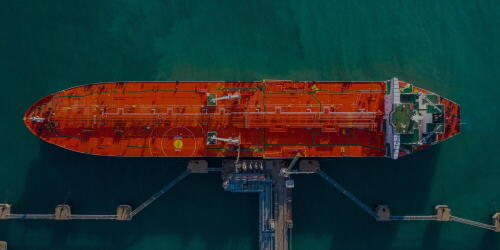
The Crude Voyager is a weekly analysis of U.S. Gulf Coast loading activity that explains the ebbs and flows of crude loadings, destinations, and geopolitical issues impacting U.S. exports. It outlines the major paths for laden tankers hauling U.S. crude all over the world and reflects the change in tanker departures to the main regions that consume U.S. crude.
As a note, the Bakken refers to a production area that encompasses parts of western North Dakota, eastern Montana and parts of southern Saskatchewan and Manitoba. We will be primarily focusing here on North Dakota production for data purposes, as it is the major driver in the Bakken growth trajectory. Later, we will include Montana and South Dakota as we look at applicable takeaway capacity/outflow numbers.
Back in that March blog, we reported that the Baker Hughes North Dakota oil rig count was beginning to rebound from mid-2016 averages at 27 rigs into the low 30s (red line and right axis in Figure 1). This past summer, as prices for light-crude benchmark West Texas Intermediate (WTI) started to stabilize in the low-to-mid-$50/bbl range, we saw the rig count rise as high as 53 (in July) and more recently settle in at 51 and 50 (in October and November, respectively).
As we noted then, North Dakota crude oil production (blue area and left axis in Figure 1) had started to feel the effects of the lower price environment at the end of 2015 into 2016. We saw North Dakota production fall below 1 MMb/d for the first time in two years in August 2016. In 2017, production has seen a few dips south of 1 MMb/d but has maintained a fairly steady upward trajectory as production has climbed from 983 Mb/d in January to just over 1.1 MMb/d in September, according to the most recent production numbers from the North Dakota Pipeline Authority (NDPA).
About the song
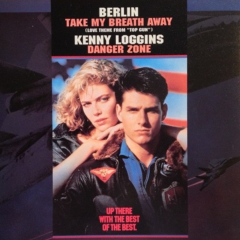
“Take My Breath Away” was the second single from the Top Gun soundtrack album, the first being “Danger Zone” by Kenny Loggins. Written by Giorgio Moroder and Tom Whitlock, and performed by the band Berlin, “Take My Breath Away” won the 1986 Academy Award for Best Original Song and hit #1 on the Billboard Hot 100 charts.