The world is in desperate need of more crude oil right now and anybody with barrels is scouring every nook and cranny for any additional volume that can be brought to market. Some of that may come from increased production, but the oil patch is a long-cycle industry, just coming off one of the most severe bust periods ever, and it will take time to get all the various national oil companies, majors, and independents rowing in the same direction again. For now, part of the answer will be to drain what we can from storage — after all, a major purpose of storing crude inventories is to serve as a shock absorber for short-term market disruptions. To that end, the U.S. is coordinating with other nations to release strategic reserve volumes to help stymie the global impact of avoiding Russian commodities. Outside of reserves held for strategic purposes though, commercial inventories have already been dwindling as escalating global crude prices have been signaling the market to sell as much as possible. Stored volumes at Cushing — the U.S.’s largest commercial tank farm and home to the pricing benchmark WTI — have been freefalling for months, which raises the question, how much more (if any) can come out of Cushing? In today’s RBN blog, we update one of our Greatest Hits blogs to calculate how much crude oil is actually available at Cushing.

To truly understand Cushing — what it does and how it works — you need to know the hub’s assets and how they fit together. RBN’s Cushing Crude Oil Playbook provides the first one-stop, comprehensive guide to the hub’s assets.
The Midcontinent trading and storage hub at Cushing, OK has an estimated 94 million barrels (MMbbl) of “shell” storage capacity, according to the Energy Information Administration, or EIA. (About 2 MMbbl of that was temporarily out of service at the time of the last EIA survey in March 2021 but could have been placed back in operation within 90 days of the report date following maintenance or repair. Also, Keyera Corp. brought on about 4.5 MMbbl of additional capacity since that report was released). There are 16 owners of storage capacity at Cushing but the ownership is highly concentrated, with about 67% held by three companies: Plains All American, Enbridge and Magellan Midstream Partners. Another 20% is held by four others: Energy Transfer (through its Rose Rock Midstream and Sunoco Logistics subsidiaries), Keyera, NGL Energy Partners and Deeprock Energy Resources. (Check out the Cushing Playbook for detailed maps of the Cushing facilities.) The EIA estimated in their March 2021 report that 13% of Cushing storage was used by the owners and 87% was leased out to third parties. It is important to note that most of that third-party storage capacity is leased out under long-term (5 years or more) contracts. As we said in Part 1, producers, midstreamers and refiners use Cushing for operational purposes — that is, as a sort of waystation where crude can be received, blended to meet refinery specifications, and sent out when refineries need it — a characteristic sometimes overlooked when inventories get swung by prices.
And that happens from time to time with all storage but particularly at Cushing because it is also the delivery point for the CME/NYMEX futures contracts for West Texas Intermediate (WTI) — one of the most widely and actively traded physical commodity futures contracts in the world and the benchmark underpinning most physical U.S. crude oil purchase and sales contracts. In addition to the operational reasons for storage noted above, producers and marketers active at the hub also use the storage for commercial operations, primarily to take advantage of market opportunities around the timing, volume or quality of crude supplied from producers to refiners.
About the song
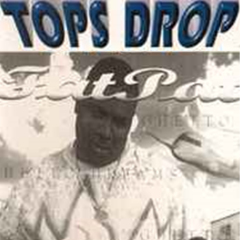
"Tops Drop" was written by Fat Pat and J. Slash. It appears as the 12th song on Fat Pat's 1998 debut solo album, Ghetto Dreams. Released in March 1998 as a single, it went to #5 on the Billboard Hot Rap Songs chart and #10 on the Billboard Bubbling Under Hot 100 Singles chart. The song, produced by J. Slash, features Fat Pat on vocals, with beats by Platinum Soul. The song has been featured at many sporting events in Fat Pat's hometown of Houston, and in 2015 a petition was started to make it the official anthem of Houston.
Ghetto Dreams was recorded in 1997-98 at J2 Recording Studio in Houston. Production was handled by Double D, Noke D, Sean "Solo" Jemison, Prowler, Big Swift, and J. Slash. D. Reck served as executive producer. Released in March 1998, the LP went to #39 on the Billboard Top R&B/Hip-Hop Albums, and #19 on the Billboard Top Heatseekers Album charts. It was released just one month after Fat Pat was found murdered in Houston. "Tops Drop" was the only single released from the album.
Fat Pat (Patrick Lamark Hawkins), also known as Mr. Fat Pat and P-A-T, was an American rapper from Houston. He was a member of Dead End Alliance (DEA) with his brother Big Hawk, DJ Screw, and Kay-K –- all original members of the Screwed Up Click (SUC). SUC was heavily involved in the southern rap screw scene (slowing down tracks for a better feel). Fat Pat released six posthumous solo albums and one single. He released one LP with Dead End Alliance, and was a featured rapper on three other singles. Fat Pat was shot and killed in Houston at the age of 27 in February 1998. His murder remains unsolved. His brother, rapper Big Hawk, was murdered eight years later.