Crude-oil-focused production in the Bakken still hasn’t fully recovered from its pre-COVID high, partly because the western North Dakota shale play continues to face takeaway constraints, especially for natural gas and NGLs. A couple of NGL pipeline projects in the works will certainly help, but will they be enough to enable the Bakken’s increasingly consolidated E&P sector to ramp up its crude oil production? And one more thing: How will the incremental NGLs flowing south on Kinder Morgan’s soon-to-be-repurposed Double H Pipeline find their way to fractionation centers in Conway and Mont Belvieu? In today’s RBN blog, we’ll look at the Bakken’s complicated production-vs.-takeaway conundrum and the ongoing efforts to address it.

The Natural Gas Master Class is a one-day online event focusing on understanding flow analysis, interpreting pipeline data and forecasting future flows. This course is designed to equip you with the knowledge and skills to effectively analyze the complexities of natural gas markets, flow analysis, and pipeline modeling. Join us online
October 21 | Online
The Bakken was one of the first beneficiaries of the Shale Revolution — from 2009 to 2019, crude oil production there increased more than 10-fold, topping out at about 1.5 MMb/d before the pandemic hit and the play’s output cratered to 900 Mb/d. Production has rebounded somewhat, but remains range-bound near 1.2 MMb/d, well short of its potential. A major reason for the flat-line crude output is that old stumbling block — pipeline takeaway capacity — not so much for crude oil (though that is a lingering concern) but for natural gas and NGLs because, as it turns out, the most prolific oil-focused wells in the Bakken also produce large volumes of liquids-rich associated gas.
As we discussed in Take It To The Limit, the gas-to-oil ratio (GOR) in the Bakken is now well over double what it was a decade ago. While a producer extracted only 1.1 Mcf of gross associated gas for each barrel of crude oil produced, on average, in 2014, that number is now 2.7 Mcf. And the gas packs plenty of NGLs — as much as 9 gallons (or more!) per Mcf, or GPM. Altogether, the Bakken churns out 730 Mb/d of potential NGL production, about 443 Mb/d of which is ultimately recovered with the rest “rejected” into natural gas for its Btu value.
All of which brings us to the Bakken’s pipeline-takeaway specifics, the plans by ONEOK and now Kinder Morgan to add new NGL pipeline capacity, and what they mean for the basin, its producers and its production. As we discussed earlier this year in Take It to the Limit, there are five main ways to move NGLs out of the Bakken: (1) mixed NGLs entrained within “wet” gas on Enbridge and Pembina’s Alliance pipeline (light pink line in Figure 1) to the Chicago area (where the NGLs are separated out), (2) ethane rejected into gas on the Northern Border pipeline (dark-blue line), (3) ethane piped north to Canada on Pembina’s Vantage Pipeline (medium-green line), (4) mixed NGLs piped south to Conway on ONEOK’s Elk Creek and Bakken NGL pipelines (medium-purple and dark-pink lines, respectively), and (5) so-called C3+ NGLs (propane, butanes and pentanes) either trucked or railed away — ethane can’t be transported that way.
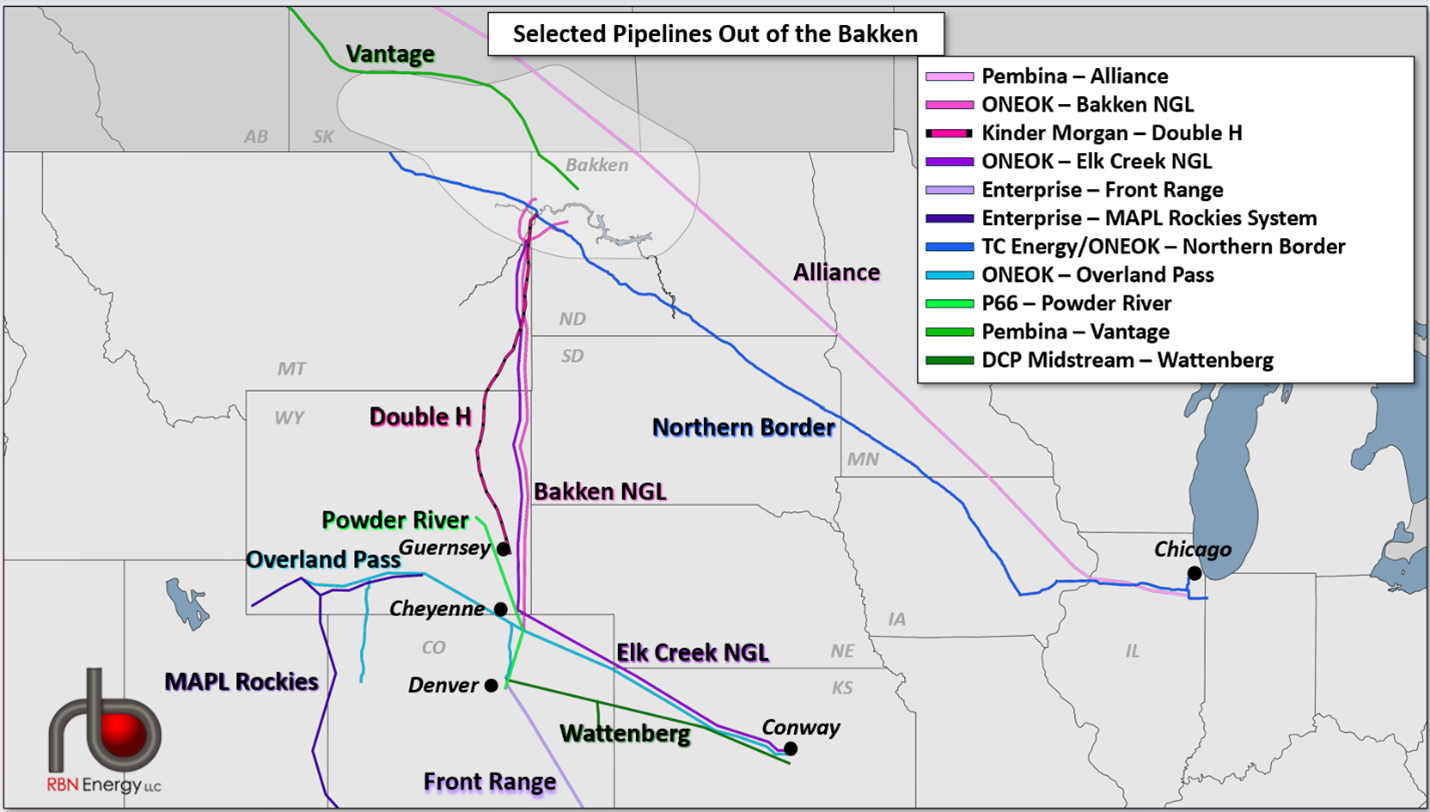
Figure 1. Selected Pipelines Out of the Bakken. Source: RBN
About the song
“Double or Nothing” was written by Paul Williams and Steve Dorff and is performed by Kenny Loggins and Gladys Knight as the third song on side one of Rocky IV: Original Motion Picture Soundtrack album. It was recorded in 1985 at Unique Recording Studio in New York City, produced by Bernard Edwards, and engineered by Josh Abbey. Personnel on the record were: Kenny Loggins (vocals), Gladys Knight (vocals), Casey Young (synthesizer programming, drum programming), and Nile Rodgers (guitar solo).
Rocky IV: Original Motion Picture Soundtrack is the only score for a Rocky movie not composed by Bill Conti. It features nine different artists and 10 songs utilizing a variety of producers on different tracks. The album was released on Scotti Brothers Records in November 1985 and went to #10 on the Billboard 200 Albums chart. It has been certified Platinum by the Recording Industry Association of America. Four singles were released from the LP. Two singles, “Burning Heart” by Survivor and “Living in America” by James Brown, were Top 5 hits.
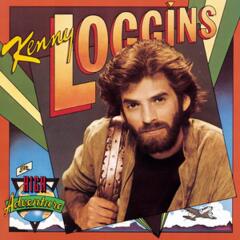
Kenny Loggins is an American singer, songwriter and guitarist. His first professional break came in 1970 when the Nitty Gritty Dirt Band recorded some of his songs. From 1972-77, along with Jim Messina, he was half of the popular rock duo Loggins & Messina. Loggins is known as the “King of the Movie Soundtrack.” With Loggins & Messina, he released six studio albums, three live albums, four compilation albums and 11 singles. As a solo artist, he has released 14 studio albums, two compilation albums and 31 singles. He has won a Daytime Emmy Award, two Golden Globe Awards and two Grammy Awards. He continues to record and did his final concert tour in 2023. He will be appearing at a benefit concert for Santa Barbara, CA, first responders in September 2024.
(A side note: Dave Loggins, Kenny’s second cousin, was a singer-songwriter who had one Top 10 hit, “Please Come to Boston,” and also wrote the memorable theme song for the Masters golf tournament. Sadly, Dave passed away July 10 at the age of 76.)
Gladys Knight is an American singer known as the “Empress of Soul.” She recorded several hit records in the 1960s through the ’80s with Gladys Knight & the Pips, which included her brother and two cousins. As a member of the Pips, she released 25 studio albums, three live albums, 22 compilation albums and 77 singles. As a solo artist, she has released 10 studio albums and 18 singles. She has won seven Grammy Awards and is a member of the Rock and Roll Hall of Fame and Grammy Hall of Fame. Knight is a recipient of the National Medal of Arts and Kennedy Center Honors. She continues to record, act and tour.