


When it comes to energy markets analysis, there’s nothing quite like spending the better part of an afternoon piecing together a long chain of unit conversions only to find the next day you’ve misplaced the sticky notes on which you wrote them. We’ve all been there, though for most of us it’s become commonplace to memorize the few hydrocarbon conversions needed to get through a lunch or happy hour. Unfortunately, the same cannot be said when it comes to hydrogen, which brings its own set of unique units of measure, many of them not usually bantered around your typical business development discussion. Crunching through them is tough, in our experience, and we find ourselves writing them down over and over again. Which gave us an idea: why not write a blog on the topic? Fortunately, we are in that business, and today we continue our series on hydrogen with a look a green hydrogen production projects and the math needed to make sense of them.
In observance of today’s holiday, we’ve given our writers a break and are revisiting a recently published blog on the U.S. Hydrogen Market. If you didn’t read it then, this is your opportunity to see what you missed! Happy Easter!
Every two weeks on Thursdays we are in this space discussing our favorite non-hydrocarbon fuel. If you want to catch up on our hydrogen-related research, you might start with our initial blog from last fall, which also introduced a few of hydrogen’s unique characteristics. Also, since we discuss hydrogen production projects today, you may also find our blog on production technologies useful, as well as the follow-up to that piece that focused on production economics. Today we look at existing and planned green hydrogen projects, specifically those that will produce the fuel through electrolysis of water, but we will spend quite a bit of time wrapping our minds around the math needed to really understand the size — or lack thereof — of the various announced initiatives.

Shown below in Figure 1 is our current list of what for now passes for commercial-scale green hydrogen projects in North America, a summary that we keep updated in our weekly Hydrogen Billboard. So far, it’s a pretty short list, but it does seem like the pace of project announcements is starting to pick up steam and we may have missed a few of the smaller ones. We don’t mean to offend in that regard, so if you see an omission, feel free to send us a kind note. Still, the list is long enough to start garnering some knowledge around how green hydrogen projects are presented and discussed. You’ll noticed some usual items in the table, such as the projects’ names and operators. We have also included the electrolysis technology used, where that information is available. Note that PEM in the table stands for proton exchange membrane, which we covered back in the production technology blog referenced above. Also, note that we classify these projects as “green” and you may want to reference our initial blog for an introduction to hydrogen’s color scheme. Also included in Figure 1 are two columns for capacity, though you will notice the units are not what we are used to in the hydrocarbon world. Each project’s capacity is listed in megawatts (MW for short) and kilograms per day (kg/day). We will discuss these units in more detail below, but first wanted to give a brief outline of each project.
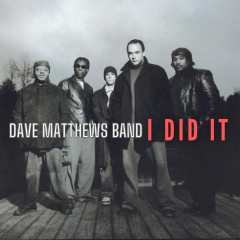
About the song
"I Did It" was written by Dave Matthews and Glen Ballard, and appears as the first song on the Dave Matthews Band's fourth studio album, Everyday. Released in January 2001, it was the first single by a major recording artist to be initially made available to Napster, the controversial free file-swapping service. The song went to #5 on the Billboard Alternative Songs chart, and #71 on the Billboard Hot 100 Singles chart. Personnel on the record were: Dave Matthews (lead vocals, guitar), Carter Beauford (drums, percussion, backing vocals), Stefan Lessard (bass), LeRoi Moore (sax, flute, clarinet, backing vocals), Boyd Tinsley (violin, backing vocals), and Glen Ballard (keyboards).
Everyday was recorded between October and December 2000 at Conway Studios in Los Angeles. Produced by Glen Ballard, the album was released in February 2001. It went to #1 on the Billboard Top 200 Albums chart. All the songs on the album were written by Dave Matthews and Glen Ballard. It has been certified 2x Platinum by the Recording Industry Association of America. Three singles were released from the LP.
The Dave Matthews Band is an American rock band formed in Charlottesville, VA, in 1991 by Dave Matthews, Carter Beauford, Stefan Lessard, Boyd Tinsley, and LeRoi Moore. The band has released nine studio albums, 85 live albums, three compilation albums, two EPs, and 29 singles. It has won one Grammy Award and sold over 31 million records worldwide. Eleven members have passed through the ranks of the band since its formation. Founding member LeRoi Moore died in 2008. The band continues to record and tour, with live dates lined up beginning in June 2021.





Comments
Jason, Great summary of the hydrogen math. To close the loop, if you use the Hydrogen BTU's in thermal application most can equate that energy to gas, oil, etc., however, what if the end use is to put it back into an electric motor via fuel cell or other power generation equipment. How many of the 20MW's, in the case of the Becancour, end up as horsepower/MW on a motor shaft?