After a WSJ story broke in late June that the Commerce Department’s Bureau of Industry and Security (BIS) had permitted the export of condensates by Enterprise and Pioneer, a good number of additional export requests were received by the agency. Then a couple of weeks ago, Reuters reported that the BIS had put a “hold” on the approval of any more requests, implying that potential condensate exports were in limbo. Turns out, as we understand it, there is no limbo – it is nothing more than an administrative process that takes time for any of these requests while the applicant is providing additional supporting information that the BIS requires. There has also been misunderstanding in the industry about the process of receiving BIS approval for exports. But in fact, approval is a fairly straight forward process of having BIS agree that your product should be classified as something designated EAR99 and assigned a CCATS number – for Common Classification Automatic Tracking System. Today we explore this process and what it takes to get condensates approved for export.
The Condensate Export Story
Condensate is a very light form of crude oil being produced in ever-greater volumes these days from US shale formations. “Lease” condensate, produced at the wellhead, condenses into a liquid from natural gas at surface temperature and pressure. There is no universal standard to distinguish lease condensate from crude oil, but some use an API gravity measure greater than 50 or 55 degrees as the dividing line. Outside the US, condensate is produced and marketed as a separate product. In the US, arcane Department of Commerce - Bureau of Industry and Security (BIS) 1970’s era regulations governing the export of crude oil, define lease condensate as crude oil. Under those BIS regulations, exports of US crude are banned except to Canada or in specific circumstances from Alaska and California unless the crude or condensate has been “processed through a crude oil distillation tower” (see With or Without Splitting). Any crude exports under the regulations require a License to be granted by BIS.
These decades old BIS rules seemed set in stone until the end of June this year when the WSJ broke a story that two industry players, Enterprise Products Partners and Pioneer Natural Resources had obtained “letters” from the BIS permitting them to export lease condensate – apparently because their condensate had been subject to satisfactory processing to by-pass the export ban. Everyone assumed that the process satisfying BIS referred to a type of distillation called stabilization that is commonly used in the South Texas Eagle Ford shale basin to remove unstable light hydrocarbons from condensate. We subsequently surveyed publically available data on stabilizers in the Eagle Ford and listed companies with infrastructure in place – including Pioneer Resources (see You’re A Stabilizer Baby – Part 1 and Part 2). Since the story broke, speculation in the industry has continued to focus on exactly what process is required to satisfy the BIS requirements that, for many seem shrouded in mystery.
However, the fog around the BIS process has started to clear. About two weeks ago the Energy Information Administration hosted it’s 2014 Energy Conference, in Washington which included a panel on exports hosted by EIA’s Lynn Westfall, and including John Auers of Turner, Mason, Jason Bordoff of Columbia University and Jacob Dweck, of Sutherland Asbill & Brennan LLP. We learned a lot of good information from that panel. Mr Dweck’s presentation was particularly interesting since he was the attorney who assisted Enterprise in their successful applications to the BIS. Some of Mr. Dweck’s comments and a couple of subsequent discussions assisted in the preparation of this blog.
Bureau of Industry and Secrecy?
One reason for some of the misunderstanding around the condensate export approval is the lack of information about exactly what was approved. After all, BIS did not release the approvals. The information only became public when it was published by the Wall Street Journal. Why can’t the BIS just tell everyone about their ruling and let the industry get back to producing crude oil? Well, the main business of this federal agency is making sure the U.S. doesn’t export critical technologies to the wrong countries. So they spend most of their time making sure computers don’t go to North Korea and missile control systems don’t go to the Middle East. As you can imagine, a lot of that technical information is pretty confidential. Which accounts for the secrecy surrounding these applications. There is no conspiracy.

About the song
We would like to offer our special thanks to Shelley Wong, associate with Sutherland Asbill & Brennan LLP for her help with some of the conceptual and technical aspects of this blog. Shelley has a thorough understanding of BIS procedures and is an expert in navigating crude oil and condensate export rules. As a member of Sutherland’s Energy and Environmental Practice Group, Shelley counsels clients on matters involving exports of crude oil and petroleum products. In particular, Shelley has assisted clients in obtaining licenses to export crude oil and collaborated with clients to develop export business plans and alternatives as well as compliance strategies concerning oil exports.
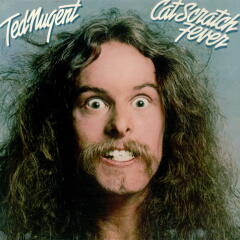
Cat Scratch Fever is the title song from Ted Nugent’s 1977 album of the same name. Although the song never moved above 30 on the charts, VH1 named it the 32nd best hard rock song of all time in 2009.