The Canadian natural gas market has exited the most recent heating season in reasonable shape. Storage withdrawals were below average thanks to mild winter temperatures, but overall storage levels at the end of the season were not too far out of line with the five-year average thanks to below-average storage levels in the west more than offsetting above-average storage levels in the east. However, Canadian gas storage may be facing a most unusual test this coming summer as storage injection activity will be influenced by reduced gas demand in the U.S. due to COVID-19 disruptions, as well as the potential for similar pandemic-driven weakness in homegrown demand, especially in Alberta’s gas-intensive oil sands. How the various pushes and pulls on gas flows play out this summer could very well determine if Canadian gas storage might test capacity limits this injection season. Today, we consider this possibility.
The natural gas market in Canada has had to deal with a laundry list of issues in the past half-dozen years: insufficient pipeline egress capacity, rule changes on its largest domestic pipeline system in Alberta, loss of market share in the U.S., a domestic supply resurgence in recent years, followed by a decline in 2019, and too many instances of severely depressed, near-zero prices for a good part of summer 2019. Our seven-part blog series Get Me Out of Here discussed many of the pipeline egress issues, while more recently, Don’t Stop and Fixing a Hole painted a picture of a Canadian natural gas market that was looking more positive this year than in the past few years. That better outlook was thanks to more pipeline egress out of the supply areas and favorable rule changes to the Alberta gas pipeline system, with the end result being much-improved spot and forward prices for AECO, the Western Canadian gas price benchmark.
Alas, that good news didn’t seem to last long. The energy complex as a whole is now facing intense uncertainty from the recent oil price crash that resulted from the pandemic-driven collapse in global demand and the Saudi/Russia price war. Sub-$25/bbl crude prices in the U.S. have negatively impacted oil and gas producers’ spending plans for 2020. The high degree of integration between the U.S. and Canadian natural gas markets and pipeline systems means that the COVID-related U.S. gas market disruptions we discussed at the end of March in Flirtin’ With Disaster are most likely going to spill over the border to the Canadian gas market, with still very uncertain outcomes.
Crude Oil Permian provides detailed analysis of the fundamental drivers impacting the Permian Basin crude oil market including weekly data, analysis and market intelligence updates of: Permian crude oil supply and demand, pipeline outflows and capacity, prices, and infrastructure updates.
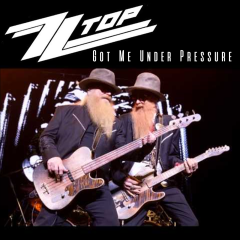
About the song
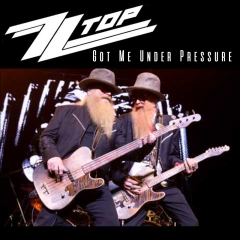
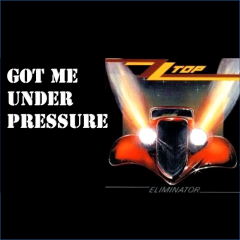
“Got Me Under Pressure” was written by Billy Gibbons, Dusty Hill and Frank Beard and appears as the second song on side one of ZZ Top’s eighth studio album, Eliminator. The album was unique for the band in that it used synthesizers, drum machines and sequencers for the rhythm section tracks, supplemented by Billy Gibbons’s guitar. The album featured the vocals of Gibbons and ZZ Top bass player Dusty Hill. The first draft of the album was done at drummer Frank Beard’s house in Houston, with Linden Hudson doing most of the programming and engineering. Billy Gibbons finished the album at Ardent Studios in Memphis, with Bill Ham producing and Terry Manning engineering. Manning said Gibbons used a Dean Z electric guitar and Legend Rock n Roll Combo amp for the Eliminator guitar sound. There is controversy about the album in that Linden Hudson claims that he co-wrote most of the material on it with Gibbons. The band denied that and has Hudson listed as “pre-production engineer” on the album credits. They later settled a three-year legal battle with Hudson by paying him $600,000 and giving him a writing credit on the song “Thug.” In spite of the credits on the album, Hill and Beard did not play on the record, letting the new technology represent the rhythm section, and setting a new standard for how rock records sounded in the early 1980s.
Eliminator was released in March 1983 and went to #9 on the Billboard Top 200 Albums chart. “Got Me Under Pressure” was released as the second single from the album in May 1983 and went to #18 on the Billboard Mainstream Rock Singles chart. Eliminator has been certified Diamond (10 million copies sold) by the Recording Industry Association of America. Billy Gibbons had Don Thelan of Buffalo Motor Cars in Paramount, CA, build him a chopped hot rod 1933 Ford coupe named “The Eliminator.” The car would be featured on the album cover and all videos of the band from the Eliminator album. The videos were a huge hit on MTV, with heavy rotation. Personnel as listed on the album cover of the record were: Billy Gibbons (guitars, vocals), Dusty Hill (bass, backing vocals, lead vocals on “I Got the Six” and “Bad Girl”) and Frank Beard (drums, percussion).
ZZ Top is an American rock trio formed in Houston in 1969 by Billy Gibbons, Dusty Hill and Frank Beard. Bassist Hill and drummer Beard were previously in the Dallas psychedelic blues band, American Blues, and guitarist Gibbons was a member of the Houston rock band The Moving Sidewalks. They have released 15 studio albums, four live albums, one soundtrack album, seven compilation albums, three EPs, and 38 singles. They have sold more than 50 million records worldwide. They have won three MTV Video Music Awards, have a star on the Hollywood Walk of Fame, and were inducted into the Rock and Roll Hall of Fame in 2004. After bassist Dusty Hill's death in July 2021, at Hill's request, he was replaced in the band by his longtime guitar tech, Elwood Francis. They continue to record and tour and will appear with Lynyrd Skynyrd on the Sharp Dressed Simple Man Tour, and as solo artists, through December 2024.