Bakken crude oil production surpassed 1.4 MMb/d this spring and has maintained a level near that since, even posting a new high just shy of 1.5 MMb/d in April 2019. The rising production volumes have filled any remaining space on the Dakota Access Pipeline (DAPL) and prompted midstream companies to step up expansion efforts to alleviate the pressure, even as questions linger about the possibility of a pipeline overbuild if all of the announced capacity gets built. Specifically, the market is weighing the need for the recently announced Liberty Pipeline and a DAPL expansion. Today, we look at these two new projects and what their development means for the supply/demand balance in one of the U.S.’s biggest shale basins.

Crude Oil TradeView provides up-to-date data and insights into the behavior of differentials for 33 crude assessments across North America. Each week, it also walks you through the reasoning of why differentials widen, narrow, flip (premium vs. discount), or blow out.
As we highlighted in Part 1 of this series, Energy Transfer’s Dakota Access Pipeline (orange line in Figure 1) to Patoka, IL, fixed a lot of the crude takeaway problems in the Bakken after its start-up in June 2017. Prior to DAPL’s completion, there was a big gap between growing Bakken output and less-than-adequate pipeline capacity out of the basin. Producers and traders in the area were forced to rely upon slower — and more expensive — crude-by-rail capacity in order to move barrels to sales markets. With its initial capacity of 525 Mb/d, DAPL served as a relief valve to area producers, and gave them the ability to connect directly to Gulf Coast markets via DAPL’s sister system, the Energy Transfer Crude Oil Pipeline (ETCOP; yellow line) from Patoka to Nederland, TX. DAPL, which was later expanded to 570 Mb/d, also allows producers to reach Midwest refiners if they choose to off-ramp at Patoka.
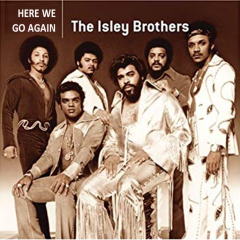
About the song
"Here We Go Again" was written by Isley brothers Ernie, Marvin, Rudolph, O'Kelly and Ronald with Chris Jaspers, and appears on The Isley Brothers' 18th album, Go All the Way. The song went to #11 on the Billboard R&B chart when released as the second single from the album. Go All the Way was recorded at Bearsville Studios in Bearsville, NY, with The Isley Brothers producing. Released on the Isley's own T-Neck Records label in April 1980, the LP went to #1 on the Billboard Top Soul Albums chart and #8 on the Top 200 Albums chart. Personnel on the record were: Ronald Isley (lead and background vocals), O'Kelly Isley (background vocals), Rudolph Isley (background vocals), Ernie Isley (guitar, drums, percussion and background vocals), Marvin Isley (bass and background vocals) and Chris Jasper (keyboards, drums and background vocals). The album also yielded the #1 R&B single, "Don't Say Goodbye (It's Time for Love)."
The Isley Brothers are an American musical group originally founded in Cincinnati, OH. They have released 31 studio albums, four live albums, 15 compilation albums and 111 singles during their career to date. They have recorded for T-Neck, Motown, Buddah, Epic and Warner Bros. Records during their career. The group were inducted into the Rock and Roll Hall of Fame in 1992, and are members of the Vocal Group Hall of Fame. Rudolph Isley quit the music business and became a Christian minister in 2004. O'Kelly Isley died in 1986, and Marvin Isley in 2010. Ron and Ernie Isley collaborated on an album with Carlos Santana, Power of Peace, which was released in 2017. They continue to tour under The Isley Brothers banner.