Crude oil production in the Bakken Shale, which slumped after the 2014-15 crash in oil prices, has increased by more than 50% in the past three years, and now tops 1.5 MMb/d. Just as important, producers in the core of the crude-focused play in western North Dakota have been ratcheting down their drilling-and-completion costs and making plans for continued production growth in 2020. Also, midstreamers are addressing a gas processing capacity shortfall that had threatened to slow drilling activity; in addition, some of them are developing crude oil takeaway capacity, including the planned Liberty Pipeline to the crude hub in Cushing, OK. Today, we begin a series on the Bakken’s expanding network of smaller-diameter crude pipelines and their role in further improving the shale play’s economics.

It seems like eons ago, but the Bakken was one of the first shale plays in the U.S. to demonstrate the promise and potential of horizontal drilling and hydraulic fracturing in the production of crude oil. As shown by the green area and left axis in Figure 1, between the beginning of 2010 and the end of 2014, Bakken crude production rocketed from ~250 Mb/d to ~1.26 MMb/d, a gain of more than 400%. But the mid-decade collapse in oil prices hit the Bakken hard. By December 2016, crude production there had bottomed out at less than 960 Mb/d, and the number of active rigs in the play (yellow line and right axis) had plummeted to 32, from 182 rigs two years earlier.
Things soon turned around, though. Crude oil prices rebounded, producers significantly reduced their drilling-and-completion costs and increased their wells’ productivity, and — especially important for the Bakken, which remained chronically short of pipeline takeaway capacity through its initial 2010-14 growth spurt — the Dakota Access Pipeline (DAPL) to Patoka, IL, came online in 2017. DAPL, which started out with a capacity of 470 Mb/d and has since been expanded to 570 Mb/d, freed many Bakken producers and shippers from their reliance on crude-by-rail, and slashed the cost of delivering the play’s light crude to market.
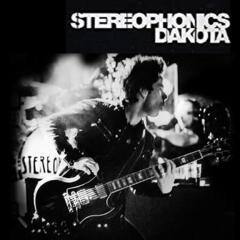
About the song
"Dakota" was written by Kelly Jones, and is the fifth song on Stereophonics’ fifth studio album. Released as the first single from the album in February 2005, it became the only Stereophonics single to hit the U.S. charts to date. It went to #34 on the Billboard Modern Rock Tracks chart after receiving airplay on alternative rock radio in the U.S. The song went to #1 on the UK Singles chart.
Stereophonics is a Welsh rock band formed in 1992 in Cwmaman, Wales — for our readers who aren’t fluent in Welsh, Cwmaman sounds a lot like “Come on, man.” The group has released 11 studio albums, one live album, one compilation album, four EPs and 43 singles. Stereophonics has won one Brit Award and has sold close to 10 million records worldwide. The current lineup of Kelly Jones, Richard Jones, Adam Zindani and Jamie Morrison still record and tour.