Plains All American Pipeline announced on Tuesday that it has agreed to acquire Alpha Crude Connector (ACC), an extensive, FERC-regulated crude oil gathering system in the Permian’s super-hot Delaware Basin, for $1.215 billion. At first glance that might seem to be a lofty price, but the development of the ACC system appears to be a classic case of right-place/right-time because it addresses a fast-growing need for pipeline capacity across an under-served area. And, with its multiple connections, ACC is an attractive source of crude to fill currently underutilized downstream pipelines headed to Midland, the Gulf Coast to Cushing. Today we review Plains’ newly announced agreement to acquire the ACC pipeline system in southeastern New Mexico and West Texas.
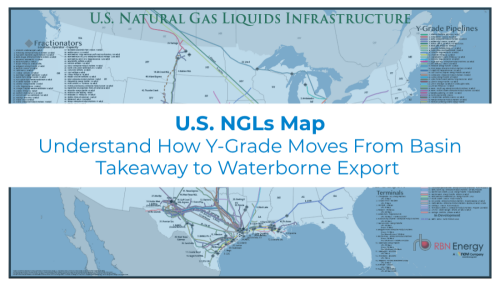
Visualize the infrastructure behind U.S. NGL movement.
The U.S. NGLs Map provides a comprehensive view of the transport, processing, and export networks moving NGLs across the U.S.
Let’s begin our look at Plains’ new ACC deal with a review of Permian Basin production trends. The Permian has proven to be a hydrocarbon superstar. Falling crude oil prices may have hurt most crude-focused plays in the U.S., but Permian production has continued rising; output there now averages ~2.1 million barrels per day (MMb/d), according to our friends at PointLogic, up from ~1.6 MMb/d in mid-2014, when crude prices started their long decline. These production gains came as exploration and production companies (E&Ps) focused on their most prolific “sweet spots” and worked to further reduce their drilling and completion costs. The Permian’s 10,000-square-mile Delaware Basin sub-region, and particularly the northern Delaware, offers many of what seem to be the sweetest of the sweet spots. E&P companies have been perfecting their drilling and completion technologies and wringing remarkable volumes of crude from the area’s Bone Springs, Avalon, Leonard, and Wolfcamp formations. As a result, break-even costs in the area have dropped from $60/bbl in 2013 to as low as $30/bbl, ranking the area among the best return on investment anywhere in the U.S. These outstanding returns will drive continued increases in Delaware Basin production. That assumes, of course, that there are cost-effective means to transport those incremental crude volumes to market. Historically, a significant portion of the oil produced in this area has been transported by truck to takeaway pipelines that began near the edges of the northern Delaware—a costly and cumbersome way to do business.
Enter ACC, whose planned development we first discussed in Part 5 of our Come Gather ‘Round Pipeline series on Permian crude gathering systems. As shown Figure 1, ACC (red line) runs through the heart of the northern Delaware in southeastern New Mexico and West Texas. The vast majority of ACC’s pipe-mileage is in Lea and Eddy counties located in the southeastern corner of New Mexico; Alpha also includes gathering lines in northern Culberson County, TX, and a mainline from southwestern Lea County through northeastern Loving County (TX) to the Wink area in central Winkler County (TX). The various elements of ACC came online between late 2015 and late 2016.
About the song
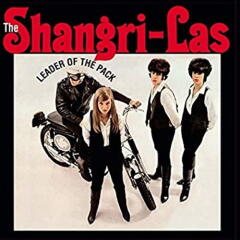
“Leader of the Pack" was written by Shadow Morton, Jeff Barry and Ellie Greenwich. It appears as the second song on side one of The Shangri-Las’ debut album of the same name. Released in September 1964, the song went to #1 on the Billboard Hot 100 Singles chart. The instrumental parts were recorded in July 1964 at Ultrasonic Studios in Hempstead, NY, and the vocals were recorded at Mira Sound Studio in New York City, with Shadow Morton producing. Personnel on the record were: Mary Weiss (lead, backing vocals), Betty Weiss (lead, backing vocals), and Marge and Mary Ann Ganser (backing vocals). Uncredited session musicians played on the record. In 1985, heavy metal band Twisted Sister released a cover of the song from their album Come Out and Play. It went to #53 on the Billboard Hot 100 Singles chart.
The album, Leader of the Pack, was compiled and released in February 1965 to capitalize on the success of The Shangri-Las’ hit singles, “Remember (Walking in the Sand)” and “Leader of the Pack.” Produced by Shadow Morton, the album went to #114 on the Billboard Top 200 Albums chart. Four singles were released from the LP.
The Shangri-Las were an American pop girl group who were popular in the 1960s. The two sets of singing sisters were discovered by Artie Ripp in New York City. The group took its name from the Shangri-La restaurant in Queens, NY. They released four studio albums, nine compilation albums, and 17 singles before officially breaking up in 1968. Mary Weiss served as the front person and main vocalist for the group. All the girls sang backup and were at times featured as the lead vocalist. Betty Weiss retired from the music business and lives on New York’s Long Island. Mary Ann Ganser died in 1970, Marge Ganser in 1996, and Mary Weiss in January 2024.