It’s been a challenging few years — some would say decades — for producers in northern Alaska. Crude oil production in the remote, frigid region peaked at just over 2 MMb/d in 1988 and has been falling ever since, dropping to about 450 Mb/d in 2020 and the first few months of 2021. It’s not that Alaska is running out of oil; far from it. Instead, the state’s energy industry has been battered by competition from shale producers in the Lower 48, thwarted by federal policies, and, more recently, ESG-related concerns and the Biden administration’s efforts to put the kibosh on new federal leases. Despite it all, the few producers still active in Alaska hold out hope for a revival. Today, we discuss the many hurdles that northern Alaska producers face.
As we said in our 2016 blog series about Alaska, the 49th state was seen as the next big thing for U.S. crude oil production in the 1970s –– and that promise soon became reality. With the completion of the 800-mile Trans-Alaska Pipeline System (TAPS) from Prudhoe Bay to Valdez, AK, in 1977, Alaska North Slope production took off, and by 1988, the state not only accounted for one-quarter of total U.S. crude oil output (blue layer in Figure 1), it briefly knocked Texas off its perch as the #1 oil-producing state. Alaskan oil didn’t give the U.S. “energy independence” -– a rallying cry in the Ford, Carter and Reagan years –– but it sure helped. The physical characteristics of the North Slope’s medium sour crude, with a 31.5 API gravity and about 1% sulfur, were (and are) a plus. West Coast refineries were configured to run it, and the crude is marketable in Asia too. Still, Alaska’s production has experienced a long, slow decline that continued in 2020, when it averaged 448 Mb/d, only 4% of the U.S. total and the lowest level since TAPS came online 44 years ago, according to the Energy Information Administration (EIA).
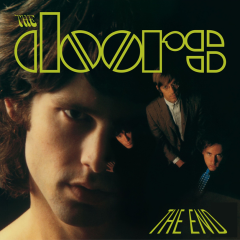
About the song
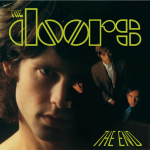
"The End" was written by Jim Morrison, Ray Manzarek, Robby Krieger, and John Densmore and appears as the final song on side two of The Doors’ self-titled debut album. The song was recorded during August 1966 at Sunset Sound Recorders in Hollywood, with Paul Rothchild producing. Jim Morrison initially wrote the lyrics about his breakup with then-girlfriend, Mary Werbelow. After months of live performances at the London Fog club along the Sunset Strip and at The Doors’ house gig at the nearby Whisky a Go Go, the song evolved into a 12-minute soundscape about pain, death, and survival. The spoken word Oedipus section of the song would get The Doors fired from their Whisky residency by club owner Elmer Valentine. One night Morrison decided to ad lib a profanity-laden recitation of that section of the song, which Valentine took exception to. The version of the song that ended up on The Doors’ debut album was recorded live in the studio with no overdubs. "The End" has been said by some to be a forerunner of the goth rock genre. The use of the song in the opening scene of Francis Ford Coppola's film, Apocalypse Now, as a patrol boat cruises up the Nung River to find and terminate rogue commander Colonel Kurtz, is a precursor to the darkness and horror of the Vietnam War as depicted in the film. Personnel on the album were: Jim Morrison (vocals), Ray Manzarek (organ, piano, keyboard bass), Robby Krieger (guitar), and John Densmore (drums).
The Doors album was recorded in August and September 1966, with Paul Rothchild producing. Released in January 1967, the album went to #2 on the Billboard Top 200 Albums chart. It has been certified 4X Platinum by the Recording Industry Association of America (RIAA). Two singles were released from the LP. The single "Light My Fire," released in April 1967, would go to #1 on the Billboard Hot 100 Singles chart. It has been certified Platinum by the RIAA. "Light My Fire," along with The Doors album, have been inducted into the Grammy Hall of Fame. In 2015 the Library of Congress selected The Doors LP for inclusion in the National Recording Registry,
The Doors were an American rock band formed in Los Angeles in 1965. The band took its name from the title of the Aldous Huxley book, The Doors of Perception. They released nine studio albums, five live albums, 21 compilation albums, two soundtrack albums, and 21 singles. They have sold more than 100 million records worldwide. They are members of the Rock and Roll Hall of Fame, have received a Grammy Award for lifetime achievement, and have a star on the Hollywood Walk of Fame. Jim Morrison died in 1971 and Ray Manzarek in 2013. Robby Krieger and John Densmore continue to perform in various solo projects.