The natural gas industry and its regulatory structures can get confusing sometimes, especially as they interact with a very active and transparent market. One regulatory topic that’s been around for a long time but has suddenly become enormously important is 311 transportation. This relates to the transportation of gas by an intrastate pipeline that is not regulated by the Federal Energy Regulatory Commission but delivers into interstate commerce. As we discuss in today’s RBN blog, 311 transportation is in the spotlight because it applies to the slew of new pipelines that have been built across Texas to get Permian gas to market.
First, a little background. “311” refers to Section 311 of the Natural Gas Policy Act of 1978, aka the NGPA. Yes, it goes back that far. A half-century ago, the U.S. interstate natural gas market was out of gas. The wellhead price of gas destined for the interstate market had been regulated at very low levels, ever since 1954. Low prices had two consequences:
- Natural gas was very in-demand, especially after the Clean Air Act became law in 1970 and pretty much required anyone with a big boiler to cut their pollution, with gas being the cheapest way to do so.
- The producers who brought natural gas to market were deeply uninterested in selling at low prices, especially when gas that did not get into interstate markets — that stayed in the state where it was produced — could be sold at whatever the market would bear. The difference for producers was selling at $0.52/Mcf interstate or $2.50/Mcf in the intrastate market.
High-cycle salt cavern storage in Southeast Texas, strategically located near major interstate and intrastate pipelines to provide firm storage service connecting Permian supply with LNG, power generation, utility, industrial, and Gulf Coast end-use markets.
Contact: Edmund Knolle - [email protected]
As a result, the interstate gas market suffered extreme, sometimes catastrophic shortages throughout the 1970s. This came to a head in 1977, when newly inaugurated President Jimmy Carter got the Emergency Natural Gas Act (ENGA) passed to fix as much as it could in short-term emergencies. One of the problems that was pointed out and addressed in that act was the ability of gas in intrastate markets to get out of their states into interstate markets.
This problem existed because, back then, if an intrastate pipeline even touched gas destined for interstate markets, it suddenly became a federally regulated interstate pipeline and had to redo everything — that is, become fully regulated by FERC (actually, FERC’s predecessor, the Federal Power Commission) under the Natural Gas Act of 1938 (NGA). This meant that during the natural gas shortages of the 1970s, gas in Texas intrastate pipelines could not leave the state, despite the rest of the country starving for supply.
ENGA provided for intrastate pipelines to feed interstates in an emergency without becoming FERC-regulated. Then, the next year in the NGPA, Congress made that permanent, creating a way to free up access from the intrastate market to the interstate market, to help keep people from freezing in New York. The new rules were written into Section 311 of the NGPA. It allowed intrastates to transport to an interstate pipeline without getting to experience the joys of federal regulation under the NGA.
Because all this was happening under a different law than the NGA, 311 service got its own set of rules at FERC. The intrastate pipelines could continue to offer intrastate service — for example, a Texas pipeline could use its Texas Railroad Commission tariff to move the gas that remained in-state, and would use a “Statement of Operating Conditions” providing rates and terms and conditions of service on file with FERC to transport gas delivered to interstate pipelines.
The 311 transportation rates didn’t have to be “just and reasonable” — the standard required for interstate rates — they had to be “fair and equitable.” (Admittedly, it would be hard for anyone but a FERC expert to tell the difference.) In any event, there were two ways an intrastate pipeline could set its rates for 311 service into the interstate market:
- If it had state-approved rates (as in Texas), it could propose to FERC that it use those, and FERC would “presume” the rates were “fair and equitable” when they took effect. If the rate was challenged, i.e., the presumption was rebutted, FERC could step up and review the work of its state regulator counterparts.
- If there were no state-approved rates (as in Louisiana), the pipeline would have to make a cost-based showing to support its proposed rates, similar to what an interstate pipeline has to do in a rate case. Once approved by FERC, these rates would be deemed “fair and equitable.”
Remember, all this was going on against a backdrop of “freeing up” the intrastate network (red lines in Figure 1 below) to help out the interstate market (blue lines). So, 311 service was a useful, but somewhat secondary thing going on in the gas market, not changing much even as the market as a whole changed profoundly through restructuring and the Shale Revolution.
About the song
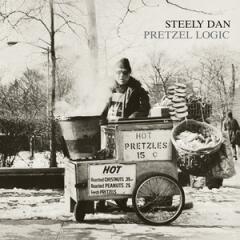
“Rikki Don’t Lose That Number” was written by Walter Becker and Donald Fagen and appears as the first song on side one of Steely Dan’s third studio album, Pretzel Logic. The song’s lyrics refer to Rikki Duconet, a student at Bard College, where Donald Fagen met and became attracted to her. The intro to the song was lifted from the intro to jazz artist Horace Silver’s “Song for My Father.” The Latin-flavored tune with the sing-along chorus was released as the first single from the album in April 1974 and went to #4 on the Billboard Hot 100 Singles chart. Personnel on the record were: Donald Fagen (lead, backing vocals), Walter Becker (bass, backing vocals), Michael Omartian (piano), Jeff Baxter (electric guitar), Dean Parks (acoustic guitar), Jim Gordon (drums), Victor Feldman (percussion, flapamba), and Timothy B. Schmit (backing vocals).
Pretzel Logic was recorded between October 1973 and January 1974 at Village Recorder and Cherokee Studios in Los Angeles with Gary Katz producing. Released in February 1974, it went to #8 on the Billboard 200 Albums chart and has been certified Platinum by the Recording Industry Association of America. Two singles were released from the LP.
Steely Dan is an American rock band formed in Annandale-on-Hudson, NY, in 1971 by Walter Becker and Donald Fagen. The duo moved to Los Angeles, and by 1974 they chose to stop performing live and use studio musicians on future Steely Dan releases. They have released nine studio albums, two live albums, 12 compilation albums and 22 singles and have sold over 40 million records worldwide. They have won three Grammy Awards and are members of the Rock and Roll Hall of Fame and the Songwriters Hall of Fame. The duo took a hiatus from 1981 to 1995, then did a few reunion tours and released two more studio albums in 2000 and 2003. Both Becker and Fagen achieved successful solo careers. Walter Becker died in New York City in September 2017 at 67. Donald Fagen continues to record and perform as a solo artist and under the moniker of Steely Dan.
"About the Song" -- written by Mickey McMahan , RBN Director of Musicology