Open seasons are a key part of marketing capacity for gas pipeline and storage projects, but they can also raise several regulatory questions. It starts with determining whether an open season is legally required or is simply an expected part of the process, and extends to the nuts and bolts of how it should all be designed and run. And the answers depend on what kind of open season it is. In today’s RBN blog, we take a deep dive into the ins and outs of a gas project open season.
This is our second blog in a three-part series on open seasons. As we covered in Part 1, an open season is essentially a competitive bidding process in which any qualified shipper can compete for firm pipeline capacity. That capacity might be on a brand-new pipeline, an expansion of an existing system, or space that’s opened up because current shippers decided to give some back or it was simply unsubscribed. The rules and customs vary depending on the situation, and there are big differences in how the Federal Energy Regulatory Commission (FERC) regulates natural gas and liquids (crude oil, refined products and NGLs) pipelines. Things get even looser with intrastate pipelines and gathering systems, where there are no federal rules to worry about — just state rules and commercial norms. In this series, we're focusing on the interstate world, where open seasons are pretty formalized and can carry real consequences.
Today, we’re zeroing in on natural gas, including how open seasons connect to precedent agreements and certificate proceedings. (A precedent agreement is a binding commercial contract in which a shipper commits to reserve and pay for transportation capacity, usually contingent on the pipeline project being built or expanded. The agreement outlines key terms such as volume commitments, contract length, rates, receipt and delivery points, and conditions required for the project to proceed.) In Part 3, we'll tackle services by crude oil, refined products and NGL pipelines, where the common-carrier model — with all its quirks like proration, committed versus uncommitted service, and contract terms — affects the need and terms for open seasons. It’s a dense regulatory topic, but we’ll break it down in a way that we hope can keep you awake.
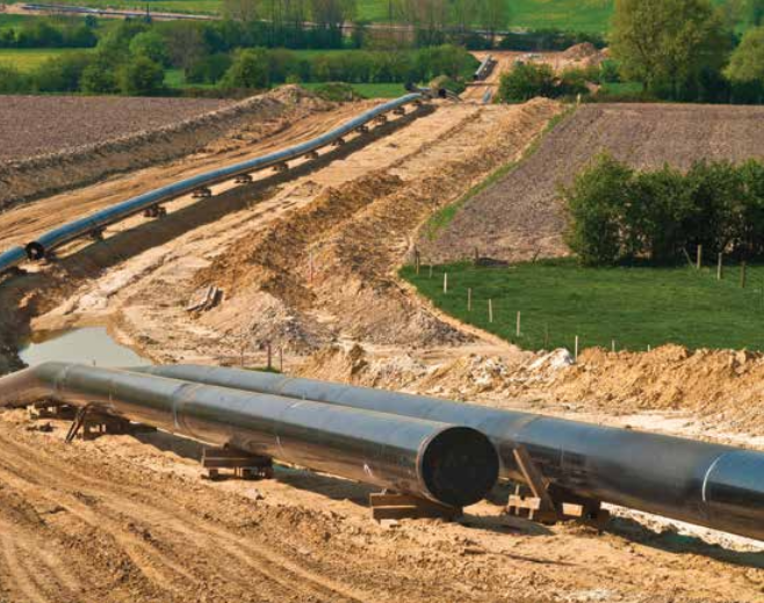
A Natural Gas Pipeline Under Construction. Source: FERC

About the song
“Open Season” was written by Jack Milas and Oli Chang. It first appeared as the second song on High High’s self-titled debut EP, released in October 2011. It also appears as the fifth song on the group’s debut LP of the same name. It is featured as the 16th song on the deluxe edition of Pitch Perfect: Original Motion Picture Soundtrack. Pitch Perfect is a 2012 musical comedy film directed by Jason Moore that follows a female a cappella group competing for an international championship. The song, “Open Season,” which is about reaching into your mind to find peace and joy, was also used in the 2015 film Sleeping With Other People and featured in commercials for Amazon Kindle and Pacifico Beer. Released as a single in October 2011, it failed to chart on the Billboard Hot 100 Singles chart. Personnel on the record were: Jack Milas (vocals, guitar, bass), Oli Chang (synthesizer, percussion), and Zach Lapkins (drums, percussion).
The album, Open Season, was recorded at Dreambear in Brooklyn, NY, and produced by High Highs. Released in January 2013, the album failed to reach the Billboard 200 Albums chart. Two singles were released from the LP.
High Highs is an indie rock band formed in Sydney, Australia, in 2010 by Jack Milas and Oli Chang. They have released two studio albums, one EP, and three singles. Since 2017, Milas and Chang have been working on solo projects in addition to High Highs material.
"About the Song" -- written by Mickey McMahan , RBN Director of Musicology